Showing posts with label top ten tuesday. Show all posts

Tuesday, 1 November 2016

Sci Fi Month: Introduction and Top Ten SF Books.


Hello and welcome, whether you're one of  my handful of regular readers or if you've come to this blog because of Rinn's event. This is the fourth year of Rinn's Sci-Fi month, but it's my first time taking part. A month-long inter-blog celebration of all things science fiction? I couldn't resist, despite it clashing with National Novel-Writing Month, so I'm having to be very organised for a change and these posts written and scheduled ahead of time.

So, for those of you who don't know me, my name is Katie and I live on the Isle of Wight. I'm a relatively new fan of science fiction, although I've been reading fantasy since I was a kid. I started watching Doctor Who when it was relaunched back in 2005, but it wasn't until my best friend showed me Joss Whedon's cult classic TV show Firefly that I really got hooked on all things in time and space. And there are no half-measures for me; if I become interested in a thing, then it takes up a lot of room in my imagination.


Over the next month, I plan to post twice a week, on Tuesdays and Fridays, with reviews of sci-fi books, films and TV, discussion posts and general fangirling. Next week will be Star Trek week, in celebration of the franchise's fiftieth anniversary earlier this year. But today, let me start off with a top ten list of my favourite science fiction books.

10: The Girl With All The Gifts - M. R. Carey. I think it's best to read this book without knowing too much about it, although now there is a film adaptation out there, I don't know how possible that is. It's a tale of human survival in an uncertain future, of hope, and an unusual but very important little girl.
9. Terra - Mitch Benn. By comparison, Terra is a happy little book, the tale of a human girl adopted by aliens and brought up on another planet; a celebration of cultural diversity and finding similarities in apparent differences. 
8. Sleeping Giants - Sylvain Neuvel The third in a row where a novel's catalyst is a small girl. When Rose Franklin is a child, she makes a discovery that will shape not only her own future but that of the whole world, and possibly beyond. But what shape will that future take? Is every scientific discovery doomed to bring the human race closer to destroying itself, or can it be saved from itself?
7. The Time Machine - H. G. Wells. The book that started all modern time-travel stories. Written in the Victorian age, The Time Machine reads as though it were written this year; with a humorous protagonist, science that even I can make sense of, and a surprisingly spooky ending. Without this book, the worlds of science fiction would be very different.
6. 2001: A Space Odyssey - Arthur C. Clarke. I saw the film of this first; a very strange movie, slow-moving with a weird beginning and a freaky ending, and (aside from the bits of music you associate with the film) the most unearthly, terrifying soundtrack imaginable. Not one to watch at midnight in an empty house. I was on edge throughout the "Beyond the Infinte" section! But the film made a lot more sense after reading the book, which was written alongside the screenplay and explains a lot of the weird stuff you see on the screen. It also reminded me in a roundabout way about how when I was seven or so, I was obsessed with my space encyclopedia and used it almost as a travel guide, mentally planning which planets I most wanted to visit when I was grown up and space travel was as common as getting on a bus. (My inner seven-year-old is still mad we haven't even sent anyone to Mars yet.)
5. Redshirts - John Scalzi. You know in Star Trek, whenever Captain Kirk and the main characters beam down to a planet on an away mission, they always have a few unknown crew members come with them in order to die horribly and create a sense of peril for the characters who must survive? Redshirts is their story. Very tongue-in-cheek,"recursive and meta," and snort-your-drink-up-your-nose hilarious. Use caution when reading in public.
4. Ready Player One - Ernest Cline. A wonderful treasure-hunt story set almost entirely in a virtual-reality universe, a celebration of gaming and geek culture, and especially that from the 1980s. You don't have to know all the references - of which there are multitudes - although every recognition adds an extra layer of insider-enjoyment. A fabulous page-turner.
3. The Martian - Andy Weir. If an astronaut got accidentally stranded on Mars, how could he possibly survive long enough for another rocket to come back for him? Answer: with a quick-thinking scientific mind, a twisted sense of humour, and the first potatoes grown on Mars. I took my time getting into The Martian on my first reading, but by the end I was gripping the book tight, desperate to know what happens next. An intelligent, believable but often comical sci-fi novel. It has also been made into a movie, in which, once more, Matt Damon is in need of rescuing.
2. 11.22.63- Stephen King. You probably think of Stephen King as a horror writer, but he is so much more than that. 11.22.63 tells the story of a man who is shown a door that will take him back in time to 1958. The same day, every time, always resetting back as if it was the first time that day came around. His mission is live in the past for five years, in order to prevent the assassination of president John F. Kennedy, then come back and see how the world would be changed as a result. But his task is complicated when he becomes attached, and meanwhile, time itself seems to be fighting back. 11.22.63 is not a horror story, more a historical novel than anything else, with a new approach to how time-travel works. I enjoyed losing myself with Jake in the '50s and '60s, and forming a life for himself there, just as much as the suspense-filled main plot. Stephen King makes you care about his characters, and then fear for them. There was a TV adaptation earlier this year, but while it kept the shape of the story roughly the same, the details were different, and most of the little things that I loved about the book were either passed over or changed. It's a beast of a book, about 800 pages, and yet it never drags. It is a book you can enjoy spending time in.
1. The Long Way to a Small Lonely Planet - Becky Chambers. Anyone who has been book-shopping with me this year will not be surprised to see this book at number one. Just as Stephen King took a new approach to time-travel, so Becky Chambers (the only woman on this list - shocking!) has given us a fresh look at the space-opera genre. The Long Way to a Small Angry Planet is, as the title suggests, the story of a small crew on a journey; not a military vessel, nor even a starship on a noble quest for knowledge (albeit heavily armed for self-defence) but an unarmed engineering ship building wormholes. The setting is a space alliance between many planetary cultures, but unlike Star Trek's Federation, Star Wars'  Empire or Firefly's Alliance, humans are a very new and insignificant addition to the Galactic Commons. The crew of the Wayfarer is vastly diverse, both among the humans (who are still the majority on this ship) and the other members. It is a story of relationships between people who have to work at close quarters together, and it's absolutely gorgeous. I've been recommending it to everyone I know with an interest in sci-fi and they've all loved it. 

Tuesday, 28 June 2016

Top 10 Tuesday: Best of 2016 so far

Hello! Can you believe we're halfway through the year already? It must be time to review my favourite reads of this year so far.

Top Ten Tuesday is the brainchild of the Broke and the Bookish.

  1. The Long Way to a Small Angry Planet by Becky Chambers. Anyone who was with me on the London Book Crawl in February won't be at all surprised to see this book on my list; it's a wonderful science fiction saga that follows a wonderfully diverse spaceship crew, and not the military or the elite, but the workers in charge of building a wormhole from one part of the galaxy to another. It's a space opera that doesn't revolve around the human race, but one that celebrates difference, empathy and everyone's common person-hood throughout everything, with well-realised characters and species, people I loved spending time with, a very well-built story universe. I've been putting it into everyone's hands and making them read it if they like sci-fi.
  2. Sofia Khan is Not Obliged by Ayisha Malik. This was my first impulse-buy of the year, the story of a Muslim woman commissioned with writing a dating book just after a break-up. Sofia is smart, stubborn, witty and likeable, and I felt as though she was a friend after reading just a few pages. Her family and friends are flawed but good-hearted, and I laughed aloud many times reading about their exploits and misadventures - although I shed a few tears as well. 
  3. Jonathan Strange and Mr Norrell by Susanna Clarke. One of the most unusual and imaginiative works of twenty-first century fantasy, set in an alternative Regency England where the world of fairies is just a step away. It is dangerously easy to lose yourself in this tale of two magicians awakening forces that might be more powerful than they anticipate.
  4. The Stand by Stephen King. A truly frightening apocalyptic thriller and tale of survival after a killer flu wipes out most of the world's population. Perhaps not one to read while suffering from flu yourself, as I did! King does what he does best: makes us care about his characters before throwing his arsenal of horrible things at them. At it's heart, it's a tale of good versus evil.
  5. The Time Machine by H. G. Wells: The original time-travel story; it is funny, scary, and an interesting commentary on contemporary Victorian class divides; without this novella, science fiction as we know it today would be unrecogniseable. Yet it's more than just the prototype; The Time Machine is as fresh as if it were written recently.
  6. Our Endless Numbered Days by Claire Fuller: Part family drama, part dark fairytale, Our Endless Numbered Days tells the story of a girl smuggled away from civilisation by her father, and brought up as a survivalist in the woods. I found it a little slow to start, but it grew into a twisty tale of secrets and lies at the heart of a family.
  7. When I Was Invisible by Dorothy Koomson:  The story of two best friends who have grown apart; their shared experiences leading to very different lives and choices. Not always an easy read, but one with a humanity that softens the blow. The mysteries and the characters make this a "one more chapter" book, and it was unusual to have a main character who had spent many years as a nun.
  8. Breakfast At Tiffany's by Truman Capote: We all know the film, but reading the book, a novella of 100 pages, I felt like I was discovering it for the first time. I'm not sure I like Holly Golightly, but she's an interesting character, for the flashes of vulnerability beneath her glamorous, "manic-pixie" persona. It is a friendship story, not a romance. The novella feels sadder than the movie, untidier in plotting - things don't necessarily work out the way that the rules of story dictate - which I appreciated. 
  9. The Ghost Hunters by Neil Spring: A creepy gothic novel, a story-within-a-story, somewhat based on real events and people, though told from the perspective of a fictional secretary and assistant to the titular ghost hunter, Harry Spring, who is sceptical about the "supernatural activity" he investigates, and exploits those who turn to him for help. But can he have an answer for everything? 
  10. There But For The by Ali Smith: I'm not sure I should include this as I'm only halfway through, but there is a wonderful poetry to Ali Smith's writing. She plays with language seemingly effortlessly, and the narrative flows through the lives and minds touched by one individual. An absolute joy to read.

Tuesday, 9 February 2016

A Valentine's Day Top Ten Tuesday for the Singletons

Top Ten Tuesdays are created and hosted by the Broke and the Bookish.

It's that time of the year where you are constantly surrounded by red hearts and cutesy teddy-bears (and if you're really lucky, a display table of pink stationery at Staples!) as the shops cash in on coupledom even more than usual. Romantic love is a fine thing (she says, grudgingly) but, despite the media assuming that everybody is (heterosexually) paired up, it is not a part of every person's life - and nor is the single person's life incomplete without their "other half." So in this week's Valentine-themed Top Ten Tuesday I've chosen to celebrate literature's single heroes and heroines.

  1. Bilbo Baggins: The Hobbit and The Lord of the Rings by J. R. R. Tolkien. Perhaps because The Hobbit has literally no female characters (unless, as I still like to believe, some of Thorin's band are lady dwarves but Bilbo is too unobservant to notice) but it is one of the few stories out there without a single romantic subplot. In decades following his adventures, Bilbo lives a happy and comfortable bachelor's life at Bag Eng, the eccentric of Hobbiton. His nephew, Frodo, hero of Lord of the Rings also never marries or even considers it as a possibility. He is rather more damaged by his adventures, and opens his home to his good friend Sam and his family before crossing the sea to find healing in "the West."
  2. Sherlock Holmes in the stories by Sir Arthur Conan Doyle has no time for romantic distractions; his work is too important to him to even consider courtship or marriage. Almost certainly asexual and aromantic.*
  3. Esmerelda "Granny" Weatherwax: Discworld by Sir Terry Pratchett.  Granny Weatherwax is the leader that witches don't have: stubborn, prickly and judgemental, Granny nonetheless has a strong moral compass and a huge heap of resentment for it - she'd rather have been the wicked witch of the family. Her brand of witchcraft is mostly plain common sense, with just a little bit of magic when necessary. One of Sir Pterry's most enduring characters.
  4. Mark Watney: The Martian by Andy Weir. We don't know a lot about Watney's personal life on earth, but for the duration of the novel he is the only person on a planet for over a year. That's pretty much as single as they come. Watney's resourcefulness, resilience and a quirky sense of humour help him to survive an impossible situation.
  5. Matthew Cuthbert: Anne of Green Gables by L. M. Montgomery. I could have equally selected Matthew's sister Marilla here, but Matthew seems more at peace with his bachelor existence - after all, if he were to court a woman, he'd have to talk to her, and Matthew is the shyest man imaginable. He lives a quiet life as a hard-working farmer, but his world is turned upside down by the arrival of a little red-headed chatterbox one spring morning.
  6. Professor Minerva McGonagall: Harry Potter by J. K. Rowling. Rowling later revealed that Professor McGonagall was widowed, but as this happened a long time before the start of the series, I'll let that stand. She is the head of Gryffindor House at Hogwarts, and deputy head of the school, rather prim and stern on first meeting, but gradually revealed to have a softer side and fiercely protective of her students.
  7. The Hempstock women: The Ocean at the End of the Lane - Neil Gaiman. I'm including all three here, as they are inseparable, three generations of women (one a little girl who has been a little girl for a very long time.) There have been men, perhaps,once, but the Hempstocks are a self-sufficient matriarchy on a cosy farm, seem very ordinary on the outside, but beneath that homely surface runs a deep, strong power.
  8. The Marquis de Carabas: Neverwhere - Neil Gaiman. I'm not sure de Carabas really counts as I'm quite certain he has dozens of lovers off the page. But, at the same time, he is an imposing, tricky, solitary figure, like the cat from the fairy tale from which he has taken his name and built his reputation.
  9. Snufkin: The Moomins by Tove Jansson. Snufkin is a solitary wanderer, quietly self-confident, and although he has good friends among the Moomin clan, he always stands a little by himself, happily playing his harmonica and thinking wise and philosophical thoughts.
  10. Miss Jenny Honey: Matilda by Roald Dahl.  Despite - or perhaps because of - her abusive upbringing at the hands of her monstrous aunt (and now employer) Miss Trunchbull, Miss Honey is a gentle, kind-hearted primary school teacher, beloved by the children in her class, and who takes particular care for child prodigy Matilda. Jenny is the sort of teacher who makes a child want to come to school in the morning, makes learning fun, sweet but determined that a child gets every opportunity possible, a quiet protector even while still living in terror of her aunt. She is a survivor; her home is a tiny, shabby cottage, her food is plain, and yet it is her sanctuary.  But little as she has, she does not hesitate to share it with Matilda to save her from the miserable, neglected childhood she herself experienced. 
A note: This was a really tricky list to come up with. I was very strict with what constituted "single" - someone who goes on dates does not qualify, nor do child characters or a lady who spends most of the book single before finding her prince charming just in time for the end of the book. Women in particular were very difficult to find; in centuries of novels, most ladies seem to be there to support their men or to eventually find a man to support them - or be the slightly sad or ridiculous maiden aunt whose life has passed her by. What does it say that three of my four female entries are either old witches or witch-ish? 

There must be more stories about single ladies living their lives where "happily ever after" doesn't mean married with kids. (And I recognise that I too need to write these stories.)

One of my Twitter friends, @thepagelady suggested a couple of titles I hadn't come across before: Julie of the Wolves by Jean Craighead George and Island of the Blue Dolphins by Scott O'Dell, both of whose protagonists are girls or women who are "single by circumstances." Definitely books I plan to look out for.

 Can you suggest any more examples?


*There's an extra "n" in it. I have no idea how he smells. Probably like pipe tobacco.

Tuesday, 24 February 2015

Top Ten Tuesday: Heroines

Top Ten Tuesdays are hosted at The Broke and the Bookish.
10. Nancy Blackett, Swallows and Amazons. Shiver my timbers, she's great! Nancy, (never Ruth, for pirates are ruthless) is a fearless adventurer, ship's captain and ruler of her group of family and friends. Most early- 20th century children's adventure stories are very much male-led, but Nancy, aged about thirteen, takes command of every expedition, whether that be gold-mining on the fells or a trek to the "North Pole" organised from her sickbed. Nothing frightens Nancy... except perhaps her fearsome Great-Aunt.

9. Precious Ramotswe, The No. 1 Ladies' Detective Agency. Founder of Botswana's first and only detective agency, Mma Precious Ramotswe is a kind-hearted person who loves her country, loves people and has found her purpose in life in making a difference solving the seemingly insignificant but still devastating problems of everyday life. In an increasingly cynical world, decency and a cup of tea can be just as heroic as anything loud and ostentatious.

8. Catherine Morland, Northanger Abbey. 
"No one who had ever seen Catherine Morland in her infancy, would have supposed her born to be a heroine."
But when she is taken on a trip to Bath, one of the social centres of Georgian Britain, Catherine finds herself caught up in an adventure to rival those in her favourite "horrid" gothic novels. (Never mind that it was all in her head!)

7. Arya Stark, A Song of Ice and Fire. A hot-headed child with a great proficiency with a sword, survived great dangers and terrifies even grown men. However, in later books she moves closer to the dark side, and what was cool at first (a preteen assassin) becomes slowly more uncomfortable reading.

6. Coraline Jones, Coraline. Just an ordinary, bored, inquisitive girl who finds the courage she needs within herself when faced with danger from her button-eyed Other Mother.

5. Lucy Pevensie, The Lion, the Witch and the Wardrobe. The child who discovers Narnia and, with her innocence, faith and loyalty is the catalyst for saving the magical land from the evil White Witch.

4. Granny Weatherwax, Discworld.
"I can't be havin' with that."
Proof that heroism is not just a young woman's trait. Any of Terry Pratchett's witches could be included in this list, but Granny Weatherwax, with her stubbornness, headology and no-nonsense manner is my personal favour. She even dares to play Poker with Death for a child's life.
I HAVE TO KNOW. WHAT WOULD HAVE HAPPENED IF I HAD NOT... LOST?'
'At the cards, you mean?'
YES. WHAT WOULD YOU HAVE DONE? 
Granny laid the baby down carefully on the straw, and smiled.
'Well,' she said, 'for a start... I'd have broken your bloody arm.'
3. Eowyn of Rohan, Lord of the Rings.
 “But no living man am I! You look upon a woman. Éowyn I am, Éomund's daughter. You stand between me and my lord and kin. Begone, if you be not deathless! For living or dark undead, I will smite you, if you touch him.”
A fierce, brave daughter of fierce, brave people, Eowyn too often gets overlooked and relegated to look after the women and children of Rohan while her kinsmen ride off into battle. She is their equal and more than their equal, and when she is brought face to face with one of the most terrifying beings of the Third Age of Middle-Earth, she laughs in his face.

2. Victoria McQueen, N0S4R2. She's a troubled-character, but she will do anything to rescue her son from the clutches of the creepy Charlie Manx and his Christmasland.

1. Anne Shirley, Anne of Green Gables. Which will come as no surprise to anyone who knows me. She may not be a swashbuckling adventurer like some of the other characters on this list, but the more I read her story the more I am in awe of how she got through a lonely, miserable childhood up to the age of eleven and still managed to retain her sense of wonder and optimism.

I always feel closest to Anne at this time of year, probably because she arrived at Green Gables in the spring, and the book is so descriptive of the sunshine and apple-blossoms.

Runners-up

Jean Louise "Scout" Finch, To Kill A Mockingbird
Sara Crewe, A Little Princess
Bobbie, The Railway Children
Hermione Granger, Harry Potter
Jo March, Little Women

Tuesday, 30 September 2014

Top Ten Tuesday: Books that were hard to read

Top Ten Tuesdays are hosted by The Broke and the Bookish
I haven't written one of these posts for a while, but this week's topic got me thinking. Not all of the titles listed below were books I hated - although some were - others were ultimately rewarding but hard work. In no particular order:


 1. Horns - Joe Hill. The main character wakes up one morning with horns on his head, and the ability to hear people's deepest, darkest secrets. And most of these are horrific. It is exhausting spending time with seemingly decent people only to find they are so foul underneath.

2. Les Miserables - Victor Hugo. Good story, (great music) and it really gives a lot more understanding to the musical adaptation - but could do with a ruthless editor. I'm not entirely sure we needed fifteen pages about the sewage systems of Paris, and that's one of the shorter digressions from the plot.

3. A Clash of Kings - George R. R. Martin. This was the point at which I was sorely tempted to give up on the Song of Ice and Fire series. I grew heartsick with the violence, the sexism, the awful worldviews of the majority of Westeros. I'm glad I stuck with it, but it's heavy-going at times.


4. 1Q84 - Haruki Murakami. Not my first Murakami novel, but the first I read full of his trademark surrealism. It's in three volumes, and is patchy in quality: fascinating world-building, but I was not convinced by the "love story" or the characters.

5. The Children's Book - A. S. Byatt. The only book I put down unfinished this year (so far.) The Children's Book follows a rather bohemian family at the turn of the last century doing... stuff. It was enjoyable enough, the characters were okay, but a hundred or so pages in, I couldn't figure out what the plot was going to be. The book got ruined on my camping trip in August; I still have it, it is still readable, though not in any condition to pass onto anyone else, so no doubt I'll pick it up eventually just to prevent it from feeling unloved. But I'm not in any hurry.

6. The Bitterbynde Trilogy - Cecelia Dart-Thornton. This is a pre-blogging favourite - as I said before, a book being hard work is not necessarily a bad thing. These books are rich in mythology, but also in purple prose - why use one word when a paragraph will do? I haven't reread them in a while. Life is short and there are so many books. But I still hold a fond place in my heart for The Ill-Made Mute, The Lady of the Sorrows and The Battle of Evernight. 

(Actually, just seeing the covers again makes me want to reread this series right now.)

7. Post Office - Charles Bukowski. One of the first books I had to read for my university course, Post Office was short, and I made myself read it in one go, knowing that if I put it down I would not want to pick it up again. I loathed it with a fiery passion, although I believe I was an anomaly in this. I was disgusted by the main character, could not get past certain decisions he made early in the book, and these feelings overshadowed any humour I might have found in the book. You may notice I haven't posted the cover for this one. I won't have that on my blog or my computer.


8. Rilla of Ingleside - L. M. Montgomery. From one extreme to another: Rilla is one of my favourite books, but only to be read when I am feeling emotionally strong. The first time I read it as an adult I sat up all night crying over it, not only a certain beloved character's death, but that the idea that the timeless, innocent world of Anne of Green Gables should be irrevocably changed by the First World War.

9. The Call of Cthulhu  - H. P. Lovecraft. One of the pioneers of a certain kind of horror fiction, but he writes for the most parts by hints and glimpses, and creating a spooky atmosphere. The prose is full of "indescribable horrors" - you're a writer, man, describe it! 

10. Moby-Dick - Herman Melville. Another candidate for "did not finish." I've read about fifteen chapters, and okay, it is not as impossible to read as I'd expected, even with some unexpected humour, but I'm not sure life is long enough to read another 135 or so chapters of a man chasing a whale, even if it does help me understand the references that seem to be popping up in every film and TV show I watch. I know what happens. Man chases whale past all sanity, resulting in his own destruction.

Tuesday, 24 June 2014

Top Ten Tuesdays (time warp edition): Books of 2014 so far

Tuesdays are funny things. By the time I notice a really good Top Ten Tuesday blog prompt, it's usually Wednesday, and by the time I get around to thinking of my own top ten lists, it's Thursday night, or Friday next week. Everyone else listed their top ten reads of 2014 so far two weeks ago, but better late than never, I suppose. (Plus, it is closer to the half-way point in the year now.)

Top Ten Tuesday is hosted by the lovely ladies at The Broke and the Bookish.

1. The Martian - Andy Weir. The story of a man stranded on Mars, attempting to stay alive long enough to eventually make it back to Earth. This book is quite slow to start off with, but becomes an edge-of-your-seat thrill ride based in scientific plausibility, and the narrator has a goofy sense of humour that makes it impossible not to like him.

2. NOS4R2 - Joe Hill. The horror novel everyone was talking about around Christmas. The tale of a girl with a gift for finding lost things, and a villain whose lair is Christmasland. Joe Hill is the son of Stephen King, and has inherited his father's storytelling gene.

3. The Charioteer - Mary Renault. A gay soldier, wounded at Dunkirk, searches to find his place in the world and is caught between two friendships: one formed of romantic idealism, and the other of heroes and experience. Though painful at times, the book felt optimistic and ahead of its time (the 1950s).

4. Attachments - Rainbow Rowell. A love story with a difference - for the two people involved don't even interact with one another until late on in the book. It's a cosy, feel-good read.

5. Mr Penumbra's 24-hour Bookstore - Robin Sloane. A young man takes a job in a bookstore with a secret and finds himself embarking upon a quest that will unearth secret codes, medieval artefacts and the heart of Google. A bibliophile's dream.

6. The Explorer - James Smythe. My second choice involving an astronaut in isolation: a much darker, weirder story than The Martian, but every bit as gripping.

7. The Rosie Project - Graeme Simsion. A university professor comes up with a project to find the perfect wife. Needless to say, not all goes to plan. A heartwarming and gently funny read.

8. The Shining - Stephen King. I don't usually include rereads on these lists, but it's been long enough since I read this for the first time, and this time around I think I appreciated it even more. This has been made into an iconic horror film, of course, but the novel is so much more than just another haunted house story. It's about family, and fate, isolation and inner demons: The Shining is a gothic masterpiece.

9. An Astronaut's Guide to Life on Earth - Chris Hadfield. The third book on this list about astronauts, this time a work of non-fiction from one of the heroes of 2013. Commander Hadfield reveals just what it takes to become an astronaut (and has made me far more critical of science fiction after reading this book.) An extraordinary man, whose experiences provide insight not just for wannabe astronauts but also for those of us whose feet will remain on the ground.

10. Pretty Girl Thirteen - Liz Coley. A girl returns home with no memories of what has happened over the past three years. A thoughtful, unsettling novel.

Tuesday, 10 December 2013

Reading Cram Read-a-thon Day 2 and Top Ten Tuesday


12:15PM: I spent most of yesterday evening reading Perdido Street Station, and reached the end of part two. I went to bed quite early, as I could barely keep my eyes open, but managed to get in a couple more chapters of Harry Potter and the Goblet of Fire before falling asleep. Hagrid's secret past has been splashed all over the Daily Prophet, in a subplot that I don't think was touched on much during the films. I can't help feeling that Rita Skeeter must be based upon J. K. Rowling's own experiences with evil journalists (and if she were a muggle, Miss Skeeter would be the Daily Mail's darling. What a nasty piece of work.)

I made the most of my day off this morning by not setting my alarm clock and sleeping in late. I read another chapter of Perdido Street Station over breakfast, though since then I've really just been pottering around, dancing round my room to my Dreamboats and Petticoats CD and getting sucked into the internet. Time to put that computer away, Edwards! Get reading!

3:30PM: Oops.


Everyone seems to be talking about NOS4R2 among my bloggy friends. I've had my eye on it since it was first released, but was going to wait for the small paperback to be published. But with all the internet chatter about this book, and the fact that it is apparently a Christmassy horror story, I couldn't wait another year, and as I just needed to spend another £10 at Waterstone's before I got a free gift card, I decided to treat myself to an early Christmas present.


Perdido Street Station: The story so far:

Isaac's study of assorted birds, bugs and other winged creatures has brought him into contact with a brightly-coloured creature which has a strange effect, seemingly with powerful psychic or empathic abilities. This creature has been stolen from a research facility, where its siblings have been treated with caution, even fear. This cannot end well. My suspicion is that it will incite all sorts of nastiness from the people of New Crobuzon.

10PM: After coming back from town, I intended to get stuck back into my book for the rest of the afternoon, but after updating the blog, I ended up sorting out all my photos from the last 15 months and deciding which ones need to be printed for albums. I still love having physical photo albums to look back over my memories. Then I remembered I still hadn't reviewed the film of Catching Fire, so I put that right (scheduled for tomorrow morning when I'm back at work.) I settled back into my book for an hour or so, where some very strange events came to pass. First, as far as I can make out, someone programmes a hoover to make it become sentient. You may call it a cleaning construct all you like, but as far as I'm concerned it's a hoover. Now, quite what the plot has planned for a sentient hoover, I am yet to find out. Also, the weird psychic, drug-addicted caterpillar-creature Isaac has been studying has hatched out of its cocoon as a man-sized killer moth, and has freed its fellow man-sized killer moths from the research facility to cause chaos across the city. Despite how silly this may sound, it's quite suspenseful stuff, and I'm keen and dreading to see what happens next.

This evening I took over the kitchen and baked some delicious Christmas goodies: sugar cookies, Christmas cupcakes and a batch of fruit and nut shortbread, which should be ready to come out of the oven any minute. I am not posting photos because although they taste delicious, they look nothing like the photos in the recipe books, alas. I started icing the cakes when they were still warm, and it turned out a bit messy, but I ate the worst of the evidence.

I'm off to bed in a minute, for an early night and to see if I can get to the end of part three of Perdido Street Station before meeting Judith for lunch tomorrow.

Stats:
What I've read today: Perdido Street Station
Number of pages read today: 127
Running total: 332 pages
Number of mince pies consumed during the readathon: 3 1/2
My life outside books: I am a baking queen!


Top Ten Tuesday: The to-read pile


Top Ten Tuesday is hosted by the ladies at The Broke and the Bookish


Well, my to-read pile has more than ten books on it, but the following are likely to be read sooner rather than later.


1. Mindstar Rising - Peter Hamilton. This is a loan from a friend, who described it as "detective fiction set in the not-so-distant future." Aside from that I know very little about the book, but look forward to finding out.

2. From a Buick 8 - Stephen King. Because I haven't read any King for a while, and my brain is itching to read some more. This one was on the 3 for £5 offer at the Works, so I had to snap it up.


3. Interworld - Neil Gaiman and Michael Reaves. A Neil Gaiman book I haven't read yet? Better put that right!


4. Shine Shine Shine - Lydia Netzer: A book I picked up on my last-but-one trip to London: "This is the story of an astronaut who is lost in space, and the wife he left behind."

5. Mr Penumbra's 24-Hour Bookstore: Robin Sloane: A book about books, bookshops, and bookshop customers. What's not to love?


6. Something Borrowed - Paul Magrs: The sequel to Never the Bride which I read on holiday this summer. If it's as good as the first, I'm in for a treat. This is a library book, and I've already renewed it once, so I ought to get to this one soon.

7. The Cuckoo's Calling - Robert Galbraith: Yeah, we all know "Robert Galbraith's" real identity. Though I didn't buy it because it's by J.K. Rowling, the extra publicity made me actually look at this book and decide it looked good. I enjoy crime fiction, but don't read that much of it because when I'm in the crime section of a bookshop or library, I don't really know where to start without a particular author or title in mind.


But before I get started on The Cuckoo's Calling, I ought to finish my reread of the Harry Potter books. I don't like having more than one book or series on the go by the same author or in the same genre at any one time.

8. Harry Potter and the Order of the Phoenix - J. K. Rowling. Also Half-Blood Prince and Deathly Hallows.


9: A Christmas Carol - Charles Dickens. 
10: The Lion, the Witch and the Wardrobe - C. S. Lewis: These two are essential December rereads, for obvious reasons.


Tuesday, 22 October 2013

Top Ten Tuesdays: 10 best character names in books (and 5 worst.)

Thanks to the ladies of The Broke and the Bookish  for coming up with this feature.


When it comes to writing memorable characters, the right name is crucial. Below are my favourite names to be found in literature through the ages. (Some authors excel at coming up with names for the inhabitants of their fictional worlds, and it is difficult to choose just one, so I have added some runners-up. It would be easy to have ten names from the Harry Potter series, for example.

10. Scarlett O'Hara - Gone With the Wind by Margaret Mitchell. Not the most likeable of characters, perhaps, but her name is full of romance: huge dresses, windswept hair and a great American epic.
9. Gilbert Blythe - Anne of Green Gables by L. M. Montgomery. Just the right mixture of suave charm and best friend.
8. Caddy Jellyby - Bleak House by Charles Dickens. One of many brilliant names from Dickens (along with Ebeneezer Scrooge, Philip Pirrip, Nicholas Nickleby and the like.)
7. Effie Trinket - The Hunger Games by Suzanne Collins. You just know she's going to be as fluffy and insubstantial as cotton candy!
6. Granny Weatherwax - The Discworld series from Terry Pratchett. You know that this is a woman who can't be havin' with any nonsense.(See also Nanny Ogg, Nobby Nobbs, Cheery Littlebottom, Havelock Vetinari... the list goes on... and on... and on... and on...)
5. Bilbo Baggins - The Hobbit by J. R. R. Tolkien. (Also: Eomer son of Eomund, Arwen Undomiel, many of the Elvish names. Of course, the Elvish language was created to sound as beautiful as possible.)
4. Lettie Hempstock - The Ocean at the End of the Lane by Neil Gaiman.
3. Draco Malfoy - the Harry Potter series. J. K. Rowling is second only to Dickens for her skill in naming. (a sample: Albus Dumbledore, Mundungus Fletcher, Severus Snape, Dolores Umbridge, Filius Flitwick, Nymphadora Tonks...)
2. Eustace Clarence Scrubb - The Chronicles of Narnia by C. S. Lewis. It is a most unfortunate name, but, as Lewis writes, "he almost deserved it." 
1. Tuppy Glossop - The Jeeves and Wooster series by P. G. Wodehouse. Doesn't it just roll off the tongue? Possibly the most fun you can have with combining two words. Tuppy. Glossop.

And the worst:

5. Tris - Divergent by Veronica Roth. Sorry, Divergent fans, but I just don't like the name. It seems to be lacking something, somehow. Feels unfinished.
4. Patch - Hush, Hush by Becca Fitzpatrick. Sounds like a puppy, not a bad-boy fallen angel.
3. Fitzwilliam. Mr Darcy's first name in Pride and Prejudice. Jane Austen creates the most lusted-after fictional man in the history of the world, and saddles him with the first name Fitzwilliam. Most unfortunate.
2. Joffrey - A Song of Ice and Fire by George R. R. Martin. The brat didn't stand a chance, really, did he?
1. Renesmee - Breaking Dawn by Stephenie Meyer. Try as I may, I cannot pronounce this hybrid of her grandmothers' names Renee and Esmee as anything other than "Renny-smee." Which is just ridiculous. Ick.

Tuesday, 2 July 2013

Top ten books of 2013 so far/Once Upon a Readathon

I'm really cheating here, because this was The Broke and the Bookish's top ten for last week, but I was away from my computer for a couple of days and missed it.


My blogging resolution for 2013 was to read quality, rather than quantity: to take my time reading books I could fall in love with, instead of skimming through things I didn't care in order to reach a target. So far it seems to be working. I haven't even kept track of how many books I've read, and deleted my Goodreads account, but there seem to be a higher proportion of great reads on my list.

Top Ten Books of 2013 So Far (in no particular order)

1. Paper Towns by John Green. Although Looking For Alaska, which has similar themes, has more publicity, I preferred this story of a boy piecing together the mystery of his friend and crush's
disappearance. I love a good treasure-hunt story, a mystery with clues to solve, and the interesting and little-known facts and details that make Green's books come alive and appeal to us nerdy types.

2. Warm Bodies by Isaac Marion. I am very much not into zombies. They Warm Bodies was the exception: Somehow Marion was able to convey just what it would be like to live as a zombie, trapped inside a mind that is almost but not quite eroded, snarkily humorous but surprisingly thoughtful and compassionate. (The book is better than the film.)
do nothing for me.

3. Tell The Wolves I'm Home by Carol Rifka Brunt. I found this book just after the death of an old friend, and it was just what I needed to read at that time: a tale of grief and young love, family and growing up, and the confusion that comes when someone dies. I haven't seen much publicity around this book, which is a real shame. Highly recommended.

4. The Universe Versus Alex Woods by Gavin Extence. A story of a friendship between a bright but unusual teenager and a grumpy old man. An odd mixture of humour and sadness, this book challenged me to think. Alex Woods is a wonderful character, and I defy you not to fall in love with him.

5. After the Fall by Charity Norman. This is an odd one, because I wasn't sure I was going to like this book at all. I felt sure I knew where the story was going - and I couldn't have been more wrong. I love books that surprise me; that manage to sneak past the emotional barriers I put up, making me care for the characters more than I intended to. Challenging, heartbreaking, but ultimately hopeful.

6. Watchmen by Alan Moore. A dark and dismal story that takes a sideways look at the concept of superheroes, and wonders what kind of world it would be if they really did exist. An uncomfortable and sometimes unpleasant read, posing difficult questions about morality, heroics
and the human race as a whole, but one that stays with you for a long time.

7. Ready Player One by Ernest Cline Did I mention that I love a good treasure hunt story? This one is set in a dystopian future, but its true setting is within the internet itself, in a virtual reality that is a geek's paradise, stuffed with references to gaming, science fiction, cult films and TV, in
particular of the 1980s. A thriller with all the adrenaline-rush of the best video game in the world.

8. The Ocean at the End of the Lane by Neil Gaiman This was my most
anticipated read of the year, and it did not disappoint. A children's tale for grown-ups and a short story grown long, this is all about childhood, magic and memory, filled with deep-down truths that I can't quite grasp, but that Gaiman has made sense of through story. As soon as I finished this book, I started at the beginning once more, a thing I haven't done since I read the final Malory Towers book at the age of 11 or 12.

9. 2001: A Space Odyssey by Arthur C Clarke I only half-watched the film, which probably demands one's full attention, but is extremely slow-paced. The beginning is bizarre, the middle a respectable science fiction movie slowed right down, starring the world's most sinister computer, and the ending both terrifying and a complete mind-screw. I didn't love it, but it lingered, and when I saw the book in the library, I took it home to read straight away. The novel and film are really two halves of a whole: the film shows, while the book explains what we're seeing. And as I read, a long-forgotten part of my childhood returned to me. When I was seven or eight, I was fascinated by the solar system; the vastness of space, the strangeness of all the planets, and the dream of space exploration. I had a space encyclopedia I could pore over for hours - but as I grew older, I'd forgotten all of this. 2013 has been the year of me discovering I actually like science fiction, but the realistic journey of the Discovery to Jupiter and Saturn gives a far greater idea of the size of space than all the fictional galaxies of Star Trek and Firefly. 

10. Les Miserables by Victor Hugo This is not a book I intend to reread from start to finish regularly, the 1000+ page tome breaking from the story every few chapters for Hugo to pass judgement at great length on history, politics, life in a convent and the sewers of Paris. Of course, you can enjoy the musical without reading the book - from the comfort of your own home now it has been filmed - but the book is so much deeper and richer.


Once Upon A Readathon: Mon 8th- Weds 10th July 2013


After last month's Bout of Books readathon, I've found myself bitten by the bug. Of course, I can devote any of my free time I choose to reading, and do, but it's easy in these days of wi-fi to spend more time tweeting about books, reading blogs about books and setting off a TvTropes tabsplosion about books, than actually reading. A readathon is a great incentive to actually sit down, ignore all the distractions, and actually get lost in a good book or three. So I've decided to sign up for Once Upon A Readathon, which takes place next week. I don't expect to read more than two books during that time, as I'll be at work on two of the three days. Monday will be my day off, and so I intend to get as much reading done as possible that day. Can't wait!


Tuesday, 28 May 2013

Top Ten Tuesday: Book Settings I Want to Live In.

This week, The Broke and the Bookish have left the subject of Top Ten Tuesday up to us. I've chosen to list the top ten book locations that leave me aching to pack up my bags and board a plane/TARDIS/reality hopper.


Top Ten Book Settings I Want To Live In (or at least visit)

1. 19th Century Prince Edward Island - Anne of Green Gables by L. M. Montgomery. 
2. Narnia, circa the time of The Voyage of the Dawn Treader by C. S. Lewis. This seems to be the best time to be a Narnian, when the land is at peace and adventure is for adventure's own sake.
3. New Zealand - After The Fall by Charity Norman. Even if the story emphasises that you can't escape from your own life, it still makes me want to start a completely new life - and with such a background!
4. London Below - Neverwhere by Neil Gaiman. Complete with Croup and Vandemar and certain death around every corner? Perhaps not. Yet in many ways London Below seems more real, more alive, than the London I can visit on the train.
5. Middle Earth - The Lord of the Rings by J. R. R. Tolkien. Yes, even with the deadly, hopeless quest.  It would certainly show what a person is made of. I'd love to see the Elves in Rivendell and Lothlorien, and visit the human lands of Gondor and Rohan, but ultimately I would be most at home with the Hobbits in the comfort of the Shire.
6. Botswana - The No. 1 Ladies' Detective Agency by Alexander McCall Smith. Mma Ramotswe has such a joyful approach to life, and such a love of her country.
7. 1920s Lake District - Swallows and Amazons by Arthur Ransome. Childhood seems so much freer in this era, with the children camping on a lake island, sailing, mountaineering and adventuring to their hearts' content. And ginger beer and corned beef sandwiches taste so much better when eaten outdoors and called "grog" and "pemmican."
8. Hogwarts - Harry Potter series by J. K. Rowling. Of course. Who doesn't want to learn Transfiguration, Potions and Defence Against the Dark Arts instead of maths, science and geography?
9. Beszel/Ul Qomo - The City and the City by China Mieville. Two cities, that live on top of each other like two pictures on different sheets of tracing paper, where you may not even acknowledge something going on the other side of the street, if it is technically in the other city. Perhaps this would be a place to visit rather than to live in - but I'd like to see exactly how it works.
10. Australia - Down Under, by Bill Bryson. 

And 5 settings I'm happy just reading about from the safety of my armchair:

1. Westeros - A Song of Ice and Fire by George R. R. Martin.
2. High School - Every YA novel ever. Once was quite enough for me, thank you very much.
3. Panem - The Hunger Games trilogy by Suzanne Collins.
4. The Arctic Circle - Dark Matter by Michelle Paver. Brrrrr. I do not like the cold.
5. The Chalet School by Elinor M. Brent-Dyer. I love the idea of this boarding school in the Alps, but I suspect it would not be as much fun as the stories lead you to believe, with the taboo on slang, having to be trilingual in English, French and German, and the earnestness of the Real Chalet Girls.

Tuesday, 9 April 2013

Top Ten Tuesday: Books I read before I started book blogging

Hello dear readers! Apologies for the lack of recent reviews or posts. There's not been a lot of reading happening lately, and most of what I have been reading has been rereading of old favourites. But this week's Top Ten Tuesday prompt got me thinking about my old favourite books, from the days before I started my book blog. I'm not going to include any of the books that are still favourites and as such have been reviewed on rereads, so I've found it interesting to think back over the books that I used to love, and those which are really due a reread.

Top Ten Tuesday is hosted at The Broke and the Bookish


1. The Book Thief - Markus Zusak

I wrote about this on my (now deleted) personal blog, but all I could find to write was "JUST READ IT!" The Book Thief shows a little girl growing up in Germany during World War 2, but in a unique twist, the author is Death. This does not make the book a morbid read, but Death's matter-of-fact tones really highlight the beauty and tragedy of the story in an understated way. (I really have to reread this!)


2. A Tale of Two Cities - Charles Dickens

When I finished my degree, I realised I'd hardly studied any Dickens in the entire three years - a shocking state of affairs! Though it took me a while to get into the book the first time - so many characters, and it takes a bit of time to figure out how they fit together, who are the main characters and who is in a supporting role - by the time we got to the French Revolution scenes I was hooked. I was holding my breath with worry for some of the characters and completely stunned by the well-known twist ending. This book left me with a serious book hangover.


3. The Bitterbynde trilogy - Cecelia Dart-Thornton

Long before the trend for fairy-tale retellings came the Bitterbynde trilogy from Cecelia Dart-Thornton. Though very, very verbose, the series, beginning with The Ill-Made Mute draws on ancient Celtic mythology and well-known fairy-tales to weave a rich, uncanny tapestry, opening a little window onto a dangerous fairyland.


4. Rebecca - Daphne Du Maurier

The main reason I initially read this book was because my Cornwall-based friend from university assumed I'd read it and I didn't have the heart to disillusion her. It was well worth it - an eerie, suspense-filled novel of a young woman haunted by the memory of her husband's first wife. I find myself reminded somewhat of Jane Eyre.


5. I Capture the Castle - Dodie Smith

"I write this sitting in the kitchen sink." How can you not love a book which opens thus? I Capture the Castle is a quirky story of family, growing up and falling in love, and has been made into a film starring Romola Garai and Bill Nighy. 

6. The Elenium trilogy - David Eddings.

Fantasy always has to come in trilogies, doesn't it? This was the first high fantasy I read after Lord of the Rings sucked me into the genre, and I fell in love with it. I later read Eddings' Belgariad series, and maintain that whichever Eddings story you read first will be the one you like best - because he has one story, one set of character archetypes, which he used many times in different ways. Recently I tried to reread the series, and alas, the years were not kind. The fantasy-names felt made-up, the archaic speech felt fake, the plot full of cliches. The Elenium was saved a little by humour and likable characters, but maybe it's not fair to include The Elenium in a top ten of anything. Still, it played an important role in helping me fall in love with fantasy.


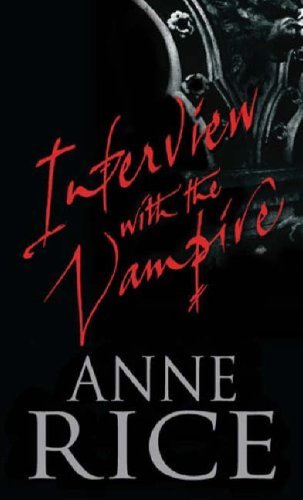
7. Interview With the Vampire - Anne Rice
I read this as a semi-gothic student, little knowing quite how far its brooding protagonist would set the standard for angsty, self-loathing vampires everywhere.

8. Night Watch - Terry Pratchett

This is perhaps one of the darkest books in the Discworld series, but also the best. Les Miserables crossed with Life on Mars - except this was published before Life on Mars. This is one of the City Watch sub-series, but with a twist, because Sam Vimes is caught in a magical storm and sent thirty years back in time, when Ankh Morpork was a much more dangerous place, and it's up to Vimes to sort out the mess, tutor his younger self, and minimise the damage, when all he wants is to get home to his wife and unborn son. Truth! Justice! Freedom! Reasonably Priced Love! And a Hard Boiled Egg!

9. Eve Green - Susan Fletcher

A simple story about family and the past, which I found at just the right time. When Eve Green is expecting her first child, she returns to the Welsh village where she grew up. The story is told in flashbacks to the summer when another little girl went missing, as Eve pieces together the secrets that have been kept from her, and the forgotten memories. Eve Green is a quiet novel, but a cosy read. 

10. The House at Riverton - Kate Morton

Kate Morton's books seem to follow a particular formula: two stories, separated by many decades but linked in some way, a big house, forgotten secrets and family mysteries. The link in The House at Riverton is an elderly woman (in the present day) who used to work at the house as a maid, at the time of a young man's suicide. Tangled up in the story is the relationship between three young people: the man and two sisters, and the novel is reminiscent of Ian McEwan's Atonement. It may be an unpopular opinion, but Riverton is the novel I'd hoped Atonement would be but wasn't. I read the entire 600 or so pages in a single lazy Saturday. I couldn't put it down.
Related Posts Plugin for WordPress, Blogger...