Showing posts with label book to film. Show all posts

Sunday, 24 May 2020

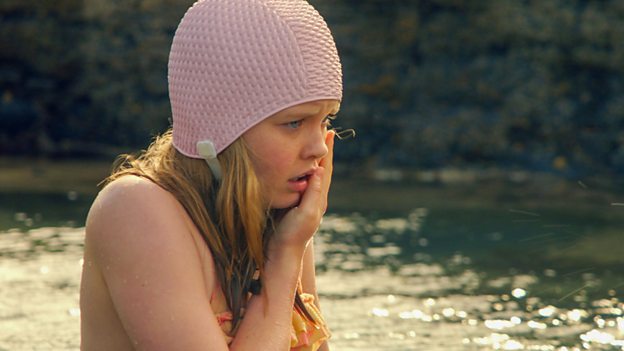
Book to Screen: First Term at Malory Towers

When I was about eleven, I started adapting Enid Blyton's First Term at Malory Towers into script form, in a small Lion King notebook. It may have been around the same time that CITV broadcast an excellent adaptation (at least to my pre-adolescent eyes) of the Famous Five books. It was certainly an exercise in wish-fulfilment that I knew would never see the light of day, partly because I was a kid, but also because even at that age I knew there would be no home on kids' TV for a series with an all-female cast.

The Malory Towers books - especially the first one - opened up an entire world to me. I was not new to Enid Blyton's books - I was an enormous fan of her mysteries, especially the Famous Five - and I remember rummaging through the classroom book box for something by the author, and turning up triumphantly with Malory Towers. At first I was a little nonplussed, with a little confusion over the lead character's gender - I had only known Darrell as a boy's name at that point - and some bewilderment about how the brown tunic with orange trim could possibly constitute a "jolly nice" school uniform, but by the time I'd made it onto the train, I had put aside these nitpicks and become thoroughly engrossed in the story and the new-to-me setting of the Girl's Boarding School. Malory Towers came alive; I could picture the school, in its grey stately setting, built around a courtyard, with its salt-water swimming pool on the cliffs, and the dormitory towers.

That was at least 25 years ago, yet that series, especially the first book, became one of the stories that became inextricably entangled with my own childhood. It seems strange to lay a personal claim to a popular book by one of Britain's biggest-selling children's authors, but when I learned that the BBC had adapted it as a 13-part series, I felt weirdly proud and possessive. I approached it excitably - even getting up early on the day it arrived online, to watch an episode before work (my last day of work before we closed due to The Current Situation.)

Readers, it was simply marvellous!

I wasn't sure how much of Blyton's story was going to be used, and how much would be using her setting to tell original stories.  The story takes an episodic form - ideal for the genre, which takes place over the course of a school term - which blends scenes from the book with new material very well. Every scene I'd hoped for was there, in full and with very little meddling: the slap in the pool, the tricks, the mystery of Sally, and Mary-Lou's fountain pen. These scenes were adapted just as faithfully as my inner purist could ever have hoped, and so I don't mind in the least that additional material has been tidily slotted in alongside it. As well as the Blytonesque hijinks - midnight feasts, secret passages, a ghost story - the characters face things that maybe Blyton wouldn't have written about herself, but that ring true to the boarding school setting of the late 1940s, such as class and its expectations, and academic struggles. I think that it was a bold step to depict one of the bright heroines as having what would now be recognised as dyslexia: an important piece of representation for Malory Towers' young audience

The girls and mistresses were brought to life by a diverse cast who worked well together as a team. They embodied the classmates I've known for a quarter of a century - even the minor characters who even Blyton forgot about or replaced over the course of the series. (The only girl missing from the First Form North Tower dormitory is Violet, mentioned twice, whose defining trait is that she has exactly zero personality. Poor soul, I often wondered what became of her.) The only character I felt disappointed with was Matron (Ashley McGuire), reduced to a walking stereotype, a bullying, incompetent martinet. I've a suspicion that she was used to fill the gap left by Ma'm'zelle Dupont, Blyton's comedy French mistress whose main purpose was to be the butt of Alicia's pranks.

Ella Bright plays a spirited, well-rounded Darrell Rivers, a Darrell with a Past - an elaboration from the source material, but which is consistent with her character: she is the quintessential schoolgirl heroine, kind, fair, sporty and smart. (I just wish she had curly hair like the illustrations on my 1990s paperbacks.)

Meanwhile, Danya Grivers is every bit the spoilt, catty drama queen Gwendoline Mary Lacey - the perfect antagonist. Yet even she is shown a little more compassion, by the script and the characters, than Blyton ever afforded her. I never thought it fair that she was sneered at from her very first appearance. She's awful, but she was never given the chance to be otherwise. Here, at least, she is shown a little mercy and her character's vulnerability peeps through her spiteful exterior.

Then there's timid, sweet little Mary-Lou, jolly and scatterbrained musician Irene - as soon as they appeared, the friends who had been words on a page had faces of their own. Moody Sally, sensible Jean (albeit not Scottish) and stern Katherine, the head of form. Quiet, traditionally feminine Emily, who only really spends a couple of pages in the limelight on the page, has a subplot of her own, not from the book but that fits in seamlessly. A few lines and a North American (I think Canadian?) accent go a long way towards explaining hard-edged prankster Alicia, who rarely gets to see her family, even in the holidays, and who has huge hampers and gifts sent to her, perhaps as compensation, and remember that this is post-war Britain where rationing is stricter than it was even during the second world war.

Aside from the Matron quibble, I only have a few minor criticisms; occasionally some 21st-century-isms popped into the dialogue, such as Alicia saying "guys" or a couple of characters using the pinky-promise to swear everlasting friendship, which is a ubiquitous trope and yet I'm pretty sure has not been around as long as writers think it has. And I'd like to draw the distinction between anger, which can be used for good, and "temper" which is anger without self-control. Finally, there appear to be only about a dozen pupils and four members of staff in the whole school, and poor Pamela the head girl is also games coach and remedial tutor, and it leaves you wondering when on earth she has time to study her own lessons! But all in all, the first series of Malory Towers was simply smashing, and I'm really keen to see the rest of the books also adapted for the screen. I want to meet Bill, and Clarissa, and Mavis; I want to see the clifftop rescue, the midnight horse-ride, the Fifth Form pantomime.

I've waited 25 years for this, and now I want more.

Sunday, 14 May 2017

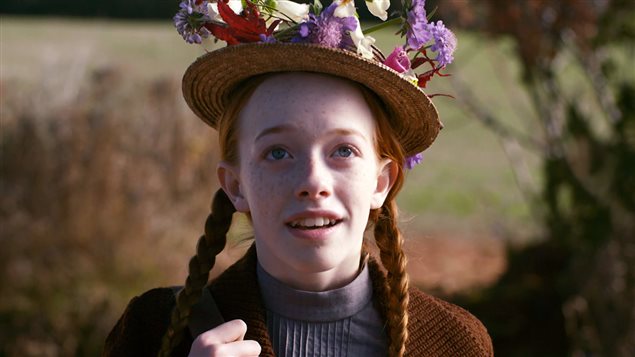
Book to TV: Anne with an E

Here I am, right on schedule to pronounce my judgement on the latest Anne of Green Gables adaptation, Netflix's Anne With An E. In the last two or three years I've been rather pleased by the abundance of different versions of Anne Shirley, what with last year's TV movie starring Ella Ballentine, and the two webseries, Green Gables Fables and Project Green Gables. But how does Anne With An E measure up to the rest?


The Ella Ballentine adaptation attempted to hint at a darker side to the familiar story, but it is a half-hearted effort, with little more than a few flashbacks to Anne's unhappy pre-Green-Gables life to add shadow. Ballentine is sweet and likeable, but her delivery of Anne's peculiar speeches feels calculated for effect; her "depths of despair" are melodramatic but quickly shrugged off. It sticks to the story, but on a surface level; it is the child's Anne. What makes Lucy Maud Montgomery's story stand out from her contemporaries like Pollyanna and Rebecca of Sunnybrook Farm is her deft weaving of light and shadow; the light touch of sorrow makes the joy all the more rewarding. And so, it is not necessarily a bad thing that Anne With An E does explore more darkness than we are used to, mostly in examining how a childhood of neglect, drudgery and loneliness would form a character like Anne, with a second level exploring the attitudes of cliquey, small-town people towards an unknown orphan. There is some room to readjust the balance between darkness and light in this story, but it is a delicate process, to be handled with care, if Anne is not to skew too far either way. 

Anne With An E starts off with a superb pilot episode, sticking faithfully to the first fourteen chapters of the book, at least up to the last few minutes. Amy Beth McNulty is a wonderfully lovable and believable Anne - and unlike every other version where her plainness is in name only, her Anne is "terrible skinny and homely," all eyes and teeth and elbows. Her non-stop chatter is humorous and heartfelt, with an underlying desperation to please and to be loved. She is a more traumatised Anne than we've seen before, which does not take away from her endearing Anne qualities, but rather gives them more depth. Her imagination has helped her to survive. 

There is a solid supporting cast, especially R.H. Thomson and Geraldine James as Matthew and
Marilla Cuthbert. Marilla in particular is a "Spock" sort of character: it requires great subtlety to correctly convey the amount of emotion that goes on behind the repressed, stern facade, and James plays the part admirably. However, as in several of the other adaptations, it really bothers me that Anne's initial stay at Green Gables is dependent on her good behaviour; it does not sit well with me that Marilla would hold the threat of banishment over Anne like a weapon. Diana is a sweet girl and a devoted friend, without being Anne's shadow, and the series gives a different perspective towards her and her family; there is a noticeable difference in class between the Barrys and the Cuthberts. We also get to see a bit more of Aunt Josephine, and I enjoyed seeing a new side to this cantankerous old lady with a heart of gold. Gilbert Blythe passed the test; the popular boy in class, who is used to getting the girls' attention, mischievous but with a goodness and maturity that hints at the man he will become. Not that there's any room for the lovey-dovey stuff so early in the story, although Anne already doth protest too much.

I am open to different interpretations of Anne; I welcome them. I return to the story again and again because I get something new out of it every time I read it or watch an adaptation; if it was the same experience every time, I don't think it would be alive the way that it is. So I am not going to declare the story "ruined forever!" because another person reads it differently. Some of the scenes shown in Anne With An E did not work for me, but they gave me something to think about. I did not like Anne's frank speculations with her classmates about her teacher's relationship with Prissy Andrews - it seemed more Mary Vance from Rainbow Valley, a character who I view as the antithesis of Anne. And yet there was an innocence even in her scandalous breaking of taboos that she's not even aware of, that makes the scene make sense from another angle. The same could not be said about her lying about skipping school, when the show earlier worked so hard to establish Anne's honesty.


The faithfulness towards book details and historical setting varied wildly. The team worked hard at ensuring the right sorts of potatoes were used, and that Anne's schoolbook was correct, for example, and then might utterly blow it with something utterly anachronistic; a line of dialogue, the use of pinky-fingers in Anne and Diana's oath of friendship, and a progressive mother's group being so progressive that they use the words "feminism" and "suffragette" about twenty years before their first recorded use (if Anne With An E is set in 1876 like the book; the last two adaptations were brought forward to the turn of the century.) And it felt all wrong to show characters such as Mrs Andrews and Mr and Mrs Barry - the Cuthberts' nearest neighbours! - introducing themselves for the first time, when the defining characteristic of the Avonlea setting is that it is a small rural community where everyone knows everything about everyone else's business!


The publicity for Anne With An E, back when it was just called Anne, made a big point about introducing new themes of feminism and being true to yourself - except they are themes that have been in the text all along. Lucy Maud Montgomery was a remarkable woman for her time, very unusual to have a university education and an independent career, and throughout the books Anne defies society expectations with a similar determination. The addition of the minister telling Anne that she needs to learn to be a good wife, or the boys shouting at the girls to get back in the kitchen, felt like a heavy-handed imposition on the storytelling.


After the first episode, the plot takes ever-increasing detours away from the source material. I'm the person who takes note of every digression of the 1985 Megan Follows miniseries/film from the book; it (the first story, anyway) is so faithful there is only minutiae to criticise. I'm less of a purist than I used to be; I went into Anne With An E allowing for a lot of wiggle-room in the treatment of the story. It is an episodic book, so new episodes can be slotted in alongside the familiar ones, giving Anne new adventures without derailing the entire story. I didn't sit there saying "NO, IT DIDN'T HAPPEN LIKE THAT!" but considered each alteration under the question "could it have happened like that?" Sometimes yes, the changes fitted, and other times they did not. Some plot elements, although they did vary from the book, could have been written in collaboration with L.M. Montgomery herself, albeit the older, sadder Maud who wrote Rilla of Ingleside and The Blythes Are Quotes, the Maud revealed in her diaries. Other aspects felt heavily influenced by the Brontes, Dickens and Hardy. The narrative wanders off the path, then comes back for such key moments as the cracked slate, the raspberry cordial and the puffed sleeve dress, usually framed in a new and more sombre context. 


But with every step off the path, the plot gets further away from what is recognisably Anne, and I'm sorry to have to report that by the last episode, the series is well and truly lost in the Haunted Woods. Although I had a high tolerance for the series taking liberties with the plotline and the tone, I nearly switched off halfway through the final episode, watching one particular scene with absolute horror and fury. Unforgiveable is a strong word, and at the end of the day, even Anne of Green Gables is only a story, but one character's decision, and one newly-introduced plotline for a cliffhanger, felt like a violation of something precious. By the end, the dynamic of the story has changed, and I'm not sure how Anne With An E can find its way back to the sanctuary of Green Gables. 

Sunday, 28 August 2016

Book to Film: L. M. Montgomery's Anne of Green Gables (2016)

As a general rule, I don't really approve of remaking classic films. But a second, or fourth, or nineteenth filmed adaptation of a book is not the same thing as a remake, and so when I heard that there was to be a new film of my book, Anne of Green Gables, I was not one of the Megan Follows devotees who bewailed that the 1985 series was untouchable. Because, excellent as that series is (at least, the first one) having multiple adaptations available sends you back to the source material. All on-screen Annes are imitations of the Platonic Ideal Anne found in the pages of L.M.Montgomery's novels. And as far as I'm concerned, the more Anne the better.


All the previous versions of Anne that I have seen have aged Anne up a bit, or a lot, from her original eleven years. Megan Follows' Anne (1985) started out as thirteen, Anne Shirley's Anne Shirley (1934) was fourteen, and although I've only seen the sequel to the BBC version from the '70s, it looks like Kim Braden would have been at least in her late teens. Both contemporary-set webseries Green Gables Fables and Project Green Gables started her story at the age of seventeen. But Ella Ballentine was closer to Anne's real age, and reminds us that she was in fact only a child, and yet she'd already been through so much. She is a resilient, loving little soul who has used her vivid imagination to survive a turbulent childhood and bring what comfort she can to others; we see her trying to cheer up other children in the orphanage and on the train to Prince Edward Island. When she speaks of her hardships, her matter-of-fact tone breaks the listeners' hearts, both in-universe and out, that nothing strikes her as unusual in living with guardians who she was sure meant to be good to her, or never having had a friend.  After such an existence, she revels in life in the countryside, and although Matthew and Marilla don't know what to make of her joy at such (to them) commonplace things as the scent of lilac, the flight of seagulls, they come to see their world as for the first time. This bright-eyed little girl with the fancy turn of phrase is both strange and endearing,


Of course, if Anne is the right age, so are Diana and her schoolmates, and so is Gilbert Blythe (13). He is very definitely a mischievous schoolboy and not a romantic hero. But this is Anne of Green Gables before it becomes a love story; its focus is on family and belonging, and a celebration of simple wonders. Diana is a true kindred spirit; the film shows us a little bit more of what draws her and Anne together, their love of fairy-tales and make-believe. Mrs Rachel Lynde provides a light comic touch. "Now, you know me, I'm not one to interfere..." Marilla Cuthbert is well-drawn, played by Sara Botsford, striking the right balance between severity and soft-heartedness. Martin Sheen's Matthew, was not quite Matthew Cuthbert as we know him. He's lovable, quiet and sweet, but not shy so much as introverted.


This film doesn't cover the whole book, but only Anne's first year at Green Gables. Still, it's better to take its time over the first half and do it well than to rush the entire book into a two-hour movie. It ends with a slight deviation from the original story, in order to have a satisfying conclusion part-way through, while still potentially leaving it open to a sequel.

And if this team does not make a sequel, there will be more of Miss Shirley to come next year on Netflix, with a new series simply entitled Anne. Watch this space.

Friday, 6 February 2015

Book to Film: The Hobbit: The Battle of Five Armies

I don't like that tagline. An Unexpected Journey was
the "defining chapter" of my Hobbit.

Heartbreaking though it was to admit, as December approached last year I found that I was really not looking forward to the release of the final part of The Hobbit movie adaptation. Far from the excitement of the Unexpected Journey release, when I went to a Tolkien-themed movie quiz dressed up, not as a beautiful elf-maiden or a cute hobbit-lass, but as a "beardy-axe-dwarf-girl." Because why does dress-up have to equal sexy rather than character? (Though, if I say so myself, I think I made a moderately pretty bearded dwarf woman!)


But The Desolation of Smaug, although I gave it a fair review on the blog, noting both the good and the bad decisions, it was the bad that stuck with me. Nothing that compared to Faramir, or Frodo sending Sam away in Lord of the Rings, which were just Wrong, out of character, and contradictory to the book. But the love triangle, the weird combination of padding and speeding over actual content from the book, and the decision to make the climactic scene of the film something ridiculous and not from the book at all lingered far more than the impressiveness of the dragon, and I felt as though I was going to see The Battle of Five Armies out of duty, to get it over with and to complete the series. (By contrast, Return of the King was the biggest film event perhaps of my life, and I must have seen it 7 times at the cinema.)

The Battle of Five Armies began weirdly. Not badly, but the pacing was strange. There were no flashbacks to set the scene, but the film launched straight into the action where Desolation of Smaug left off, with the dragon wreaking death and destruction on the Laketown. As before, the film gives a better impression of the size and deadliness of the dragon, and it is like a scene from the Blitz (or perhaps the end of Carrie), an entire wooden town ablaze. My imagination falls short of picturing just what it would be like to be in the midst of a dragon attack while reading the book, so the film helps to bring that to life. But it is over quickly: after all the build-up from the previous film and the advertising, the dragon is slain before the titles roll. This is true to the book - I'm always surprised when Smaug is killed off earlier than expected - but the book is not split into three parts. Wouldn't it have been better to use that part as the end of part two, rather than the nonsensical attempt to kill a dragon with molten gold? But then, maybe that wouldn't leave much left for the third film.

When Peter Jackson changed the title of the third Hobbit film from There And Back Again to The Battle of Five Armies, I feared that with the name change he had jettisoned the last remains of Tolkien's original, in favour of his speciality, the epic battle sequences which interest me far less than the plot. To be fair to Mr Jackson, that did not turn out to be the case. I was pleasantly surprised by how much character focus there was in this final part, and he did a good job of capturing Thorin's descent into evil and dragonish greed. Oh, I hated Thorin as he refused to help those who had helped him at great loss to themselves, holing himself up under the Lonely Mountain with more gold than he could ever find any use for, willing to condemn his entire company to death rather than spare some treasure he wouldn't even miss. But then, I hate him at that point in the book, too, and the film does a good job of humanising (so to speak) him as he comes to realise how far he has fallen.

And yes, as its subtitle suggests, the battle scenes are long and extended, but I never lost interest. The weakest element was probably the scene in which the White Council take on Sauron. I'm not sure how you could show a battle of magical power in a would that uses showy magic, well, just for show, well, and the scene had to somehow get from Sauron being a shadowy Necromancer figure in Dul Guldur to being a flaming giant eyeball in Moria. I guess it could have happened like that.

Martin Freeman's Bilbo, of course, is at the heart of this film, and it shines brightest when he is on screen, bringing pathos and courage and humour to the film that from time to time seems to forget who it is titled after. I'm sorry, that's not fair. There are a lot of aspects to be addressed in this story, especially when tying it in with its sequel. I'm afraid that I'm bringing a lot of my Hobbit cynicism into this review, despite enjoying The Battle of Five Armies a lot more than I had expected to.

By the time Bilbo arrives back at Bag End to find his neighbours auctioning off his property, I was firmly back in the optimistic, coming-home frame of mind that I started An Unexpected Journey with, and the ending, fading gently back into the Lord of the Rings opening was spot-on, bringing a happy tear to my eye. After all The Disappointment of Smaug, Peter Jackson and his team managed to regain my trust and love for their work bringing Tolkien's work to life. The end note is just as important for one's overall impressions of a saga as the first impression, and The Hobbit ended just right. As an added bonus, the song played over the closing credits was sung by Billy Boyd, Pippin in Lord of the Rings, a tribute to the entire film-making saga. No, The Hobbit is not as strong a film trilogy as Lord of the Rings - it was never going to be, as a trilogy. Two films would have made for tighter storytelling. But as far as I'm concerned, part three was back up to the standard of the first part, leaving the adaptation pretty satisfying over all.

Tuesday, 17 December 2013

Book to Film: The Hobbit: The Desolation of Smaug


Contains spoilers

This time last year, I was more excited about the first Hobbit film than I was about Christmas itself, and despite mixed reactions to the film, I was pretty satisfied. This satisfaction did not prevent me from being quite nervous about the second film of three based on a short book. Promotional material and internet rumours got me worried that Peter Jackson and his team might be getting carried away with their own storytelling, neglecting the book that they were adapting. Were my fears justified? Perhaps a little. The Desolation of Smaug is certainly the weakest installment of the series so far, and the bad bits were every bit as bad as I had feared. But these were fewer than they could have been, and did not affect my enjoyment of the film as a whole.

When you are adapting six chapters of a book into a film of nearly three hours, you'd expect each chapter to be fully fleshed out, but the scenes at Beorn's house are rushed through at top speed, which I found to be an incomprehensible decision. The most memorable part of this chapter was completely cut, which disappointed me, as was the fact that Beorn was not, nor did he resemble, BRIAN BLESSED.  I also thought, even taking into account that he is a huge man in the company of dwarves, the proportions were all wrong, and they looked strange and unreal on screen together. Still, the actor owned the part for the short time he was on the screen.

The story really got going in Mirkwood, the eerie forest that would gladly lead the company to their doom. This is where The Hobbit benefits from having been made after The Lord of the Rings: If one Shelob is horrid, then many are worse. I had wondered how the film would get around the problem of speaking animals, which we have not yet encountered on the screen. This was neatly shown by being a result of Bilbo's enhanced ring-senses. Martin Freeman is superb in this scene, and you really feel his horror when he realises what his desire for the ring can drive him to: a frenzy of spider-slaughter that may have saved their lives, but which was powered by the One Ring and not his own mind.

I missed the Elves' enchanted feast: in the film the enchantment of Mirkwood was stated to be because of the power of the "Necromancer." As predicted, the Elves' warrior aspect was played up, over their otherworldliness, though Elvenking Thranduil was deliciously, reassuringly creepy. I would have enjoyed seeing more of the Elvish feasting in the film. In a way, Noelle Stevenson's "Randy Thrandy: Racist Party Dad" is closer to how I picture the Elves of the book. The antagonistic Legolas was amusing to watch; a younger, hotter-headed Elf-prince than the one we've come to know.
Legolas: "What's this? Some goblin mutant?" Gloin: That's my son, Gimli.
Fans of Legolas' stunts from Lord of the Rings should be pleased with this film; they are as awe-inspiring and sometimes hilarious as ever.

And then there's Tauriel: a hot-headed young Elf-captain who kicks all kinds of buttock. If only that was all. My friends and readers probably know what I'm about to say, and I'd rather not even acknowledge this part of the film, but I feel I must.Frankly, I would prefer to have no female characters in the film at all than a two-dimensional one, and certainly I could do without one whose main role in the story is for the purposes of romance where no romance should be-o. I enjoyed the first scene between Tauriel and Kili, but it was better implied than overindulged, and it came across as overly sentimental, predictable and sloppily written. But my objection to the inter-species romance goes beyond "Ew, gross" or "It's not in the book and therefore did not happen." I felt that it made Arwen and Aragorn's romance in Lord of the Rings less remarkable and rare, as well as diminishing the power of Legolas and Gimli's friendship sixty years later. And that's all I shall say on the matter. Just no.


The scenes at Laketown were rounded out; I feel in the book of The Hobbit you don't get a lot of time to look around the settings or meet the characters. We get to know a bit more about the character of Bard who will prove important in the future, and also to see the poverty of the town in comparison to the master's lavish living. Stephen Fry as the Master of Laketown was wonderfully disgusting, with a greasy ginger wig and moustache, and his servant/spy could probably have been related to Grima Wormtongue: slimy, sneaky, despicable. Yes, there was an additional subplot added in here, but it was along the lines of the Elves at Helm's Deep or Aragorn floating down the river and being kissed back to life by his horse, unnecessary but inoffensive. Although, come to think of it, that entire subplot was there only to advance the aforementioned dreadful romance. Hmph.

As before, the best parts of this film are those that come straight out of the book, and after the Elvish and Laketown diversions, the film got back on track when Bilbo went inside the mountain and came face to face with the dragon Smaug. The slow reveal of the dragon was magnificent. The gold moves over here to reveal a dragon's eye and head... then, as Bilbo tries to hide from Smaug, the gold moves over there and you, with Bilbo, come to realise just how huge this beast is. Voiced by Benedict Cumberbatch, Smaug is gloriously hammy, but terrifying as well. You know that he could swallow any of the heroes with a single gulp, and his snout comes way, way too close for comfort.The telltale orange glow through his belly before each exhaled inferno gives his victim a few seconds to feel terror with the knowledge of inescapable death. I was very impressed by this addition to the dragon mythology. As with the last film, the most powerful and impressive scenes were those acted by Martin Freeman and an actor in a motion-capture suit.

I am still unconvinced that The Hobbit really needed to be made into three extra-long films. Though I didn't really lose concentration, a larger proportion of this film than others were, well, padding. Last time I called it character development, extrapolation, filling in the details, but this time I don't think any of those words are as accurate as padding. The film is not two and a half hours of story, but is filled out to match the others in length by extended battle scenes, stunt sequences and unnecessary subplots. There was one long sequence towards the end when I though to myself, "I have absolutely no idea what they are doing, but let's just go with it." Turns out they were trying to give Smaug a golden crown a la Viserys Targaryen; a very very stupid decision of the Dwarves. If they'd read A Game of Thrones properly, they'd know that "fire cannot kill a dragon." But it can make him very, very angry. And an angry dragon is not a good thing to have around.


Sunday, 28 April 2013

Film: Prince Caspian (2008)

Prince Caspian remembered

I realise that although over the years I've written several posts about the Chronicles of Narnia, in book, film and TV format, I have only covered some of the stories. Prince Caspian was the second book to be published and the second film adaptation. While I was absolutely blown away by the first Narnia film, The Lion, the Witch and the Wardrobe, which to my mind was a near-perfect translation from book to film, I remember being disappointed with Prince Caspian. This is perhaps not entirely the fault of the film - though not my least favourite book in the series, I think it is the weakest, with a comparatively slender plot. When the BBC adapted the book for TV in the precious Sunday Night Family Drama slot in the late '80s or early '90s, they ran it together with The Voyage of the Dawn Treader, and two half-hour episodes were sufficient to tell the Prince Caspian story. The film-makers, by comparison, had to pad out the book's story by inserting additional scenes and conflict which meant that it was not the film of the book that The Lion, The Witch and the Wardrobe was. With beloved classics such as Narnia or the stories of J R R Tolkien, I think you can tell where filmmakers have digressed from the original text, and their digressions, though often good, lack the sparkle that comes from seeing the book come to life before your eyes. It is still a pretty decent film, but Disney's Prince Caspian is not C S Lewis's Prince Caspian.

I worked out that it has been four years since I saw the movie. I saw it at the cinema on a date with my then-boyfriend, who later bought the DVD as his last Christmas present to me. We broke up shortly afterwards, and I haven't seen the film since. Perhaps my memory has been unfair to it. I remember that I enjoyed it pretty well at the time, though with a critical eye and a constant comparison to the book. But when I think of the film now, it is the memory of the disappointment that lingers. It is time to revisit the DVD in order to see if it is better than I think it is...

Prince Caspian Revisited

I guess a large part of the problem was the casting of Caspian himself. In the book, Caspian is a child, maybe thirteen years old, whereas actor Ben Barnes was in his mid-twenties. Though it is acceptable to age characters up a couple of years, and maybe cast actors up to five years older, if they don't look their age, making Caspian an adult changes the whole dynamic. Peter, too, is a few years older than his book counterpart seems to be - probably because who would believe in a thirteen-year-old high king and warrior? But the two kings (because Caspian is the rightful king) spend much of their screen time bickering and being obnoxious to one another, and generally behaving in a way that is almost, but not quite, entirely unlike Narnian Kings. It makes for a darker and less magical Narnia than the one I tried to find in my wardrobe as a little girl. Maybe the filmmakers felt that the original story lacked internal conflict or character growth, maybe they thought the boys were a little too noble and goody-good.

The movie starts differently to the book, firstly showing Caspian's aunt giving birth (I know that ladies DID give birth, and that it is a significant plot point, but it seems somewhat out of character for a children's story
of that era to actually show it.) The first we see of Caspian is of his escape in the night - I was surprised that in such a slender story that required so much padding and dull, dull battle scenes, they missed the establishing scenes with Dr Cornelius and the astronomy lessons. Those are among the scenes I am fondest of in the book, the most Narnian, so I was sorry they were gone (though the "dance of Tarva and Alambil" is mentioned later on by a centaur.)

Back in England, with the Pevensies, I appreciated the details that remind us that their London is still at war - in the books, this is only shown as the set-up for The Lion, the Witch and the Wardrobe and never mentioned again. The script gives no reason for the children to have left Professor Kirk's house in the country, but I know many children were brought home by their parents after the Blitz, so this is not a continuity error so much as a "time has passed." Although Peter's scuffle on the station with the other schoolboys is out of character for the sensible Peter of the books, it shows the toll that everyday life takes on children who have grown up once, been kings and queens of Narnia, and then have to go through adolescence all over again. I always felt that was a cruel fate. Georgie Henley's Lucy really makes us feel the tragedy of centuries passing in Narnia, while the children have been away for just a year in their time. I always felt a certain amount of sorrow that we only get to spend a brief time with Tumnus, the Beavers and the others, and then the next time they are long dead, but all I need is to reread The Lion, The Witch and the Wardrobe again. For the Pevensies, there is no time machine. Once those thousands of years have passed, there is no taking them back.

I love the banter between the children, but Skandar Keynes stands apart from the rest as Edmund, with his cheeky grin and smart comments. The dialogue can be a little clunky at times, but not half as bad as the BBC version, which has the word "magic" used about three times in two sentences. Add cynical dwarf Trumpkin into the mix, and I had a grin all over my face - and is that Game of Thrones' Tyrion (Peter Dinklage) under the beard? (Answer - yes. Yes it is.)

Warwick Davis, who is no stranger to Narnia, having acted in the BBC version in the roles of both Glimfeather and Reepicheep, this time gets to play a bad guy, Nikabrik, but plays him as a more rounded person than I've previously thought of the character. Like Trumpkin, he is angry and suspicious, but more hostile to our heroes, and ultimately proven an enemy, yet his reasons are understandable. He is portrayed as someone whose downfall was brought about by desperation, rather than an intrinsically evil character.

A short conversation between Lucy and Susan is heartbreaking when you know the books.
"Why do you think I didn't see Aslan?"
"I don't know. Maybe you didn't really... want to? [...] You're happy to be here, aren't you?"
"...While it lasts."
Welcome Reepicheep! I'd forgotten he was in this story, though the lion-hearted mouse has always been my favourite character in the series. He certainly does not disappoint here. He gets a few new wonderful moments, as well.
"You're a- a mouse!""I was hoping for something more original."
I really don't like the plot and character derailment of Peter and the Narnians attempting to attack King Miraz's castle, and I won't deny it, it's purely and simply because that didn't happen in the book. More to the point, it shows a stubborn pig-headedness on Peter's part which, to be fair to the filmmakers, gives him more development when he does start trusting Aslan and accepting Caspian as the King of Narnia, but it's out of character. I accept that they needed to fill out the plot, but I'm not happy with how they did it. This is Osgiliath all over again. It's just not Prince Caspian, and that's all I have to say on the matter! Hmmph!

And likewise, I'm not happy with the flirtation between Caspian and Susan.


As Susan never returns to Narnia, and Caspian later marries another, it is a story that is left dangling and untidy, put in for the sake of it, and I'm not a fan of putting the mushy stuff where no mushy stuff should be-O! The Chronicles of Narnia are children's stories, and when I was a child, I liked my stories to be about children. Romance belonged in the adult world, which was boring, (or at least the teens, which were just as foreign to me.) Lucy and Edmund sum it up perfectly, in the lines that were the only good thing to come out of that subplot:
"Maybe when I'm older I'll understand."
"I'm older, and I don't want to understand."
Is adding romance to a children's story alienating to its audience, are kids growing up faster than they used to, or was I the anomaly in my apathy towards the pink and fluffy? Answers on a postcard please.

In short, Prince Caspian works best when the filmmakers stick to the original material. I can understand their reasons for the added fight scenes and (ick) romance, and they do add more character development than the book, whose Peter, in particular, is pretty static after The Lion, the Witch and the Wardrobe. But this added conflict and character development means that I am spending time in the company of people who I don't know any more. These are not Caspian and Peter, though Susan stays Susanish throughout. Her added depth is consistent with what is shown in the later books, an interesting but unsettling issue; a character treatment that has left readers and writers unsatisfied for the past decades. The film's additions, though they do not resolve all the unanswered questions, fleshes out this enigmatic Pevensie girl in such a way that it fails with the two kings. Ultimately, I'm not sure whether Prince Caspian could ever work as well as The Lion, the Witch and the Wardrobe: the plot is just too thin for two and a quarter hours, and the extended battle scenes and plot digressions leave me cold. When it works, it works well, but it lacks the consistant brilliance of the original Chronicle of Narnia.


Sunday, 21 April 2013

Book and Film: V for Vendetta

Remember, Remember, the fifth of November
Gunpowder, treason and plot.
I see no reason why gunpowder treason
Should ever be forgot.

V for Vendetta is a rare example of a story that I encountered the film adaptation before the original book. I watched the movie last November 5th, texting my sister in London who was watching it at the same time. It is a tale of oppression and anarchy, set in a dystopian England comparable with that of Nineteen Eighty Four. (I wish I'd read V for Vendetta in sixth form, to compare with the Orwell, though I have my doubts about whether a graphic novel would have been considered an acceptable literary work.) Both film and book focus on a young girl called Evey, whose life is saved one night by a masked figure called V, revealed to be a terrorist intent upon bringing down the fascist government and establishing a state of anarchy.

Though I greatly enjoyed the film, it did not escape my criticism. The setting was shown to be a twisted, nightmare version of England, both familiar and unfamiliar, but though the film shows hints, I felt that it was not made clear how the world came to this, or even quite what "this" was. The book clarifies this, showing how the England of V for Vendetta is built up from the ashes of a nuclear war that has wiped out most of the world, and while the population was still struggling to its feet amid the chaos, the Fascist group Norsefire marched in and took control. This England is a cheerless place, devoid of art, music, culture, or anything that does not further the government's totalitarian regime. The government is depicted as an all-powerful being, its departments named after different body parts: the Nose (police force), the Eye and the Ear (surveillance), the Mouth (propaganda broadcasts) and so forth.

The key to understanding the world of V for Vendetta lies in context. When I watched the film, viewing it as a work of the mid-2000s, I found it fascinating but could not identify this nation with my Britain. I hope my American readers won't take this the wrong way, but the movie felt like an American dystopia with an English setting, rather than a home-grown English story (though Alan Moore is in fact English.) Some elements of Norsefire's England struck a chord, while others felt alien. I couldn't see the progression of my country from a relatively liberal, increasingly secular, live-and-let-live nation, to a Fascist state, a place of persecution where it is dangerous enough to be white, heterosexual, meek and law-abiding - and a death sentence to be anything else. (But then, who could have seen in the 1920s and early '30s what would happen in Europe a few years later?)

Reading the novel in the wake of Margaret Thatcher's death, it all clicked into place. Suddenly the media was full of memories of Thatcher's policies and Britain's political situation in the 1980s, and I understood how Moore saw his present and projected a possible future. It's strange how much my country has changed during my lifetime, even looking back to my teenage years. Is it a better place now, or worse? Certainly I'd rather live here in this reality, even with its innumerable problems, than in the V for Vendetta version.

Against the oppressive gloom of this England, V's personal universe is refreshing, rich in the collected culture that has vanished from the world above. His "Shadow Gallery" is packed with books, paintings, records - treasures that have no place in the utilitarian world after the nuclear apocalypse. V is well-spoken, well-read, musically gifted as well as a criminal genius and deadly fighter. His cultural references range from Shakespeare to the Rolling Stones to Enid Blyton. One can't help rooting for him, if somewhat uncomfortably, considering that he is indisputably a terrorist. But if he's the bad guy, his enemies are no better, and they lack V's charm and appeal. Hugo Weaving, in the film, plays the part to perfection, capturing the character's charisma and intelligence, his almost superhuman strength, but also giving V a touch more humanity and pathos than in the comic - quite an achievement when the actor's face is hidden beneath a smirking Guy Fawkes mask the entire time.

Evey's character, however, didn't make sense to me until I read the book. Natalie Portman's Evey is a different person: older, smarter, stronger-minded; but sometimes she has to behave like the naive teenager of the book in order to keep the plot on track. As such, the character doesn't always quite ring true, and I found myself rather confused. I didn't believe in her first scenes as a desperate first-time prostitute trying to scrape enough money to survive - instead, I felt that she had an ulterior motive for being out on the streets after curfew, but this was never satisfactorily resolved. And even if V did save her life, I felt that her gratitude would not be enough for her to throw in her lot with him, help him escape arrest after committing acts of terrorism, live in his "shadow gallery" as a barely protesting prisoner, and then fall in love with him. These decisions fitted the younger, more innocent character of the novel, but not the strong-minded young woman of the film. (And I'm still not sure where her loyalties lie in the scene with the priest - who is she double-crossing there?)

But quibbles aside, the film complements the graphic novel, taking different detours from the main story of Evey and V, and focusing on different supporting characters. As is often the case, there is a lot more room for details, subplots and minor characters in the book than in the film, but in its turn, I missed some scenes and characters that were unique to the film. Stephen Fry's Gordon, for example, is a completely different (very Stephen Fryish) character than the Gordon of the book.

The graphic novel's artwork is incredible, in some places more cinematic than the film itself. I would be interested to see a closer film adaptation of the book - but even that would never live up to the movie in my mind. But film as a medium can do things that even the best of books can't - such as the exhilarating musical accompaniment to the destruction of the Old Bailey at the beginning of the film. The movie ends with an emotional (as well as literal) explosion, heartbreaking and uplifting and strangely cathartic.


Sunday, 23 December 2012

Book to Film: The Hobbit: An Unexpected Journey

This is going to be a looooong one. Spoilers for the film, but not later on in the book.

It's always risky adapting a beloved film for the big screen. They say that no two people read the same book; everybody has their own ideas about how it should look, sound and feel. Even Peter Jackson, whose adaptation of J.R.R. Tolkien's Lord of the Rings was widely acclaimed, was not guaranteed to repeat his success upon his return to Middle-Earth. One could be forgiven for thinking that after the sprawling three-volume epic, The Hobbit should be a piece of cake, but the smaller novel provides its own challenges. In effect, it has to be two different stories simultaneously: the simple fairy-tale that Tolkien started writing while marking exam papers, and a part of an entire world of mythology that culminated in the Lord of the Rings. The Hobbit's reviews have been very mixed, and those negative reviews that are not primarily concerned with Jackson's experiments with frame-rates, seem to fall in one of two camps. Some complain that The Hobbit is too much like Lord of the Rings, too epic and complex, when it ought to be a Narnia-esque kids' adventure. Others think that it is too simple and childish - not enough like LotR. 

Me? I couldn't be happier. As far as I'm concerned, Jackson got the balance just right, keeping the world of The Hobbit consistent with the existing cinematic Middle-Earth, but retaining the story's unique flavour. At first I had my doubts about the wisdom and necessity of turning The Hobbit into two films, let alone three, but after reading the book I realised just how much happens, how many people Bilbo, Thorin and co meet, and how many places they visit, rushed through at a chapter per location, character or incident. It would be a very long film to do each one justice. Jackson and co have also turned to the back end of LotR's appendices and other writings to give an added depth to The Hobbit.


The film opens with a prologue, slotting it nicely into the beginning of Fellowship of the Ring, by showing Bilbo Baggins as an old Hobbit, and a cameo from Frodo. Perhaps this is a little forced, but it rekindles that homey feeling of Bag End, and was probably put in as an excuse to show Bilbo writing and narrating those immortal words:
In a hole in the ground there lived a hobbit.
Corny set-up or not, those words would have been missed if they had not been there. The entire Bag End scenes which follow are practically flawless. Martin Freeman truly is the young Bilbo Baggins. I fear Mr Freeman may be in danger of being typecast as an ordinary Englishman (or hobbit of the Shire) who finds himself caught up in extraordinary adventures against his will - see Sherlock's Dr Watson, or Hitchhiker's Guide to the Galaxy's Arthur Dent. But he plays these roles so beautifully! Bilbo and Gandalf's first interaction walked straight off the page and onto the screen, a lighter comedy than in even the beginning of Fellowship of the Ring, and laying to rest my anxieties that this would be more Lord of the Rings: The Prequel than The Hobbit. After this very strange encounter with a wizard who seem to know more about Mr Baggins than he ought, poor Bilbo finds his house swarming with Dwarves, with muddy boots, sharp swords and huge appetites, completely clearing out his pantry and threatening to trash his kitchen. (Spoiler alert: Yes, the washing-up song is in there - one of my favourite moments in the entire film.)

J.R.R. Tolkien didn't give the Dwarves a lot of personality, with the exception of the king, Thorin Oakenshield. Balin is kind, Dori is "a decent fellow," Fili and Kili are young, cheerful and a bit reckless, and Bombur is overweight - that's about all we know. For the film, each of the thirteen has his own look and personality trait. Fili and Kili are shaping up to be fan favourites - especially among the female fans, perhaps for obvious reasons.


May I here point out that they were always my favourites, years before they were cast? Fili, Kili and Balin, who is depicted in the film as a gentle soul but a seasoned warrior, a loyal follower of Thorin, but one filled with doubts about the wisdom of their quest to reclaim the Lonely Mountain of Erebor.

An unexpected favourite from the movie adaptation turned out to be Bofur (played by James Nesbitt) who has been expanded from one of the Interchangeable Backup Dwarves to quite a character. He starts off as quite a lovable rascal with a Northern Irish accent and a twinkle in his eye, tormenting Bilbo in his home and sparing no details about exactly how it would feel to run into the business end of Smaug* the dragon. Yet, a moving scene later on in the film proves that he is made up entirely of charm and loveliness.


Reading the book, I never found Dwarven king Thorin Oakenshield to be a very likeable character, surly at best and a complete jerk at worst, but, again, the movie rounds him out a little by showing flashbacks to his past. After showing the devastation of Erebor and the awful aftermath of battles, his quest comes across as more than filling his pockets with gold. I still wanted to shout "Oh, shut up Thorin!" a couple of times, but not as often as when reading the book.

Like Lord of the Rings, The Hobbit uses long, panning shots of breathtaking New Zealand countryside that made me want to pack up my bags and hop on a plane to go on long treks across the mountains. Howard Shore returned to compose the score, keeping in the heartachingly familiar Concerning Hobbits theme, and giving it a jaunty and adventurous twist in keeping with Bilbo's character. As well as other familiar leitmotifs, Shore has introduced some new tunes, most notably the solemn, proud, Dwarf theme (the same tune used in the "Misty Mountains" song which reduced many a Tolkien fan to tears in the first Hobbit trailer last year.) The soundtrack and scenery help to ground this story in the same Middle-Earth as Rings, leaving me feeling as though I'd never left.

It is interesting to compare the perspectives of the Hobbit and the Lord of the Rings quests. LotR focused upon the human civilisations and the Elves, whose glory days were coming to an end, and the beauty of their kingdoms in Rivendell and Lothlorien, but the only Dwarf, Gimli, was mainly used for comic relief. We return once more to Rivendell, but somehow it doesn't feel like the same idyllic haven that it was before. In the company of Dwarves, we see through their eyes, and I felt that Jackson excelled in subtly giving the same place a sense that something was slightly off-kilter in this golden leafy paradise. The Elves do not sing "tra-la-la-lally," (thank goodness!) but there is a tra-la-la-lally feel to their music, that is at odds with the solid, earthy Dwarves. That being said, I enjoyed seeing another side to Elrond: riding home exhilarated from battling goblins, not the care-worn, frowning leader bearing responsibility for the whole world as well as his wayward daughter.

But it was in Rivendell that I had the closest thing to a criticism of the film: the role of Galadriel. My quibble was not with anything explicitly said or done, so much as the veneration with which Galadriel was treated. Yes, she is one of the wisest beings on Middle-Earth, and, though she is not mentioned in the book of The Hobbit, the Lord of the Rings and Unfinished Tales establish her as being a key member of the White Council. But she is still an Elf. The film adaptation implied in its treatment that she ranked higher even than Gandalf, but the wizards of Middle-Earth are in fact closer to angels than humans or Elves. Still, if these suggestions and insinuations are my only cause for complaint - and "complaint" is far too strong a word, really - then The Hobbit fares better than both The Two Towers and Return of the King, which in turn are nearly flawless despite each containing a moment that makes me shout at the TV every time. + 


Galadriel is not the only character to be moved to The Hobbit from Tolkien's works. For the first time, we are introduced to Radagast the Brown, a third member of the order of Istari (commonly known as wizards.) Sylvester McCoy (familiar to many as the Seventh Doctor) portrays Radagast as a rather dotty character, with a darling little pet hedgehog named Sebastian - not a name that you could derive from any of Tolkien's languages, but one which suits the hedgehog perfectly. But I digress. Hidden beneath Radagast's silly exterior which earns ridicule from the haughty Saruman and certain critics, are strength, wisdom and courage equal to that of his peers. "Is he a great wizard?" Bilbo asks Gandalf, "Or is he more like you?" "I think he is a very great wizard," is Gandalf's answer, and I think I would prefer to take Gandalf's side on this matter than Saruman's. Power corrupts absolutely, as is proven by Saruman later on in Lord of the Rings, but there is an innate innocence to Radagast that prevents this in his case.


The great enemy of The Hobbit is, of course, Smaug the dragon, but he barely makes an appearance in the first part of the film - just flashes of stamping feet, swooshing tail and a single golden eye. But there are other foes that Bilbo and the Dwarves must face in the form of the trolls and goblins. These seem to jar a little in comparison to the evil creatures we have previously encountered in Middle-Earth, and it was very strange to watch the trolls sitting around the campfire grumbling and talking. The Great Goblin is quite jolly in a nasty sort of way, even singing a happy little song about how he intends to send the Dwarves to a gruesome fate. Such moments remind us that The Hobbit is a children's story, and yet at the same time, the villains are more complex than the Lord of the Rings orcs, with distinct personalities (albeit not particularly pleasant ones) which may cause a bit of a twinge of disconcerting pity when they get killed. There is a poignant moment when the blue glow of Bilbo's sword, an alert to the presence of goblins, fades away, the goblin having been killed by Gollum. It is strange and unsettling to feel pity for the orcs - battles against them were simple and straightforwardly good-versus-evil in the more "grown-up" Lord of the Rings. Yet that moment of pity foreshadows the critical turning-point in the entire Ring saga: when Bilbo Baggins did not kill Gollum.

It is not only the Hobbit's monsters' characters that seem a little out of place with how we've seen them so far in the cinematic Middle-Earth, but also their appearance. It is apparent that a lot more CGI has been used in the creation of the goblins, and perhaps also the trolls, than in Lord of the Rings. LotR was, of course, a big turning point in computer graphics in the movies, with Gollum a pioneer in motion capture technology. But whereas Gollum fits right at home among the other cast, thanks to the character's design and Andy Serkis' extraordinary acting skills, some of the Hobbit's CGI antagonists don't look as real as the old-style orcs which were actors in prosthetics. I thought that there was something slightly off about the Pale Orc, Azog, but it wasn't until my second viewing that I realised why. It was not merely that computer graphics look less solid than the real thing, but Azog, as well as one or two of the other creatures, looked like they had wandered off the set of Guillermo Del Toro's Pan's Labyrinth - probably no coincidence, as Del Toro also worked on The Hobbit.

Gollum, of course, stole the show, and I was saddened at the end of the film to remember that he only featured in the single chapter of the book and would not be seen again until Lord of the Rings. He is, as ever, alternately hilarious, cute and pathetic, but my friend and I agreed that we also got more of a sense of menace from him than in his previous appearances. Frodo, of course, knew of Gollum before their first meeting, but Bilbo was unprepared, alone and terrified, and he first sees Gollum violently killing a goblin twice his size. Freeman's and Serkis' acting in their game of riddles is marvellous, bringing the book to life in a bit of light relief but with an undercurrent of tension beneath.
"If Baggins loses, then we eat it whole?" 
"...Fair enough."


When Gollum discovers the loss of his "precious," the light relief is gone. The Ring is Gollum's sole reason for being, and its loss seems unendurable. But Gollum will go on hunting it for the next sixty years - or seventy-seven if you go by the book's chronology. Gollum's agony is heartbreaking, and the expressions changing from terror to compassion on Bilbo's face will stay with me for a long, long time. The entire saga depends on that single moment, and it could not have been done better. It was perfection itself.

I still don't care for 3D, though. I'm unsure whether the edition I watched on Friday 14th was the infamous double-frame-rate version of the film or not (I'm no expert in that sort of thing, being more concerned about the story, scripting and acting) but I did find it difficult to focus during the busy action scenes. The 3D is certainly well done, but I found it to be more of a distraction than an enhancement. There was one notable moment when I thought that a member of the audience had stood up in the aisle and blocked the screen, until I realised that it was a 3D character on the edge of the shot.

After Lord of the Rings, I hadn't been too excited about the possibility of a Hobbit film, and doubted the necessity of making more than one - after all, it is shorter than any one LotR volume. Yet despite its simplicity, it is a very full book, as I realised on my recent reread. Are three films really necessary? Well, I've no doubt that there are parts of An Unexpected Journey that could be trimmed with little detriment to the finished result, and I would have estimated that Jackson could probably have made two decent movies without sacrificing any plot. Yet if parts two and three are up to this standard, then as far as I'm concerned, the more Hobbit film there is, the better. (Bring on the Extended DVD!) An Unexpected Journey was an absolute joy to watch - though I strongly advise you to avoid drinking anything before or while watching it. I have already seen the movie twice, and expect to see it at least one more time. Probably more.


*I've been pronouncing it "Smorg" all these years, but apparently the "au" makes an "ow" sound. Similarly, the film rhymes "Thorin" with "Florin" but I've always called him "Thor-in."


+the Faramir-fail and the Sam-go-home-fail, if you're interested.
Related Posts Plugin for WordPress, Blogger...