I first attempted to read Jane Eyre when I was about twelve or thirteen, having seen a friend rehearsing a scene from a play of it, the part set at Lowood School. Being very much into school stories at the time, I revised my opinion of "Classics" which I had hitherto dismissed as dull and not for the likes of me. "Grown-up books." I started Jane Eyre three times during my teens, each time not getting much further than Jane leaving school and starting her life as a governess. (This is relevant, honest.) The fourth time, I determined to read to the end, and succeeded, but was unimpressed by the romance part, and the gothic atmosphere and the weirdness passed me by completely. I was glad to have got to the end, and decided that I wouldn't bother with this classic stuff.
That didn't last, of course. Perhaps it was seeing part of Pride and Prejudice or Sense and Sensibility with my Mum on TV, and actually quite enjoying it. I still wasn't sure I wanted to read all the slushy stuff, however. I asked Mum for her recommendation of which Jane Austen I should start with, and she quite determinedly said that Northanger Abbey was the one for me. Not only do I share a first name with the heroine (though Miss Morland misspells hers) but Catherine seemed the most like me, as far as Mum was concerned. As she put it, "Catherine is always reading gothic novels and lets her imagination run away with her, thinking they're real." Why should that make her think of me, I don't know!
But anyway, I eventually gave Northanger a try, and enjoyed it a lot, though there was the slushy stuff. Being my introduction to Austen, I was pleased to discover that not only was it funny in places, but that I got the humour. And it was good to have a likeable, three-dimensional romantic hero, who, yes, can be a bit pompous but mainly light-hearted and teasing.
Northanger Abbey famously parodies the Gothic fiction genre, and in particular a novel called The Mysteries of Udolpho by Ann Radcliffe. I read that last year, and not only did it help me to appreciate Northanger all the more. And, having read Northanger Abbey, I could read the somewhat melodramatic and waffly Udolpho with a smirk on my face, to see the original old, creaking buildings with their long passages, mysterious servants and secret papers hidden in secret nooks and crannies. Udolpho's heroine is a virtuous, constantly-swooning orphan, its villain a tyrannical, money-grabbing uncle who does indeed torment and lock up his wife.
Austen opens the novel with a description of the many ways in which Catherine would not be classed as a conventional heroine: she comes from a normal, happy family without any tyrants in it, as a child she is a plain, scrawny tomboy, and she has more interest in playing ball games and climbing than engaging in embroidery and other sedate, feminine pursuits - even nursing sick birdies back to health! Austen's narrator comes in every so often to comment on the way the story is progressing, and how Catherine or events defy the expectations of the gothic genre. Catherine is exposed as having let her imagination run away with her when it comes to thinking that General Tilney is capable of horrors.
Henry Tilney acts as Austen's mouthpiece when it comes to the other extreme of Catherine's naivity - that (apart from her imaginings about General Tilney) she will believe only the best of people. Her ignorance when watching the flirtation between her friend Isabella and Tilney's brother is frustrating but heartwarming. Catherine is so honest and open herself that she simply can't see how anyone can be anything else. This incident is described as through Catherine's eyes, without any interjections from Austen's narrator. The reader witnesses the same scene as Catherine, yet how glaringly obvious the affair is, without any comment from the omnipotent outsider!
Though Austen satirises the gothic novel, it seems to be an affectionate attack. It is evident that she is very familiar with the books she pokes fun at, referring to specific scenes from Udolpho and other novels in the genre. Her more scathing criticism through the book is for hypocrisy - the hypocrisy of certain people found in town, who don't care a button about marrying for money, just so long as the person they intend to marry for love happen to have lots of it. It also attacks hypocrisy in literature: those heroines of novels who wouldn't dream of reading the type of literature that they star in.
And in the end, Catherine is let off the hook to a certain extent. True, General Tilney is not a murderer, but there is enough in him that recalls to mind the evil Montoni of Udolpho. Austen allows Catherine to conclude in her own melodramatic way that "in suspecting General Tilney of either murdering or shutting up his wife, she had scarcely sinned against his character or magnified his cruelty." After all, Catherine's instincts were, if wrong in the details, correct in identifying somebody who was not what he seemed.
Sunday, 10 January 2010
Friday, 1 January 2010
2010: new reading challenges.
Last year I failed miserably in my target of reading 100 new books, managing only 82. This year, I am setting myself another challenge. All those books I intend to reread and never seem to manage more than one or two, I'm going to try to read this year. 2010 will be the Year of the Reread. Not that I am limiting myself only to this task. I want to read widely and around my chosen books, so, for example, as well as rereading Jane Eyre and Wuthering Heights, I intend to read, at the minimum, The Tenant of Wildfell Hall and a biography of the Bronte family. My reading will come into several categories:
Category A. Classics:
I plan to reread all of Jane Austen's novels. Also, something by Georgette Heyer. That one shouldn't be a problem as I've got one on loan from a friend. Regency Mills and Boon novels are not included on the reading list.
As I mentioned, something by each of the Brontes.
A Tale of Two Cities, as one of my favourite novels of all time, plus a new Dickens that I've not yet read. I have the complete set, second hand from my Grandma, who was given them as a present from her first boyfriend's mother during World War 2. So should see that they get some love.
Category B. Children's:
The Chronicles of Narnia. These I've already made a start on, and I've got as far as The Voyage of the Dawn Treader.
School stories: all of the Chalet School that I've got, plus Malory Towers and St Clares.
Selected Famous Five and other adventure stories by Enid Blyton.
And of course, Harry Potter.
Category C. Gothic Fiction
Most of the reading list of the course from university, though I won't bother with the "male and female" gothic of the last couple of weeks, as they weren't quite the same. I will, however, include The Historian and Interview with the Vampire in relation to Dracula, as well as John Polidori's The Vampyre that was missed off the reading list. Also I will add Ivanhoe, or possibly start of with that, which was pre-gothic, but links in quite nicely. Will read a couple more Poe stories, and reread The Little Stranger, which already makes itself quite at home in the Gothic canon.
Twilight is not compulsory reading for this module.
Category D. Fantasy
A few years ago, rereading Lord of the Rings was required reading every winter, first in preparation for the films, in 2002 and 2003, then for a couple of years just out of cosy habit. But as it came to the truth of So Many Books, So Little Time, it lay neglected for a few years. I picked it up again in December, and am currently mourning Gandalf outside Moria. I don't read much within the fantasy genre nowadays, but have a few series which I was fond of back when I was in the sixth form.
David Eddings' Elenium trilogy. If you've read one Eddings story, you've read them all, but this was my first .
Julia Gray's Guardian Cycle. Prophecies, madness (of a generally benign kind,) long-lost twins, floating islands, valleys buried beneath cloud... this was a wonderful world, and I lost two days of study leave for my A-Levels reading the last two books in the series.
Robin Hobb's Farseer, Liveship and Tawny Man trilogies. Also to read her Soldier Son trilogy, which I have not yet read, preferring to wait for the entire series to be published and in paperback.
At least two Pratchett rereads, plus one I've not yet read.
Also, I intend to finish Cecelia Dart-Thornton's Crowthistle Chronicles. I loved her first series, long-winded and verbose as it was, but when I came to read her second series, I had to take it one book at a time, as she was still writing them. When the third book came out in paperback, it had been so long since I had read the predecessor that I couldn't even finish the first chapter. The series is finished now, and I really ought to see how it ends!
Robert Jordan's twelve-volume Wheel of Time is not required reading.
Category Ei: Books I've been meaning to read for ages:
The Gormanghast trilogy
Middlemarch
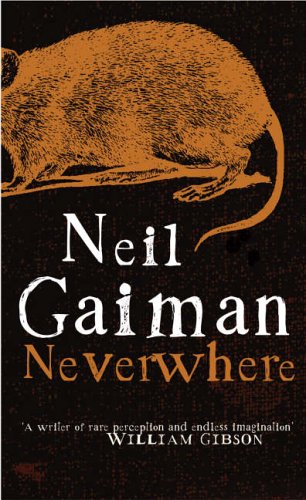
Neverwhere
Category Eii: Wide reading
More generally, I aim to read books in various genres, including non-fiction (aiming for one travel, one biography, one history book and one literary criticism.) Also, books from all over the world, as most that I read seem to be written by authors from and set in the USA or England. This year I'm after books from or about Australia, Canada, Ireland, Africa, Asia and historical USA.
Finally, I intend to have less unread books on my shelves by the end of the year than I have at the moment. To read more than I buy new.
Now, I'm sure this is several reading challenges rolled into one. I don't even know if it would be physically possible to read and reread all that I've planned, but I'll give it my best shot. And if New Year's Eve comes along and I'm only half done, then I'll give myself another year. Or two.
In the meantime, I'd better get back to my book.
Category A. Classics:
I plan to reread all of Jane Austen's novels. Also, something by Georgette Heyer. That one shouldn't be a problem as I've got one on loan from a friend. Regency Mills and Boon novels are not included on the reading list.
As I mentioned, something by each of the Brontes.
A Tale of Two Cities, as one of my favourite novels of all time, plus a new Dickens that I've not yet read. I have the complete set, second hand from my Grandma, who was given them as a present from her first boyfriend's mother during World War 2. So should see that they get some love.
Category B. Children's:
The Chronicles of Narnia. These I've already made a start on, and I've got as far as The Voyage of the Dawn Treader.All of my LM Montgomery books: I have the Anne and Emily books and The Blue Castle. Also intend to add Pat of Silver Bush novels to the collection.
All the Little House on the Prairie books.
Swallows and Amazons, Swallowdale, Winter Holiday, Pigeon Post and The Picts and the Martyrs, my favourites of Arthur Ransome's sailing books.
All of the Katy books.
Things like The Railway Children, A Little Princess and The Secret Garden. Also Alice in Wonderland. In short, most of the books that make it onto the "classic" shelf of my children's books' bookcase.School stories: all of the Chalet School that I've got, plus Malory Towers and St Clares.
Selected Famous Five and other adventure stories by Enid Blyton.
And of course, Harry Potter.
Category C. Gothic Fiction
Most of the reading list of the course from university, though I won't bother with the "male and female" gothic of the last couple of weeks, as they weren't quite the same. I will, however, include The Historian and Interview with the Vampire in relation to Dracula, as well as John Polidori's The Vampyre that was missed off the reading list. Also I will add Ivanhoe, or possibly start of with that, which was pre-gothic, but links in quite nicely. Will read a couple more Poe stories, and reread The Little Stranger, which already makes itself quite at home in the Gothic canon.
Twilight is not compulsory reading for this module.
Category D. Fantasy
A few years ago, rereading Lord of the Rings was required reading every winter, first in preparation for the films, in 2002 and 2003, then for a couple of years just out of cosy habit. But as it came to the truth of So Many Books, So Little Time, it lay neglected for a few years. I picked it up again in December, and am currently mourning Gandalf outside Moria. I don't read much within the fantasy genre nowadays, but have a few series which I was fond of back when I was in the sixth form.
David Eddings' Elenium trilogy. If you've read one Eddings story, you've read them all, but this was my first .
Julia Gray's Guardian Cycle. Prophecies, madness (of a generally benign kind,) long-lost twins, floating islands, valleys buried beneath cloud... this was a wonderful world, and I lost two days of study leave for my A-Levels reading the last two books in the series.
Robin Hobb's Farseer, Liveship and Tawny Man trilogies. Also to read her Soldier Son trilogy, which I have not yet read, preferring to wait for the entire series to be published and in paperback.
At least two Pratchett rereads, plus one I've not yet read.
Also, I intend to finish Cecelia Dart-Thornton's Crowthistle Chronicles. I loved her first series, long-winded and verbose as it was, but when I came to read her second series, I had to take it one book at a time, as she was still writing them. When the third book came out in paperback, it had been so long since I had read the predecessor that I couldn't even finish the first chapter. The series is finished now, and I really ought to see how it ends!
Robert Jordan's twelve-volume Wheel of Time is not required reading.
Category Ei: Books I've been meaning to read for ages:
The Gormanghast trilogy
Middlemarch
Neverwhere
Category Eii: Wide reading
More generally, I aim to read books in various genres, including non-fiction (aiming for one travel, one biography, one history book and one literary criticism.) Also, books from all over the world, as most that I read seem to be written by authors from and set in the USA or England. This year I'm after books from or about Australia, Canada, Ireland, Africa, Asia and historical USA.
Finally, I intend to have less unread books on my shelves by the end of the year than I have at the moment. To read more than I buy new.
Now, I'm sure this is several reading challenges rolled into one. I don't even know if it would be physically possible to read and reread all that I've planned, but I'll give it my best shot. And if New Year's Eve comes along and I'm only half done, then I'll give myself another year. Or two.
In the meantime, I'd better get back to my book.
2009: an overview in books.
For 2009, I set myself the personal challenge of reading 100 books which I'd never read before, of which I managed 82. A couple were cheats, being unabridged versions of old books, another was one I knew I'd read long ago, but couldn't remember a thing about it. 13/82 were non-fiction, against 69 fiction. 14 kids' books, if we use the term loosely, and 68 adult.
The year's highlights for me were:
The Guernsey Literary and Potato Peel Pie SocietyThe Little Stranger
The Book of Tomorrow
Being Emily
and The Earth Hums in B Flat. One set in Guernsey, one very, very English, one Irish, one Scottish and one Welsh.
The books I'd always intended to read and finally got around to it in 2009 were:
Gone with the Wind,
Wyrd Sisters (I had seen an animated adaptation but never read the book)
and Brideshead Revisited.
The disappointments were:
Confessions of a Fallen Angel, which I had completely forgotten I'd read until I saw it on the list.
Dance with Wings.
The Believers. There was not one character there that I liked.
Undead and Unwed. Too much like chick-lit, with fangs.
The Birthing House. Yes, it scared me, but although I wanted to know what would happen, I had to skim-read it because if I'd put the book down, I'd never have picked it up again.
The books I started but didn't finish:
Spitfire Women of World War 2. I intend to pick it up again in 2010.
Revolutionary Road (it came immediately after The Believers and I suspected it was another book without sympathetic or likeable characters. I didn't want two in a row like that.)
Small Island. Again, intend to pick up again.
Finally, oddly, Rilla of Ingleside. I just felt too unhappy to carry on with it.
Sunday, 20 December 2009
Film: The Twilight Saga: New Moon
I deliberately waited a month after this film came out before going to see it, and even after the month passed I wasn't sure I could face it. However, being someone who doesn't like to start something and leave it unfinished, I decided to go through with it. And it was a quiet screening, with only a few couples and groups, and thankfully no screaming teenagers.
Twilight is billed as being this great, timeless, boundless romance, but that does not ring true to me. I did not sense the chemistry of "true love" between Edward and Bella, rather the rather nauseating romance of a pair of teenagers in their first romance. And for that, it is very believable. On Bella's side, it is her first love, she is head-over-heels, and she is a teenager. Edward has less of an excuse - he's about a hundred years old. Still, it is his first love too.
Early on in the film are references to Romeo and Juliet, which is what their high school literature class are studying. And certainly within this story there are parallels with that Great Romance. (Notably, that when Edward thinks Bella is dead, he attempts suicide. The difference being that Bella, unlike Juliet, gets there in time to save him. Unfortunately, the crueler critics may say.) However, call me cynical, but I see Romeo and Juliet as unconvincing a love story as I see the Twilight saga, between two naive, soppy fools.
The one act of truly sacrificial love that I see between Edward and Bella, is in Edward's decision to leave Bella, for her own protection. At that point in the film, I felt both of their pain - because I had read the books, I knew Edward meant what he said, that he wanted her to be safe. That was the only part of their relationship that stirred any emotions in me. And of course I relived the pain of having been dumped by my own vampire, almost a year ago. The scenes showing her staring out of the window as the months passed by, I confess, moved me almost to tears, even though there was a cheesy voiceover of her dictating an email to Alice exploring her feelings. (N.B. That happens a lot in that film. Show, not tell, people!) The equivelent pages in the book, with just a blank page with the month printed in the middle, moved me only to scorn. Pur-lease! And those blank pages were a very useful guide to how not to behave when you get dumped. Perhaps because of my own experiences, I felt a little more sympathy this time around - though I still found her a bit of a mopey drip. But hey, perhaps I was a mopey drip while I was getting over my ex-vampire (please don't comment.)
The central part of the film was quite watchable. Coincidentally (?) that was the part when Edward Cullen, who shall henceforth be known by the name by which my sister christened him, Mr Sparkle, was not on the screen, save as a memory. This part showed Bella discovering life again, building a close friendship, and the tentative possibility of something more, with Jacob Black. It is awkward, and uncomfortable, but it shows the natural development of someone moving on. Firstly she starts inviting danger, to maintain her link with Edward's memory (because whenever she does anything reckless, she imagines him there telling her not to, and generally coming across as an overprotective and possessive creep. But she doesn't mind, because at least, for the moment, it's like he's there.) So it starts off with Bella spending time with Jacob so that he can fix up a motorbike for her, so she can continue to chase the elusive wraith of Mr Sparkle. But she likes his company, and he really likes hers.
And then, and this is the part that I found the most painful (in an emotive way rather than the usual "this is really bad" way) Jacob starts acting strange. First he won't come out or answer the telephone, supposedly because he's too ill. But when she goes to see him, he seems fine, fit and healthy, and running around in the rain in just his shorts. But he tells her they can't be friends any more. That he's not safe to be around. She's heard that one before! But he can't keep it up, and comes back to see her, dropping hints about what he can't say out loud - that he's a werewolf. So Bella gets drawn into this new world, and though she's still sad about Edward, she seems to be living again. She's getting there. And how I wished that she'd get together with Jacob.
But then, Mr Sparkle's sister, who I will have to call Miss Sparkle, comes to call (after a run-in with some evil vampires who want to kill Bella) and whisks her off to Rome because, as I mentioned before, Mr Sparkle thinks Bella's dead and doesn't want to live any more and they have to save her!) Here, we meet real vampires who seem a lot more like the sort of vampires we know and love (ie, whose identifying feature is that they drink human blood, rather than having applied too much body glitter.) They wear fancy, old-fashioned outfits, have long hair and you think you might be in Anne Rice territory. They might sparkle in the sun, but they don't go on about it. Anyway, Mr Sparkle decides to get them to rip his head off by exposing his sparkliness to the humans, the vampires' one no-no. Bella gets there in time - although not in time to prevent him from taking his shirt off, which is not a pretty sight.
And boom! All the good work done by Jacob and the werewolves and time is undone, just like that. He declares his undying (or is that undead) love for her, she announces her wish to have undead love for him, and to be a vampire so they can live together for ever and ever and ever! Mr Sparkle, thinking that vampires have no souls, is unwilling to take her soul by making her a vampire. By the way, I do not count Bella wishing to sacrifice her soul and her humanity as a selfless sacrifice. It's not, "I'll become a vampire so that you'll never have to be without me and never have to worry about me." It's, "Pfftt... who needs a soul? I wanna be a vampire like you so I don't grow old and you don't fall out of love with me when I look like my granny and hey, it's not so bad. What do you know? You've only been a vampire ninety years. I say it'll be a doddle." She reminds me of the interviewer in Interview with the Vampire, who listens to Louis's story and dismisses it because he thinks he knows better than the person who's actually lived the life. Except, he's supposed to be an idiot. Bella's meant to be romantic.
Like Juliet.
For the review of the first two books, please click here:
http://katiesbookblog.blogspot.com/2008/11/twilight-and-new-moon-stephenie-meyer.html
Twilight is billed as being this great, timeless, boundless romance, but that does not ring true to me. I did not sense the chemistry of "true love" between Edward and Bella, rather the rather nauseating romance of a pair of teenagers in their first romance. And for that, it is very believable. On Bella's side, it is her first love, she is head-over-heels, and she is a teenager. Edward has less of an excuse - he's about a hundred years old. Still, it is his first love too.
Early on in the film are references to Romeo and Juliet, which is what their high school literature class are studying. And certainly within this story there are parallels with that Great Romance. (Notably, that when Edward thinks Bella is dead, he attempts suicide. The difference being that Bella, unlike Juliet, gets there in time to save him. Unfortunately, the crueler critics may say.) However, call me cynical, but I see Romeo and Juliet as unconvincing a love story as I see the Twilight saga, between two naive, soppy fools.
The one act of truly sacrificial love that I see between Edward and Bella, is in Edward's decision to leave Bella, for her own protection. At that point in the film, I felt both of their pain - because I had read the books, I knew Edward meant what he said, that he wanted her to be safe. That was the only part of their relationship that stirred any emotions in me. And of course I relived the pain of having been dumped by my own vampire, almost a year ago. The scenes showing her staring out of the window as the months passed by, I confess, moved me almost to tears, even though there was a cheesy voiceover of her dictating an email to Alice exploring her feelings. (N.B. That happens a lot in that film. Show, not tell, people!) The equivelent pages in the book, with just a blank page with the month printed in the middle, moved me only to scorn. Pur-lease! And those blank pages were a very useful guide to how not to behave when you get dumped. Perhaps because of my own experiences, I felt a little more sympathy this time around - though I still found her a bit of a mopey drip. But hey, perhaps I was a mopey drip while I was getting over my ex-vampire (please don't comment.)
The central part of the film was quite watchable. Coincidentally (?) that was the part when Edward Cullen, who shall henceforth be known by the name by which my sister christened him, Mr Sparkle, was not on the screen, save as a memory. This part showed Bella discovering life again, building a close friendship, and the tentative possibility of something more, with Jacob Black. It is awkward, and uncomfortable, but it shows the natural development of someone moving on. Firstly she starts inviting danger, to maintain her link with Edward's memory (because whenever she does anything reckless, she imagines him there telling her not to, and generally coming across as an overprotective and possessive creep. But she doesn't mind, because at least, for the moment, it's like he's there.) So it starts off with Bella spending time with Jacob so that he can fix up a motorbike for her, so she can continue to chase the elusive wraith of Mr Sparkle. But she likes his company, and he really likes hers.
And then, and this is the part that I found the most painful (in an emotive way rather than the usual "this is really bad" way) Jacob starts acting strange. First he won't come out or answer the telephone, supposedly because he's too ill. But when she goes to see him, he seems fine, fit and healthy, and running around in the rain in just his shorts. But he tells her they can't be friends any more. That he's not safe to be around. She's heard that one before! But he can't keep it up, and comes back to see her, dropping hints about what he can't say out loud - that he's a werewolf. So Bella gets drawn into this new world, and though she's still sad about Edward, she seems to be living again. She's getting there. And how I wished that she'd get together with Jacob.
But then, Mr Sparkle's sister, who I will have to call Miss Sparkle, comes to call (after a run-in with some evil vampires who want to kill Bella) and whisks her off to Rome because, as I mentioned before, Mr Sparkle thinks Bella's dead and doesn't want to live any more and they have to save her!) Here, we meet real vampires who seem a lot more like the sort of vampires we know and love (ie, whose identifying feature is that they drink human blood, rather than having applied too much body glitter.) They wear fancy, old-fashioned outfits, have long hair and you think you might be in Anne Rice territory. They might sparkle in the sun, but they don't go on about it. Anyway, Mr Sparkle decides to get them to rip his head off by exposing his sparkliness to the humans, the vampires' one no-no. Bella gets there in time - although not in time to prevent him from taking his shirt off, which is not a pretty sight.
And boom! All the good work done by Jacob and the werewolves and time is undone, just like that. He declares his undying (or is that undead) love for her, she announces her wish to have undead love for him, and to be a vampire so they can live together for ever and ever and ever! Mr Sparkle, thinking that vampires have no souls, is unwilling to take her soul by making her a vampire. By the way, I do not count Bella wishing to sacrifice her soul and her humanity as a selfless sacrifice. It's not, "I'll become a vampire so that you'll never have to be without me and never have to worry about me." It's, "Pfftt... who needs a soul? I wanna be a vampire like you so I don't grow old and you don't fall out of love with me when I look like my granny and hey, it's not so bad. What do you know? You've only been a vampire ninety years. I say it'll be a doddle." She reminds me of the interviewer in Interview with the Vampire, who listens to Louis's story and dismisses it because he thinks he knows better than the person who's actually lived the life. Except, he's supposed to be an idiot. Bella's meant to be romantic.
Like Juliet.
For the review of the first two books, please click here:
http://katiesbookblog.blogspot.com/2008/11/twilight-and-new-moon-stephenie-meyer.html
Saturday, 10 October 2009
Theatre: The Sound of Music: UK tour 2009
For about a year, my best friend had been promising me a trip to see The Sound of Music if we could find a localish production. I thought it unlikely because of something to do with the licence: it was being performed professionally in London's West End, so I thought amateur companies wouldn't be allowed to put it on - my dramatic society just about got away with Oliver! last year.
But we were saved a trip up to the Capital when The Sound of Music came to us, or as close to "us" as you can expect, doing a run at Southampton's Mayflower Theatre. As it was running for a month, the end of September until the end of October, I decided to make a birthday trip of it.
Before, I had only seen the film, so wasn't quite sure what to expect. The opening certainly wasn't expected - instead of Maria whirling around the hills with the title number, the nuns were wandering around the stage singing nun-ish things in latin with beautiful harmonies.
Alas, after that opening, the song, "The Sound of Music" didn't quite live up to expectations. Connie Fisher ('er off the telly) had a very sweet, pure voice, and from here on I have no problems with her, or the show at all, but after the harmonies of the nuns' song, it didn't quite seem like the big theatrical number that it is in the film. After all, it is a solo, and Connie Fisher isn't Agnes from Terry Pratchett's Maskerade - she cannot sing in harmony with herself. I also had a fear, at first, that her voice wouldn't carry over the orchestra. This was only a momentary worry, I stress, and my only other criticism of the show is that it was over too soon.
Connie is absolutely lovely as Maria. She plays the part very much like Julie Andrews in the film, with, if it's possible, more childlike energy and mischief. I found her very believable as the devout, well-meaning novice who just can't stay out of trouble.
Michael Praed played Captain Von Trapp, and to him, too, could be applied the overused adjective "lovely." There is more of "the political stuff" in the stage show than in the film, and here we really got to see the strength of Von Trapp's character as he stood up to Max and Baroness (here only called "Frau") Schraeder's advice to keep his head down, compromise and not to anger the Nazis. It is made explicit here that it is Frau Schraeder's different political views that ultimately cause Von Trapp to call off the engagement. Yet we see a vulnerability to the Captain as he debates whether to accept the commission to keep his family safe, or to stand firm in his beliefs.
The wedding scene was beautiful. Perhaps my favourite piece of music in the entire film and show is when she walks up the aisle while the nuns sing the reprise of "How do you solve a problem like Maria?" (answer: marry her off.) Inexplicably I found tears in my eyes at that point. Perhaps it was the absolute joy of the occasion, and the knowledge of what was so shortly to come. I was glad they didn't have the changing tone of bells as in the film, for that would have finished me off.
The most powerful part of the musical, for me, was when the scene changed from the Von Trapp family demonstrating to the Nazis what they are to sing at the music festival, to the festival itself (not here the escape attempt pushing the car as in the film.) The spotlights became brighter, and the stage adorned with banners of the swastika. Being in a theatre audience in actuality brought us considerably closer than any other setting or media to tell the story.
The supporting cast were all spot-on with their portrayals of the characters. Among the children, special mention should go to the little girl who played Gretl - she could not have been more than six or seven, but she was note-perfect, and her yodelling was superb. Unfortunately, I don't know which actress performed the day I went to see the musical, as the six younger children shared the roles between three actors per role, due to the work involved for school children.
But we were saved a trip up to the Capital when The Sound of Music came to us, or as close to "us" as you can expect, doing a run at Southampton's Mayflower Theatre. As it was running for a month, the end of September until the end of October, I decided to make a birthday trip of it.
Before, I had only seen the film, so wasn't quite sure what to expect. The opening certainly wasn't expected - instead of Maria whirling around the hills with the title number, the nuns were wandering around the stage singing nun-ish things in latin with beautiful harmonies.
Alas, after that opening, the song, "The Sound of Music" didn't quite live up to expectations. Connie Fisher ('er off the telly) had a very sweet, pure voice, and from here on I have no problems with her, or the show at all, but after the harmonies of the nuns' song, it didn't quite seem like the big theatrical number that it is in the film. After all, it is a solo, and Connie Fisher isn't Agnes from Terry Pratchett's Maskerade - she cannot sing in harmony with herself. I also had a fear, at first, that her voice wouldn't carry over the orchestra. This was only a momentary worry, I stress, and my only other criticism of the show is that it was over too soon.Connie is absolutely lovely as Maria. She plays the part very much like Julie Andrews in the film, with, if it's possible, more childlike energy and mischief. I found her very believable as the devout, well-meaning novice who just can't stay out of trouble.
Michael Praed played Captain Von Trapp, and to him, too, could be applied the overused adjective "lovely." There is more of "the political stuff" in the stage show than in the film, and here we really got to see the strength of Von Trapp's character as he stood up to Max and Baroness (here only called "Frau") Schraeder's advice to keep his head down, compromise and not to anger the Nazis. It is made explicit here that it is Frau Schraeder's different political views that ultimately cause Von Trapp to call off the engagement. Yet we see a vulnerability to the Captain as he debates whether to accept the commission to keep his family safe, or to stand firm in his beliefs.
There was a wonderful scene around the "Something Good" song, where Maria talks about how dancing with Von Trapp was very different from the last time she had danced, as a very little girl. Von Trapp asked her, "When you were a very little girl, did a very little boy ever kiss you?" The horror and disgust as Maria replied "Ye-es." was brilliant, before Von Trapp assured her that that was different too.
The wedding scene was beautiful. Perhaps my favourite piece of music in the entire film and show is when she walks up the aisle while the nuns sing the reprise of "How do you solve a problem like Maria?" (answer: marry her off.) Inexplicably I found tears in my eyes at that point. Perhaps it was the absolute joy of the occasion, and the knowledge of what was so shortly to come. I was glad they didn't have the changing tone of bells as in the film, for that would have finished me off.
The most powerful part of the musical, for me, was when the scene changed from the Von Trapp family demonstrating to the Nazis what they are to sing at the music festival, to the festival itself (not here the escape attempt pushing the car as in the film.) The spotlights became brighter, and the stage adorned with banners of the swastika. Being in a theatre audience in actuality brought us considerably closer than any other setting or media to tell the story.
The supporting cast were all spot-on with their portrayals of the characters. Among the children, special mention should go to the little girl who played Gretl - she could not have been more than six or seven, but she was note-perfect, and her yodelling was superb. Unfortunately, I don't know which actress performed the day I went to see the musical, as the six younger children shared the roles between three actors per role, due to the work involved for school children.
Thursday, 8 October 2009
The Little Stranger, Sarah Waters
When you read a lot of books, it is inevitable that many of them leave you disappointed. Occasionally, however, a book comes along that is close to perfect. I found that two years ago, unexpectedly, when I reached the end of A Tale of Two Cities. At the beginning of last year, Markus Zusak's The Book Thief left me speechless. And a few weeks ago, I discovered The Little Stranger (which has now been nominated for the Man Booker Prize, and I will be disappointed if it doesn't win.)The Little Stranger is a ghost story of sorts, set just after the end of the Second World War, in Hundreds Hall, an old house whose family are losing control of it. The Ayres family have the house, but not the money to run it, and strange phenomena start occurring. The narrator is one Doctor Faraday, the son of one of the former maids at Hundreds who becomes friends with the family. As he becomes more intimate with the Ayres family: the widowed Mrs Ayres, her son Roderick and daughter Caroline.
The novel reads as though it were written at the time in which it is set. Waters not only uses the vocabulary of the era, but stylistic conventions. For example certain words are not spelled out, but contain dashes. Similarly, when characters mention a recent scandal, the name is omitted.
The central character in The Little Stranger is not Doctor Faraday, or any one of the Ayres family, but Hundreds Hall itself, which takes its place in a long line of old crumbling houses in the Gothic tradition, from Horace Walpole's Castle of Otranto to Stephen King's Overlook Hotel. The atmosphere of the house begins as one of shabby nostalgia, a sorry memory of grander times. Waters skillfully evolves that atmosphere, through one of intrigue as Roderick starts to think that there is something wrong with the house. At first the signs are petty, seemingly harmless, such as furniture moving, and corresponding marks. These uncanny occurrences become more malevolent and when Dr Faraday notices dark marks all over the walls of Roderick's bedroom, spreading like mildew, like the "infection" Roderick feared. A creeping terror came over me as I read of those marks, which I knew corresponded with something terrible that would happen.
Sarah Waters never fully explains the "ghost," if ghost it is. Doctor Faraday, a man of science, stubbornly resists, in the face of evidence, that there is anything supernatural taking place at Hundreds Hall, and there is no moment of realisation. Traditionally in Gothic fiction, if the narrator is a scientist or a doctor, it is to add veracity to the tale - but Dr Faraday refuses to see what does not fit into his understanding. Waters through other characters suggests identities or explanations - Mrs Faraday believes the ghost of her late daughter Susan to be haunting her old house, and some of the clues seem to point to that, but others make no sense at all. Other characters suggest Roderick to be "haunting" Hundreds, or Caroline's repressed feelings. But Waters never gives an explanation. I started the novel wanting to know the answers, but when I reached the end I realised that a definite answer would be inevitably disappointing, while an open ending leaves the reader to come to their own conclusions, if they want to. Besides, I could not imagine a moment of realisation coming to Faraday - it would not fit with the novel or the character, and would be too tidy. Is "the little stranger" a straightforward ghost? Is it, like Poe's House of Usher, the house and the family, the one inextricable from the other? Is it some force influenced by one, or more, of the characters?
I read an interesting blog article by someone who goes by the name of "The Little Professor" which suggests that the "Little Stranger" is Faraday himself. This was a possibility I had considered myself on reading the novel. After all, everything starts after Faraday starts spending time at Hundreds, and the idea of living at the Hall and restoring it to its former glory becomes an obsession with him - he becomes engaged to Caroline, but his love for her is unconvincing. It's the house he wants, not her.
Labels:
5*,
adult,
book club,
booker nominee,
ghost,
gothic,
modern,
outstanding,
Sarah Waters,
TV Book Club,
unreliable narrator
Saturday, 15 August 2009
Just As Long as We're Together, Judy Blume
For my twelfth birthday present, my Nanna went into her local bookshop and asked the assistant what she would recommend for me, and was directed towards the Judy Blume section. ("They're all suitable, except one," she was told.) She picked out Just as Long as We're Together, and I was introduced to the world of teenage fiction. My mum read it first though, just in case. It was probably Nanna's suggestion - she didn't want me reading something my parents wouldn't approve of, but it passed the test. I asked her what she thought, to which I remember her saying, "It's very American." I wasn't quite sure what she meant by that, and I'm still not, other than the fact that it's the setting. I think it may have been that American children's books dealt with slightly more grown-up topics than the British books I was reading - but that was probably more to do with the era of writing than anything else, as at twelve I still read the Chalet School books - though I had outgrown Enid Blyton.
I loved Just as Long as We're Together. The characters, Stephanie, Rachel and Alison were a year older than I was. Their experiences of turning thirteen in suburban America, probably in the late '70s (I'm not certain as my book has lost its cover and copyright page) seemed like a completely different world from the one I inhabited at the time.If you asked me what it was like to be a child growing up in the 1990s, I don't think I could tell you. I did not live in the world of the time, really, until about 1997 or 1998 - about the time when I read this book. I lived in the world of the books - the 1940s, with the Famous Five, the 1920s with Jo Bettany the second half of the 19th century with Laura Ingalls, Anne Shirley, Katy Carr... but the world of the day did not interest me at all. As previously stated, Judy Blume's books were still a bit dated even when I encountered them - but they were more modern than the world I knew. There was television, shopping malls, denim - and sex, divorce, and adolescence, things that were hitherto unmentioned in my reading. Chalet School old girls got married to their doctors, and some time later they started knitting bootees and vests and warning people they were going to be busy soon.
Stephanie's world became very vivid for me. For a while I was sure there was a prequel - that perhaps Here's to You, Rachel Robinson, which I had already read, came before, rather than after this book. There were enough descriptions about Stephanie and Rachel's lives before the book opens, and the characters seemed well-enough established that I found it hard to believe that this was the first time we had met them. However, when I read Here's to You, Rachel Robinson, I was very disappointed. I wanted to know what happened to Stephanie, whose point of view ...Together took, and didn't care so much for Rachel and her family. I liked them as secondary characters, but didn't get to know them as intimately as the Hirsch family, who barely appeared in the sequel. I had got to know Rachel as Stephanie's too-perfect best friend, and found her slightly annoying seen from Stephanie's point of view, and therefore found her difficult to care for as a protagonist. This probably says more about who I was at the times of reading the two books than being a comment on the writing, or even the characterisation. ...Together was my companion through the storms of adolescence. I met this book just before I started to experience things like boys, being able to go shopping on my own, arguing with my best friend for the first time, and generally being a bratty teenager. When my sister bought ...Rachel Robinson a few years later, I saw her as a bratty teenager, but I no longer was (at least, not quite so bratty!) so I could no longer really relate to her struggles.
By the way, my paperback copy of this book has lost its cover, a cover I was particularly fond of, and I can't find a picture of it anywhere online. It's a Macmillan paperback, illustrated by Richard Jones, a blue back cover, and on the front it has Stephanie in the foreground wearing dungarees, and Rachel and Alison in the background. I think Steph was standing in front of a house, but I couldn't swear to that. On the very slim chance that one of you readers have the same edition, would you be able to send me a picture, please?
Thursday, 23 July 2009
Film: Harry Potter and the Half-Blood Prince
I write this review in the assumption that you have read the book, and may or may not have seen the film, but don't mind hearing my thoughts on it. Then again, would you be reading this review if you wanted everything about the film to be a complete surprise?
I went to see Harry Potter and the Half-Blood Prince yesterday, and, being a Wednesday, the queue was very nearly out of the door, as probably most of the cinema-goers, like myself, had Orange mobile phones and were taking advantage of the two-for-one offer.
So far, I've considered the Harry Potter films to be either faithful adaptations of the books, or great films in their own right. I considered The Prisoner of Azkaban to be the most impressive visually, but that it felt very different from the book. I was a bit disappointed with Lupin (I don't know if it was his stupid little moustache or plummy voice, or his refusal to say the word, "werewolf.") And talking of werewolves, I was not very impressed with his transformation - he looked as though he got stuck half-way! I was under the impression that a werewolf looked like a wolf, not a wolf-human hybrid. A few things were cut that I thought should have been revealed - such as the identities of Wormtail, Moony, Padfoot and Prongs, that Harry knew by Order of the Phoenix.
The first two movies were very good adaptations, which brought Harry's world to life, with a real sense of atmosphere - but the script was lifted straight off the page with few additions. I think a film adaptation of a book should have enough differences to make it worthwhile to read the book and watch the film, without feeling you are having the same experience twice over, but still keep the overall story, characters, and spirit true.
The Goblet of Fire and The Order of the Phoenix, I thought, were better overall: more adventurous with the script but without sacrificing the story, but not quite as impressive to look at as Azkaban, to my mind.Harry Potter and the Half-Blood Prince is the most "epic" of the films. It has a feeling of decided eeriness. This is no longer the fun, Enid Blytonesque world of Hogwarts where although Harry et al get into danger, you know they will be all right. The destruction of the Millenium Bridge, a real landmark, makes you think it's not just the fictional places such as Hogwarts that are in danger but the Muggle world too. In the book, despite the reports of Dementors roaming at large and Death Eater attacks, and Harry's fears about Malfoy being a Death Eater, the story felt pretty safe, as a lot of it is taken up with teenage romantic angst and Harry learning about Voldemort from the safety of Dumbledore's office.
I became more aware of the music in this film that I had been in the others. The score is more dramatic, adding to the unsettling atmosphere, with some choral parts that remind me more of the later installments of The Lord of the Rings and Pirates of the Caribbean.
The script, again, follows the story, with a few minor detours before coming back to the original material, not necessarily using the same scenes or dialogue as Rowling wrote, but serving the same purpose. There was one moment, about halfway through, however, when I did not know quite what was happening. They introduced an incident - Death Eaters attacking The Burrow - that was not in the novel. One thing I admire about Rowling's storytelling is the fact that everything happens for a reason, all the events are linked together. The Death Eater attack seemed to serve no purpose in the story other than reminding the audience of the ever-present danger. It leads nowhere - how can it, without derailing Rowling's entire plot? - and it doesn't ring true, as the Death Eaters could quite easily have killed off Harry and any of the Order, but didn't even seem to try, just taunting them and setting the Burrow alight. Then again, I spent the first minutes of that scene thinking, "what's happening here?" and not really watching as closely as usual.
I realised suddenly, that "Little Whinging, Surrey," must be pretty much where I used to live when I was in my second and third years at university, because when Dumbledore comes to take Harry away, he is hanging about Surbiton station. It was labelled as Surbiton, but it was Harry's nearest train station, so he must have lived in a village on the outskirts. Little Whinging can't have been another name for Berrylands, Tolworth or Hook, as they have their own train stations, as does Thames Ditton - but it could quite logically be another name for Long Ditton, my old home.
There was a sense of danger throughout the film that I didn't get from the book until the "Cave" chapter near the end. In the book, despite the reports of Dementors roaming at large and Death Eater attacks, and Harry's fears about Malfoy being a Death Eater, the story felt pretty safe, as a lot of it is taken up with teenage romantic angst and Harry learning about Voldemort from the safety of Dumbledore's office.Harry enters the cave a boy and leaves a man. The Half-Blood Prince is also the coming-of-age story of his nemesis, Draco Malfoy. Before, just an arrogant, cowardly bully, Malfoy almost becomes a full-blown baddy. Yet, it is clear that he is out of his depth, charged with the task of a hardened villain, but still just a frightened boy, for all his bluster. We are shown his progress as he works on the vanishing cabinet, his tireless efforts, his despair, his emotional battles - because although Malfoy is a nasty piece of work, he is not a Death Eater at heart. Tom Felton did a wonderful job of portraying the tortured youth who is in too deep - although he is looking far older than the sixteen-year-old he is supposed to be. (In actual fact he's my sister's age.)
Recognition also must go to Alan Rickman as Severus Snape. There was something chilling about his performance in this film, as in the book. He is a double agent, spying both for Dumbledore and Voldemort - and gives no clue either way as to where his true loyalties lie. Just as in the book, Rowling gives evidence in favour of him being a good guy and a bad guy, and no definitive proof (until, it seems, the end,) Rickman keeps his face a mask, expressing nothing - and yet you can really feel his torment, at having to live so many lies - that no one can know what he is thinking or doing.
I wasn't disappointed by the final scene - on the Astronomy tower - but it wasn't how I had pictured it. I have a clear image from the book, of Snape sweeping up the stairs, through the crowd of Death Eaters, roughly pushing them aside and standing to face Dumbledore, before pointing his wand and saying the fatal words. In the film, Harry stood below the tower, and Snape saw him and shushed him before creeping up. And Dumbledore's "Severus, please" sounded too calm - it seemed too obvious what he meant, when it should seem like he was begging for mercy. Then again, reading the book, I knew what he really begging before I realised the more obvious - and wrong - meaning. I was disappointed that after Harry called Snape a coward, we didn't see Snape's mask slip for a moment and hear him cry "DON'T - CALL - ME - COWARD!" I found that a very powerful line - Snape has just done the hardest thing of his life - but I can't imagine Rickman's Snape losing his cool like that. It doesn't suit his voice.
On the subject of voices, Lupin sounded more like I thought he should this time - although he still had the posh accent, his voice sounded rougher around the edges. I was sorry not to get the bits of back story - his work for the Order among werewolves, having been bitten as a child by Fenrir Greyback, his budding and reluctant romance with Tonks. But I recognised that was not necessary to the plot, and what we did see of him was powerful. He only had a couple of lines - getting angry with Harry for being "blinded by hatred" of Snape, but we were shown that he is still finding it very difficult being a werewolf. I was also pleased to hear Tonks call him "sweetheart" at one point.
Harry Potter and the Half-Blood Prince is perhaps the one I have the fondest memories of reading the first time around, and the film adaptation did very well at replicating the experience for me. Yes, there are a lot of minor differences, and it certainly will not replace the book for me, but I shall certainly go to see it again. Already I am looking forward to the DVD.
Labels:
adaptation,
British,
dark,
fantasy,
Harry Potter
Thursday, 9 July 2009
Jodi Picoult
I have recently finished reading The Tenth Circle, by Jodi Picoult. It was the seventh book that I have read by this author, and I fear that now I have read too many. The magic is wearing off; she no longer has the power to shock me, and that is a great disappointment.
The first of her books that I read was My Sister's Keeper, a Richard and Judy Book Club book, and now a film. I found myself hooked, intrigued, fascinated, unable to see how the situation - a teenage girl suing her parents for the right to refuse donations that would keep her sister alive - could possibly be resolved. It was a page-turner in the true sense of the word; I don't think I took more than a day or two to read it. When the novel started to draw to a close, Picoult succeeded in shocking me with the daughter's revelation, and shocking me again at the very end of the novel with an unforeseen turn of events.
A little later, I read Vanishing Acts. This time, it was a man being tried for the kidnap of his own daughter, who was now an adult and one of the narrators of the story. Again, when his reasons for doing so came out, they came, it seemed, out of nowhere, though there were unsuspected clues scattered throughout the narrative, so no one could accuse Picoult of cheating by withholding information.
The next book was Plain Truth. This time it was an investigation into the death of a newborn baby, but in an Amish community, and again a book that was hard to put down, but now I was starting to see aspects of the plot that seemed a little formulaic. I suspected that Picoult would surprise us once again with an unexpected twist - only, now I was expecting it, I just didn't know what that would be.
As a reader of mysteries - for each of Picoult's novels is a mystery, along with many other things - I like to try to be a step ahead. I read whodunnits as though I were playing Cluedo, attempting to work out the answer before anyone else (in the case of a book, the detective) before looking in the pack and having my answers confirmed. I usually fail. But when I found myself becoming more and more successful when reading Picoult's novels, I started to feel disappointed and dissatisfied. I realised I wanted the writer to be cleverer than me. I wanted to be surprise.
I've read seven of Jodi Picoult's books and found that as I became more familiar with her writing, the more I could work out for myself:
My Sister's Keeper - shocked
Vanishing Acts - shocked
Plain Truth - knew something was coming, didn't know what.
Second Glance - predicted certain elements of the plot
Nineteen Minutes - predicted certain elements
Salem Falls - suspected final surprise twist.
The Tenth Circle - knew final surprise twist.
Don't get me wrong, I am very impressed with Picoult's skills as a writer. She does incredible amounts of research into topics that are not mainstream or overused, giving us a full idea of a culture, belief or even scientific theory that has not been much written about, giving the impression that each one is her specific area of expertise (as I suppose it is, for the period of writing the novel.) She knows how to make us care about the characters, challenge our worldviews and want to know what happens.
However, though I can devour one of her 400-page novels in a single evening, I find myself becoming less impressed with her storytelling style. There is always a shocking twist at the end, but after having read seven of her books, I know that there is a surprise in store - therefore it is not a surprise. Now, I'm picking up on those clues that are supposed to lead the reader to a certain red-herring conclusion - but I'm learning how to look at those clues in another way, so I can deduce the other and true explanation that is intended to come as a shock in the last few pages. Now, Picoult is very clever at hiding those clues, and setting red herrings. Unfortunately, though I wouldn't presume to say I am cleverer still, but I have read enough of her work that I have learned how to find them.
The first of her books that I read was My Sister's Keeper, a Richard and Judy Book Club book, and now a film. I found myself hooked, intrigued, fascinated, unable to see how the situation - a teenage girl suing her parents for the right to refuse donations that would keep her sister alive - could possibly be resolved. It was a page-turner in the true sense of the word; I don't think I took more than a day or two to read it. When the novel started to draw to a close, Picoult succeeded in shocking me with the daughter's revelation, and shocking me again at the very end of the novel with an unforeseen turn of events.
A little later, I read Vanishing Acts. This time, it was a man being tried for the kidnap of his own daughter, who was now an adult and one of the narrators of the story. Again, when his reasons for doing so came out, they came, it seemed, out of nowhere, though there were unsuspected clues scattered throughout the narrative, so no one could accuse Picoult of cheating by withholding information.
The next book was Plain Truth. This time it was an investigation into the death of a newborn baby, but in an Amish community, and again a book that was hard to put down, but now I was starting to see aspects of the plot that seemed a little formulaic. I suspected that Picoult would surprise us once again with an unexpected twist - only, now I was expecting it, I just didn't know what that would be.
As a reader of mysteries - for each of Picoult's novels is a mystery, along with many other things - I like to try to be a step ahead. I read whodunnits as though I were playing Cluedo, attempting to work out the answer before anyone else (in the case of a book, the detective) before looking in the pack and having my answers confirmed. I usually fail. But when I found myself becoming more and more successful when reading Picoult's novels, I started to feel disappointed and dissatisfied. I realised I wanted the writer to be cleverer than me. I wanted to be surprise.
I've read seven of Jodi Picoult's books and found that as I became more familiar with her writing, the more I could work out for myself:
My Sister's Keeper - shocked
Vanishing Acts - shocked
Plain Truth - knew something was coming, didn't know what.
Second Glance - predicted certain elements of the plot
Nineteen Minutes - predicted certain elements
Salem Falls - suspected final surprise twist.
The Tenth Circle - knew final surprise twist.
Don't get me wrong, I am very impressed with Picoult's skills as a writer. She does incredible amounts of research into topics that are not mainstream or overused, giving us a full idea of a culture, belief or even scientific theory that has not been much written about, giving the impression that each one is her specific area of expertise (as I suppose it is, for the period of writing the novel.) She knows how to make us care about the characters, challenge our worldviews and want to know what happens.
However, though I can devour one of her 400-page novels in a single evening, I find myself becoming less impressed with her storytelling style. There is always a shocking twist at the end, but after having read seven of her books, I know that there is a surprise in store - therefore it is not a surprise. Now, I'm picking up on those clues that are supposed to lead the reader to a certain red-herring conclusion - but I'm learning how to look at those clues in another way, so I can deduce the other and true explanation that is intended to come as a shock in the last few pages. Now, Picoult is very clever at hiding those clues, and setting red herrings. Unfortunately, though I wouldn't presume to say I am cleverer still, but I have read enough of her work that I have learned how to find them.
When children's books were two-and-sixpence
Over breakfast I am indulging myself by allowing to read a chapter or two of our old Paddington omnibus each day. When we were little, we had a story-tape of the book, and my most vivid memory from that is the voice of the taxi-driver in the very first chapter, when they are taking Paddington home for the first time. "Bears is sixpence extra. Sticky bears is ninepence." So imagine my disgust when, at work, I discover that they have modernised the currency or taken out all references altogether! The quote is now along the lines of, "Bears is extra. Sticky bears is twice as much again." Firstly, it sounds all wrong. It doesn't scan. Secondly it is inaccurate. Now, I know that when the currency was changed back when my parents were little, it was very confusing and people would talk about sixpence actually being two and a half new pence. But ninepence is not 200% of sixpence. It is 150%. Maths isn't my best subject, never was, but I know that much.
And I got to thinking of the tendency to update classic books, a practice that I find abhorent, unless it is necessary. For example, some old books contain careless, throwaway phrases that are nowadays unacceptable and offensive, and I think it is quite right to remove them. But unless that is the case I think books should be left as they were.
Enid Blyton is another author whose novels are updated. Sometimes, such as in modern editions of The Magic Faraway Tree and The Adventurous Four, even the characters' names are modernised, and in almost all her books the currency is changed from shillings and sixpences to pounds and fifty pences. I had a copy of The Naughtiest Girl Again where the childrens' weekly pocket money was 20p, instead of the original two shillings. Two shillings in old money was a sensible amount of pocket money for children of that age; in new money, 20p won't buy a packet of polos. There was a scene where four children were asked to pay for a broken window out of their combined 80p pocket money. Good luck to them!
But even when there is a decent exchange rate, it is rather insulting to the reader - and it gives the whole book a feeling of inconsistency. Enid Blyton's books are very much of their time, so to give them modern names, modern pocket money, modern clothing, etc, doesn't fit in with that (although I've a nasty suspicion even the slang has changed in some versions: "I say!" to "Wow!" One wonders where it will stop. Will future editions of the Famous Five replace their lashings of ginger beer and new-made bread with Coca-Cola and happy meals? Will things stop being "jolly good" and "horrid" and start being [unrepeatable]?)
Children aren't stupid - at least, they wouldn't be if adults didn't dumb their books down for them. They are quite capable of understanding that a shilling was the currency of the time the book was written, and what "smashing" means. I'm just glad that my copies of these books were, for the most part, untainted by modernisations - but I do wonder if I should buy second-hand copies now, for the benefit of my unborn children, in case they are no longer available in their original text if and when they come into the world.
Labels:
children's,
classic,
enid blyton,
paddington,
topic,
updatings
Subscribe to:
Posts (Atom)