Sunday, 28 April 2013

Film: Prince Caspian (2008)

Prince Caspian remembered

I realise that although over the years I've written several posts about the Chronicles of Narnia, in book, film and TV format, I have only covered some of the stories. Prince Caspian was the second book to be published and the second film adaptation. While I was absolutely blown away by the first Narnia film, The Lion, the Witch and the Wardrobe, which to my mind was a near-perfect translation from book to film, I remember being disappointed with Prince Caspian. This is perhaps not entirely the fault of the film - though not my least favourite book in the series, I think it is the weakest, with a comparatively slender plot. When the BBC adapted the book for TV in the precious Sunday Night Family Drama slot in the late '80s or early '90s, they ran it together with The Voyage of the Dawn Treader, and two half-hour episodes were sufficient to tell the Prince Caspian story. The film-makers, by comparison, had to pad out the book's story by inserting additional scenes and conflict which meant that it was not the film of the book that The Lion, The Witch and the Wardrobe was. With beloved classics such as Narnia or the stories of J R R Tolkien, I think you can tell where filmmakers have digressed from the original text, and their digressions, though often good, lack the sparkle that comes from seeing the book come to life before your eyes. It is still a pretty decent film, but Disney's Prince Caspian is not C S Lewis's Prince Caspian.

I worked out that it has been four years since I saw the movie. I saw it at the cinema on a date with my then-boyfriend, who later bought the DVD as his last Christmas present to me. We broke up shortly afterwards, and I haven't seen the film since. Perhaps my memory has been unfair to it. I remember that I enjoyed it pretty well at the time, though with a critical eye and a constant comparison to the book. But when I think of the film now, it is the memory of the disappointment that lingers. It is time to revisit the DVD in order to see if it is better than I think it is...

Prince Caspian Revisited

I guess a large part of the problem was the casting of Caspian himself. In the book, Caspian is a child, maybe thirteen years old, whereas actor Ben Barnes was in his mid-twenties. Though it is acceptable to age characters up a couple of years, and maybe cast actors up to five years older, if they don't look their age, making Caspian an adult changes the whole dynamic. Peter, too, is a few years older than his book counterpart seems to be - probably because who would believe in a thirteen-year-old high king and warrior? But the two kings (because Caspian is the rightful king) spend much of their screen time bickering and being obnoxious to one another, and generally behaving in a way that is almost, but not quite, entirely unlike Narnian Kings. It makes for a darker and less magical Narnia than the one I tried to find in my wardrobe as a little girl. Maybe the filmmakers felt that the original story lacked internal conflict or character growth, maybe they thought the boys were a little too noble and goody-good.

The movie starts differently to the book, firstly showing Caspian's aunt giving birth (I know that ladies DID give birth, and that it is a significant plot point, but it seems somewhat out of character for a children's story
of that era to actually show it.) The first we see of Caspian is of his escape in the night - I was surprised that in such a slender story that required so much padding and dull, dull battle scenes, they missed the establishing scenes with Dr Cornelius and the astronomy lessons. Those are among the scenes I am fondest of in the book, the most Narnian, so I was sorry they were gone (though the "dance of Tarva and Alambil" is mentioned later on by a centaur.)

Back in England, with the Pevensies, I appreciated the details that remind us that their London is still at war - in the books, this is only shown as the set-up for The Lion, the Witch and the Wardrobe and never mentioned again. The script gives no reason for the children to have left Professor Kirk's house in the country, but I know many children were brought home by their parents after the Blitz, so this is not a continuity error so much as a "time has passed." Although Peter's scuffle on the station with the other schoolboys is out of character for the sensible Peter of the books, it shows the toll that everyday life takes on children who have grown up once, been kings and queens of Narnia, and then have to go through adolescence all over again. I always felt that was a cruel fate. Georgie Henley's Lucy really makes us feel the tragedy of centuries passing in Narnia, while the children have been away for just a year in their time. I always felt a certain amount of sorrow that we only get to spend a brief time with Tumnus, the Beavers and the others, and then the next time they are long dead, but all I need is to reread The Lion, The Witch and the Wardrobe again. For the Pevensies, there is no time machine. Once those thousands of years have passed, there is no taking them back.

I love the banter between the children, but Skandar Keynes stands apart from the rest as Edmund, with his cheeky grin and smart comments. The dialogue can be a little clunky at times, but not half as bad as the BBC version, which has the word "magic" used about three times in two sentences. Add cynical dwarf Trumpkin into the mix, and I had a grin all over my face - and is that Game of Thrones' Tyrion (Peter Dinklage) under the beard? (Answer - yes. Yes it is.)

Warwick Davis, who is no stranger to Narnia, having acted in the BBC version in the roles of both Glimfeather and Reepicheep, this time gets to play a bad guy, Nikabrik, but plays him as a more rounded person than I've previously thought of the character. Like Trumpkin, he is angry and suspicious, but more hostile to our heroes, and ultimately proven an enemy, yet his reasons are understandable. He is portrayed as someone whose downfall was brought about by desperation, rather than an intrinsically evil character.

A short conversation between Lucy and Susan is heartbreaking when you know the books.
"Why do you think I didn't see Aslan?"
"I don't know. Maybe you didn't really... want to? [...] You're happy to be here, aren't you?"
"...While it lasts."
Welcome Reepicheep! I'd forgotten he was in this story, though the lion-hearted mouse has always been my favourite character in the series. He certainly does not disappoint here. He gets a few new wonderful moments, as well.
"You're a- a mouse!""I was hoping for something more original."
I really don't like the plot and character derailment of Peter and the Narnians attempting to attack King Miraz's castle, and I won't deny it, it's purely and simply because that didn't happen in the book. More to the point, it shows a stubborn pig-headedness on Peter's part which, to be fair to the filmmakers, gives him more development when he does start trusting Aslan and accepting Caspian as the King of Narnia, but it's out of character. I accept that they needed to fill out the plot, but I'm not happy with how they did it. This is Osgiliath all over again. It's just not Prince Caspian, and that's all I have to say on the matter! Hmmph!

And likewise, I'm not happy with the flirtation between Caspian and Susan.


As Susan never returns to Narnia, and Caspian later marries another, it is a story that is left dangling and untidy, put in for the sake of it, and I'm not a fan of putting the mushy stuff where no mushy stuff should be-O! The Chronicles of Narnia are children's stories, and when I was a child, I liked my stories to be about children. Romance belonged in the adult world, which was boring, (or at least the teens, which were just as foreign to me.) Lucy and Edmund sum it up perfectly, in the lines that were the only good thing to come out of that subplot:
"Maybe when I'm older I'll understand."
"I'm older, and I don't want to understand."
Is adding romance to a children's story alienating to its audience, are kids growing up faster than they used to, or was I the anomaly in my apathy towards the pink and fluffy? Answers on a postcard please.

In short, Prince Caspian works best when the filmmakers stick to the original material. I can understand their reasons for the added fight scenes and (ick) romance, and they do add more character development than the book, whose Peter, in particular, is pretty static after The Lion, the Witch and the Wardrobe. But this added conflict and character development means that I am spending time in the company of people who I don't know any more. These are not Caspian and Peter, though Susan stays Susanish throughout. Her added depth is consistent with what is shown in the later books, an interesting but unsettling issue; a character treatment that has left readers and writers unsatisfied for the past decades. The film's additions, though they do not resolve all the unanswered questions, fleshes out this enigmatic Pevensie girl in such a way that it fails with the two kings. Ultimately, I'm not sure whether Prince Caspian could ever work as well as The Lion, the Witch and the Wardrobe: the plot is just too thin for two and a quarter hours, and the extended battle scenes and plot digressions leave me cold. When it works, it works well, but it lacks the consistant brilliance of the original Chronicle of Narnia.


Friday, 26 April 2013

Tell The Wolves I'm Home - Carol Rifka Brunt


Sometimes you only have to pick up a book to know it's going to be something special. I'd never heard of Carol Rifka Brunt's novel Tell The Wolves I'm Home when I found it at work the other day, and yet I knew before I even read the cover blurb that it had the potential to be a good friend. Maybe it's the wistful dreaminess of the title, or the striking, bright green cover design. I prefer to think that it was some kind of magic inside the book itself, calling out to me, knowing that it had found a kindred spirit.

I returned to look at this book several times while working in the bookshop, and when I found a shiny new copy in the library a few days later, I knew it was meant to be. Tell The Wolves I'm Home is the story of an introverted teenage girl, June, dealing with the death of her uncle Finn, who was her closest friend and confidant, from AIDS. Through her grief, she strikes up an unlikely secret friendship with Toby, Finn's partner, and gets to know her uncle better through Toby's memories. 

Tell The Wolves is a story about love and loss, but also of finding, growing up, death and life, loneliness and jealousy, but at its heart, it is a tale of family. The book brings the reader into June's family, and gradually, although the primary relationship is between June and Finn - both living and dead - it becomes clear that the bond between June and her sister Greta is as important, or, I would argue, even more so. The sisters were close as children, but in their teenage years have grown apart. Greta appears at first as that familiar figure, the mean elder sister; the grumpy, rebellious teenager who can't help but pick on her shyer younger sister. But the reader comes to realise, long before June does, that Greta is lonely too. Greta starts off as a background figure in the novel, which is how June sees her; while she is so preoccupied with the absence of Finn, she misses the sister who is right beside her, trying in a clumsy way to reach out to her. June and Greta echo the fragile and fractured relationship between Finn and their mother Danni, who was his sister. Once close, they had let secrets, jealousy and resentment come between them, never to be fully resolved. 

Finn was once a famous artist, but one who disappeared from public life some time ago. His final work is a portrait of June and Greta, which is the object at the centre of the novel. The painting lives on as Finn's legacy, and is added to by all those who loved the artist most, becoming a collaborative work containing parts of each of them. Tell The Wolves I'm Home demonstrates how each person's life touches many others, how we are formed by the relationships we make and the people we meet. After Finn's death, June discovers that many of his quirks and traits had originated from Toby, and in turn, she sees much of Finn in Toby. Perhaps because of this, I found it a bit difficult to view Toby and Finn as separate characters, and wondered whether June was looking for a substitute Finn in her new friendship with Toby, an issue that is addressed in the novel.

June is a thoughtful girl and mature for her age, so it would come as a bit of a shock whenever I was reminded that after all, she is still very young. Fourteen is a strange age when one is part child, part adult, and sometimes the two parts don't sit well together at all. The busyness of June's parents make it easier for her to take the train from the suburbs into New York City without their knowledge, and a couple of times I wondered why the secrecy? Surely it would be better to discuss Toby, Finn and all the unresolved issues between the families as adults, though they may have to get through some unpleasantness first? And then I remembered that they aren't all adults. I remembered how powerless you are at fourteen. If adults say no, they won't discuss something, then you can't make them. They can stop you seeing someone, going somewhere, doing anything. Finn (and later Toby) was the exception in treating June as an equal.

Tell The Wolves I'm Home touched me close to the heart. June reminded me of myself as a teenager - shy and always an outsider, though I think that despite her quietness she had more confidence in herself as a person than I did at her age. The story, too, reminded me of the stories I would write in my teens - which is not in itself a recommendation, as I was inclined towards the sentimental and the morbid. Carol Rifka Brunt avoids crossing the line into sentimentality with her lyrical prose and strong characters and relationships. Tell The Wolves I'm Home is a very beautiful, very human story, and I closed the book with reluctance. The best new book I've read this year so far. I will be buying my own copy of this book, and it will take its place on my "favourites" shelf.


If you enjoyed this, you might like:

When God was a Rabbit - Sarah Winman
A Place of Secrets - Rachel Hore
Paper Towns - John Green

Eve Green - Susan Fletcher
The Earth Hums in B Flat - Mari Strachan

Sunday, 21 April 2013

Book and Film: V for Vendetta

Remember, Remember, the fifth of November
Gunpowder, treason and plot.
I see no reason why gunpowder treason
Should ever be forgot.

V for Vendetta is a rare example of a story that I encountered the film adaptation before the original book. I watched the movie last November 5th, texting my sister in London who was watching it at the same time. It is a tale of oppression and anarchy, set in a dystopian England comparable with that of Nineteen Eighty Four. (I wish I'd read V for Vendetta in sixth form, to compare with the Orwell, though I have my doubts about whether a graphic novel would have been considered an acceptable literary work.) Both film and book focus on a young girl called Evey, whose life is saved one night by a masked figure called V, revealed to be a terrorist intent upon bringing down the fascist government and establishing a state of anarchy.

Though I greatly enjoyed the film, it did not escape my criticism. The setting was shown to be a twisted, nightmare version of England, both familiar and unfamiliar, but though the film shows hints, I felt that it was not made clear how the world came to this, or even quite what "this" was. The book clarifies this, showing how the England of V for Vendetta is built up from the ashes of a nuclear war that has wiped out most of the world, and while the population was still struggling to its feet amid the chaos, the Fascist group Norsefire marched in and took control. This England is a cheerless place, devoid of art, music, culture, or anything that does not further the government's totalitarian regime. The government is depicted as an all-powerful being, its departments named after different body parts: the Nose (police force), the Eye and the Ear (surveillance), the Mouth (propaganda broadcasts) and so forth.

The key to understanding the world of V for Vendetta lies in context. When I watched the film, viewing it as a work of the mid-2000s, I found it fascinating but could not identify this nation with my Britain. I hope my American readers won't take this the wrong way, but the movie felt like an American dystopia with an English setting, rather than a home-grown English story (though Alan Moore is in fact English.) Some elements of Norsefire's England struck a chord, while others felt alien. I couldn't see the progression of my country from a relatively liberal, increasingly secular, live-and-let-live nation, to a Fascist state, a place of persecution where it is dangerous enough to be white, heterosexual, meek and law-abiding - and a death sentence to be anything else. (But then, who could have seen in the 1920s and early '30s what would happen in Europe a few years later?)

Reading the novel in the wake of Margaret Thatcher's death, it all clicked into place. Suddenly the media was full of memories of Thatcher's policies and Britain's political situation in the 1980s, and I understood how Moore saw his present and projected a possible future. It's strange how much my country has changed during my lifetime, even looking back to my teenage years. Is it a better place now, or worse? Certainly I'd rather live here in this reality, even with its innumerable problems, than in the V for Vendetta version.

Against the oppressive gloom of this England, V's personal universe is refreshing, rich in the collected culture that has vanished from the world above. His "Shadow Gallery" is packed with books, paintings, records - treasures that have no place in the utilitarian world after the nuclear apocalypse. V is well-spoken, well-read, musically gifted as well as a criminal genius and deadly fighter. His cultural references range from Shakespeare to the Rolling Stones to Enid Blyton. One can't help rooting for him, if somewhat uncomfortably, considering that he is indisputably a terrorist. But if he's the bad guy, his enemies are no better, and they lack V's charm and appeal. Hugo Weaving, in the film, plays the part to perfection, capturing the character's charisma and intelligence, his almost superhuman strength, but also giving V a touch more humanity and pathos than in the comic - quite an achievement when the actor's face is hidden beneath a smirking Guy Fawkes mask the entire time.

Evey's character, however, didn't make sense to me until I read the book. Natalie Portman's Evey is a different person: older, smarter, stronger-minded; but sometimes she has to behave like the naive teenager of the book in order to keep the plot on track. As such, the character doesn't always quite ring true, and I found myself rather confused. I didn't believe in her first scenes as a desperate first-time prostitute trying to scrape enough money to survive - instead, I felt that she had an ulterior motive for being out on the streets after curfew, but this was never satisfactorily resolved. And even if V did save her life, I felt that her gratitude would not be enough for her to throw in her lot with him, help him escape arrest after committing acts of terrorism, live in his "shadow gallery" as a barely protesting prisoner, and then fall in love with him. These decisions fitted the younger, more innocent character of the novel, but not the strong-minded young woman of the film. (And I'm still not sure where her loyalties lie in the scene with the priest - who is she double-crossing there?)

But quibbles aside, the film complements the graphic novel, taking different detours from the main story of Evey and V, and focusing on different supporting characters. As is often the case, there is a lot more room for details, subplots and minor characters in the book than in the film, but in its turn, I missed some scenes and characters that were unique to the film. Stephen Fry's Gordon, for example, is a completely different (very Stephen Fryish) character than the Gordon of the book.

The graphic novel's artwork is incredible, in some places more cinematic than the film itself. I would be interested to see a closer film adaptation of the book - but even that would never live up to the movie in my mind. But film as a medium can do things that even the best of books can't - such as the exhilarating musical accompaniment to the destruction of the Old Bailey at the beginning of the film. The movie ends with an emotional (as well as literal) explosion, heartbreaking and uplifting and strangely cathartic.


Tuesday, 9 April 2013

Top Ten Tuesday: Books I read before I started book blogging

Hello dear readers! Apologies for the lack of recent reviews or posts. There's not been a lot of reading happening lately, and most of what I have been reading has been rereading of old favourites. But this week's Top Ten Tuesday prompt got me thinking about my old favourite books, from the days before I started my book blog. I'm not going to include any of the books that are still favourites and as such have been reviewed on rereads, so I've found it interesting to think back over the books that I used to love, and those which are really due a reread.

Top Ten Tuesday is hosted at The Broke and the Bookish


1. The Book Thief - Markus Zusak

I wrote about this on my (now deleted) personal blog, but all I could find to write was "JUST READ IT!" The Book Thief shows a little girl growing up in Germany during World War 2, but in a unique twist, the author is Death. This does not make the book a morbid read, but Death's matter-of-fact tones really highlight the beauty and tragedy of the story in an understated way. (I really have to reread this!)


2. A Tale of Two Cities - Charles Dickens

When I finished my degree, I realised I'd hardly studied any Dickens in the entire three years - a shocking state of affairs! Though it took me a while to get into the book the first time - so many characters, and it takes a bit of time to figure out how they fit together, who are the main characters and who is in a supporting role - by the time we got to the French Revolution scenes I was hooked. I was holding my breath with worry for some of the characters and completely stunned by the well-known twist ending. This book left me with a serious book hangover.


3. The Bitterbynde trilogy - Cecelia Dart-Thornton

Long before the trend for fairy-tale retellings came the Bitterbynde trilogy from Cecelia Dart-Thornton. Though very, very verbose, the series, beginning with The Ill-Made Mute draws on ancient Celtic mythology and well-known fairy-tales to weave a rich, uncanny tapestry, opening a little window onto a dangerous fairyland.


4. Rebecca - Daphne Du Maurier

The main reason I initially read this book was because my Cornwall-based friend from university assumed I'd read it and I didn't have the heart to disillusion her. It was well worth it - an eerie, suspense-filled novel of a young woman haunted by the memory of her husband's first wife. I find myself reminded somewhat of Jane Eyre.


5. I Capture the Castle - Dodie Smith

"I write this sitting in the kitchen sink." How can you not love a book which opens thus? I Capture the Castle is a quirky story of family, growing up and falling in love, and has been made into a film starring Romola Garai and Bill Nighy. 

6. The Elenium trilogy - David Eddings.

Fantasy always has to come in trilogies, doesn't it? This was the first high fantasy I read after Lord of the Rings sucked me into the genre, and I fell in love with it. I later read Eddings' Belgariad series, and maintain that whichever Eddings story you read first will be the one you like best - because he has one story, one set of character archetypes, which he used many times in different ways. Recently I tried to reread the series, and alas, the years were not kind. The fantasy-names felt made-up, the archaic speech felt fake, the plot full of cliches. The Elenium was saved a little by humour and likable characters, but maybe it's not fair to include The Elenium in a top ten of anything. Still, it played an important role in helping me fall in love with fantasy.


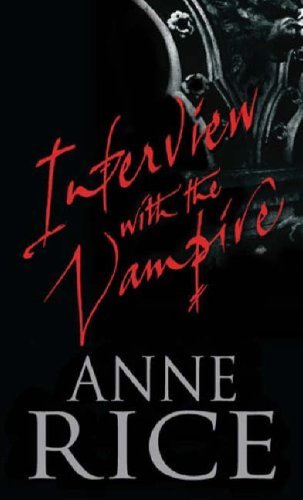
7. Interview With the Vampire - Anne Rice
I read this as a semi-gothic student, little knowing quite how far its brooding protagonist would set the standard for angsty, self-loathing vampires everywhere.

8. Night Watch - Terry Pratchett

This is perhaps one of the darkest books in the Discworld series, but also the best. Les Miserables crossed with Life on Mars - except this was published before Life on Mars. This is one of the City Watch sub-series, but with a twist, because Sam Vimes is caught in a magical storm and sent thirty years back in time, when Ankh Morpork was a much more dangerous place, and it's up to Vimes to sort out the mess, tutor his younger self, and minimise the damage, when all he wants is to get home to his wife and unborn son. Truth! Justice! Freedom! Reasonably Priced Love! And a Hard Boiled Egg!

9. Eve Green - Susan Fletcher

A simple story about family and the past, which I found at just the right time. When Eve Green is expecting her first child, she returns to the Welsh village where she grew up. The story is told in flashbacks to the summer when another little girl went missing, as Eve pieces together the secrets that have been kept from her, and the forgotten memories. Eve Green is a quiet novel, but a cosy read. 

10. The House at Riverton - Kate Morton

Kate Morton's books seem to follow a particular formula: two stories, separated by many decades but linked in some way, a big house, forgotten secrets and family mysteries. The link in The House at Riverton is an elderly woman (in the present day) who used to work at the house as a maid, at the time of a young man's suicide. Tangled up in the story is the relationship between three young people: the man and two sisters, and the novel is reminiscent of Ian McEwan's Atonement. It may be an unpopular opinion, but Riverton is the novel I'd hoped Atonement would be but wasn't. I read the entire 600 or so pages in a single lazy Saturday. I couldn't put it down.

Monday, 25 March 2013

Dollhouse: Season 2

Contains season one spoilers, season two spoilers, anguished cries of "WHY?" and cursing of the name of Joss Whedon. You have been warned.

So, everything hurts and nothing is okay. Why do we do this? Why do we, as humans, enjoy getting our feelings ripped out and shoved in a blender in the name of entertainment? Is it because we learn to deal with the highs and lows that life throws at us, in a safe environment because it's not real? Perhaps so, but sometimes even the fiction can break our heart and make us feel actual physical pain which is generally not considered enjoyable. And yet we go back for more. Joss Whedon is known for being the master of emotion-manipulation, and is simultaneously loved and cursed for it.

Funny I should say this about a television series that I initially described as "engaging my brain more than my heart." Somewhere along the line, Dollhouse changed and I started caring. Really caring. Season two is overshadowed by a sense of doom, as we know what the future has in store, thanks to Season one's finale, "Epitaph One."

It was a risky decision to have a foregone conclusion, but in this case I think it worked. "Epitaph One" showed a post-apocalyptic world where the dollhouse technology has ended up in the hands of those who use it as a weapon in an attempt to achieve immortality - by wiping minds and imprinting new personalities at the touch of a button. "Epitaph One" could almost stand as a series finale, if necessary, if a very bleak one, but it does not mean that we know everything in season two before we watch it. We know what the Dollhouse-verse will look like in 2019, but not how it got there. This flash-forward gives every little advancement in Dollhouse technology or power an ominous significance.

Season one took its time to get started, the first few episodes following Echo in various assignments in order to give a sense of how the Dollhouse works when it's running smoothly (er, if you don't include that unfortunate incident with rogue "doll" Alpha that had happened shortly before the beginning of the season, or any of the self-contained misadventures that befall Echo, Sierra or Victor while they are out on an engagement) before gradually developing into a bigger story arc. The series seemed to be a different show every time I watched it. Season two shows the plot escalating much faster. There are fewer assignments-of-the-week, with a greater focus on the Dollhouse itself and its sinister parent corporation Rossum.

I wrote in my first review that I didn't understand the love for Adele DeWitt, head of the LA Dollhouse. She is externally a very hard, cold woman, and when her authority is threatened, she becomes harder and colder. Dollhouse does not have easily classifiable "good" or "bad" characters, and Adele's motivations are unclear for much of the season. Is the welfare of her "dolls" and house her top priority, or is it her own power? I hated her for a few episodes, really believing that her character's story was a study in the corruptive nature of power and the dangers of constantly crossing and redrawing one's moral boundaries until there is nothing left. But no. Adele may have lost control for a while, but her apparent worst act of betrayal all turned out to be part of an intricate plan to attempt to bring down Rossum. After this revelation, my jaw was hitting the floor for the last five minutes of the episode. Yes, she is a complex character, double- and triple-crossing the dolls, Rossum and the viewers, the Severus Snape of Dollhouse, but with a better haircare regime.

It seems funny now, that I was so surprised that Adele was not a traitor (to us, anyway) after all. It doesn't seem like a twist at all, not compared with the following episode's bombshell.

What did I write about Boyd Langton before?
"...a fairly decent, fatherly type of character who seems to be conflicted about the organisation he works for [...] he does seem to have more of a sense of morality than the rest of the staff, who put their consciences to one side for science."
Er, quite.

Except for being the head of Rossum itself. No no no what no what what no (continue over the episode's entire closing credit sequence and you'll have my reaction.) Boyd was the one character I felt I could count on, a quiet but steady figure among a cast of morally ambiguous figures who it would be folly to trust completely. I did not see that coming!

Or did I? It seems I hit the nail on the head when I commented that I trusted Boyd because I was seeing him through Echo's eyes, who was specifically programmed to trust him with her life. So were we! And even knowing the truth, hearing him say and watching him do terrible things, that programming overruled my senses. I couldn't hate him. I couldn't look into his face and see a bad guy, despite all the evidence, even while I was shouting at the characters not to trust him. And I grieved at his death. I grieved the character I thought I'd known, even though he'd never really existed. (Yes, this is a character who never really existed on a deeper level than everyone else I've grieved who never existed other than in fiction.) It hurt.

But not half as much as the final episode: "Epitaph Two: The Return." Not due to the death of the supposed main love interest (who I didn't realise had even been absent for a few episodes until he reappeared, that's how much of an impression he made on me.) Partly thanks to the apocalyptic nightmare world of 2019. Partly when I saw Priya (doll-name Sierra) at Safe Haven among many other faces - but without Anthony (formerly known as Victor.) Their love story had transcended the many personalities imprinted on them. Whoever Sierra and Victor were from week to week, they always found themselves in love with each other, even when in blank doll-state. It even touched my hard heart. But where was Anthony? Why wasn't Anthony with them? This wasn't right, this was very wrong! It wasn't the worst, though. He was alive, but their marriage was in trouble, because Anthony had become addicted to all the technology that was the reason for the predicament the world had come to. And they had a child, and Priya had tried to shield him from all that stuff, and given the choice, Anthony chose the tech. They managed to sort things out in the end, though, thankfully. I couldn't have borne it otherwise.

But what really broke my heart was poor Topher, who was driven mad by the knowledge of his role in hastening the thought-pocalypse ("Is brain-pocalypse better? I figure, if I'm responsible for the end of the world, I get to name it," he said before he broke completely.) If ever I wanted to hug a TV character until everything was better, it was Topher. But hugs provide no comfort, because he's right. It is partly his fault: Topher developed the technology used in the terrible war that brought the world crashing down. Honourable motives don't change that.

After "Epitaph One" I knew that Topher would not survive the series. I thought I was prepared for his death as soon as I realised I liked him - Joss Whedon has a way of killing off not the heroes, but well-loved supporting characters. (Still not over his "leaf on the wind" trick! WHEDON!!!!) I wasn't prepared. Oh, it had to happen, and it was the best ending for him, I think, sacrificing himself putting right the damage he had inadvertently caused. People On The Internet have wondered how come a genius who can remotely wipe and programme people's personalities, can't invent a remote detonator for an explosion. I think it's not a case of can't, but won't. I don't think Topher could live with his guilt any more. Besides, his brain, his technology, had been his whole life, and now he'd seen the effects of that, I don't know what kind of life he would have had, forever in fear that anything he did might bring about a repeat of this devastation. His story had to end this way - but I howled.

Still, the fact that Dollhouse affected me so strongly has got to say something about its quality. It was a week ago that I finished watching the series, but the story has stuck in my head. It was quick to capture my imagination, but the characters were sneakier, worming their way into my affections without me really noticing. It shows the power of storytelling that it can both make one think and feel deeply, though now I feel emotionally exhausted.


My friend wants to show me Whedon's Cabin in the Woods, but I've resisted so far because I'm not into horror movies. But she is trying to use my love for Topher Brink to persuade me, because actor Fran Kranz is apparently just as lovable in a similar role in that movie. Perhaps not right away. I know how that film ends. I think it's time for something lighter.

I've been watching a lot of Avengers movies recently. Again, I blame Joss Whedon for getting me into that. I've been adamant that I don't do comic books. (Then Sandman happened.) And I certainly don't do super heroes! (Er, how many super hero comic-book film adaptations do I have on DVD now? The lady doth protest too much. Iron Man 3 is out soon. Yay!)


Friday, 8 March 2013

Cardiff, The City & The City, Warm Bodies, Penelope

Hello, all. I've finally reached the end of a book that feels as though it has taken me forever to read, and looking back I realise I haven't written anything about my earlier reading or adventures.


A couple of weeks ago, I went to visit my friend Anna in Cardiff, staying in a hotel with a marvellous breakfast. I can very much relate to Miranda Hart's hotel-appreciation, though unlike her, I left my hometown to indulge myself. Anna took me to the Doctor Who Experience, which was a treat: getting a ride in the Tardis, threatened by Daleks, and then looking at various props, costumes and toys that had appeared on the show. I was pleasantly surprised to find on entry that, contrary to my expectations, the queue contained more adults than children. 


The reading material that kept me company on my travels was China Miéville's The City and The City. I've been meaning to read Miéville for years, after being recommended Perdido Street Station, but never seemed to get around to it, thanks to its bulk. But after reading Willa's review at Wicked Wonderful Words, I decided to try this author through one of his more slender but intriguing novels. The City and The City of the titles are Beszel and Ul Qomo, which occupy the same space. One house could be "in" Beszel, while the next could be in Ul Qomo, but it is illegal to go from one to the other without leaving one country and entering the other. To pass from one city to the other willy-nilly is "breach" and calls down the wrath of the sinister, Orwellian Breach justice force. Sounds impossible? Citizens of Beszel and Ul Qomo are trained from birth to "unsee" what is right under their noses, but on the rival city's territory. The story itself follows Inspector Tyador Borlú as he investigates the murder of a young woman, in an investigation that delves into conspiracy theories and crosses the borders between the two strange cities. The narration is in the dry and gritty prose that marks out an urban police procedural, slow to get started, perhaps, but compelling due to the peculiar setting and the shadowy threat of Breach looming over Borlú,waiting for the inevitable slip-up. Beszel and Ul Qomo together make a fascinating setting - or should I say settings? - and once I'd engrossed myself in this book, I found it affecting the way I thought about the world. I will certainly be reading more work by Miéville.


Also while in Cardiff, I went with Anna to see the much-hyped film adaptation of Warm Bodies by Isaac Marion, which I had just finished reading. It was the movie trailer that had caught my interest at first, with its snarky, undead narrator, and I was prepared for a comic read. And though Warm Bodies, the novel, is filled with wit and humour, I actually found it somewhat melancholy. One doesn't tend to see inside a zombie's mind very often, because the general consensus is that that mind is gone. But in Warm Bodies, we see a zombie whose mind is only mostly gone. Protagonist "R" is not lacking in thoughts - otherwise, what would the prose consist of? "Urrrrrrrghhhh.... brains...."? But his thoughts are smothered in a grey mist and despite the eloquent prose, I could really feel what it must be like. (Perhaps much like mine today, when the sun has forgotten to rise and caffeine is a poor substitute for sunlight for waking me up, but on a huge scale.) Warm Bodies is an intelligent, sometimes gruesome, simultaneously amusing and heartbreaking, but ultimately hopeful tale of zombie-meets-girl. But hands up who else went through half of the book (or movie) before identifying Warm Bodies' most famous literary ancestor, and then felt like the world's biggest fool? I bet we all had the same realisation at the same page. Clue: the girl R falls in love with is named Julie. 


The movie felt very different in tone, to me. I suppose it is inevitable. Although we get to see inside R's mind thanks to the aforementioned snarky narration, we mostly see him and his walking dead associates from the outside, and what we see is grubby-looking chaps and chap-esses lurching around groaning, occasionally managing to form words. I'm not sure it is possible to make that not hammy, and so the filmmakers focused more on the comedy aspect. And actor Nicholas Hoult, who plays R, has a glorious comically-expressive face. Hoult's performance was certainly the highlight of the film. However, I felt that the film lacked the depth of the book, not quite sure whether it fit as a humorous example of the interchangeable-magical-boyfriend-creature teen fiction genre (in which case, squick!) or as a parody of it. Many of the darker elements of the book were omitted, and Julie became a fairly standard feisty-girl character, rather than the really damaged, angry girl from the book. Warm Bodies the movie was great fun, but ultimately it could not live up to the book as far as I was concerned. To be fair, though, I don't think it would be possible for any film adaptation to do that. Some things just work better on the page than on the screen, and as far as I'm concerned, zombies fit into that category.


I made the mistake of taking only one book on holiday with me, and so of course I had nearly finished The City and The City before I left Cardiff. Why is it that if you've got a huge to-read pile, every other book in the shop wants to come home with you, but if you need a book, none of them appeal? This was my experience in Cardiff that day. I realised that I'd read several gloomy books in a row, and wanted something more cheerful, but not badly-written, and not romance. Difficult specification for a book to meet (any suggestions, people?) and I spent ages in the bookshop before settling on Penelope by first-time novelist Rebecca Harrington. Its whimsical cover caught my eye, and the blurb made me think that maybe this was the book for me. The novel follows quirky girl Penelope through her first year at Harvard, in what I expected to be a kooky, John-Green-esque celebration of nerddom.

It wasn't.

I wasn't sure what to make of Rebecca Harrington's narration, which was very simple, breaking the sacred "show, don't tell" rule. Perhaps this was a stylistic choice, reflecting Penelope's disconnection from everything and everyone around her, in which case it was successful - too successful. It's a brave and dangerous choice to make the audience feel the protagonist's alienation too well, because you are in danger of alienating the reader, too. Though simply written, and less than 300 pages long, I took 11 days to finish Penelope, because I didn't care enough to pick up the book, and would watch the Avengers movie (or Firefly, Game of Thrones, or the Avengers again) instead. The problem is that Penelope is a very passive character. The quirks that drew me to her and the novel (love of Tetris, odd conversation-starters and Hercule Poirot) take up little more space in the book than on the cover blurb, as Penelope suppresses her personality, choosing instead to try to fit in among people she doesn't really like, and who don't really like her, by being agreeable to everything, not drawing attention to herself by having her own opinions. Likewise, the blurb promised an eventful, chaotic freshman year full of "the mysteries of life, love, inappropriate tutors, marionette operation and how to kiss on both cheeks and avoid disaster." Well, all of these things are featured in Penelope, but as passing mentions, almost footnotes. What the book is really full of is small talk. Banal, stilted small talk that made me want to scream and tear out my hair at times. Oh, I really wanted to love this book, and I wanted to love Penelope, but ultimately I was just glad to reach the end.


Tuesday, 26 February 2013

Dollhouse, Season 1.

Last year, my best friend got me hooked on Joss Whedon's cult classic "space western," Firefly. This year she has introduced me to another, lesser-known Whedon series: Dollhouse. The titular Dollhouse is a top secret organisation which provides employees for very specific jobs. Kind of like a temp agency, you might think - except that instead of matching the job to the employee, they create the employee from scratch to be just what the client needs: inventing the memories, skills and personalities to provide satisfaction. But these new-made people are programmed into existing bodies, or "dolls," whose personalities have been erased to make room for these new people - backed up onto disc and removed from their minds. A "doll" can be a detective, or a wife (or husband), a pop star's backing singer, or a teacher - or a spy so convincing that even they don't know that they are anything other than what they are pretending to be. These aren't actors; these are people designed to specification. They fulfill their duties, return to the Dollhouse, where this personality is wiped and they return to their vapid, childlike state, ("Did I fall asleep?" - those words gets seriously creepy after a while.) floating around the house taking endless showers and eating banana pancakes, ("I like pancakes.") until their new role comes up and they go to be reprogrammed.

It must be an extremely challenging role to play one of the "actives," as each week, they are a different character. The series follows one particular "doll," codenamed Echo, and every time you watch an episode, you're in a different show - detective, conspiracy, thriller, romance, etc. The first episodes merely show her in her jobs, the dollhouse staff, and Paul Ballard, an FBI agent who is trying to find out all about the whole sketchy business. And then Echo starts remembering things that have not been programmed into her, memories from before she became an empty "doll," when she was a student activist named Caroline. And that is just when it starts getting weird. Um, weirder.

Dollhouse is a show that engages my brain more than my heart, at first, raising a hundred and one questions about what it is to be human, what makes an individual, and free will. But with a main character who changes personality every week, you need a flexible actress. Eliza Dushku plays Echo/Caroline adequately, convincing in each new role, but never really making me feel any attachment to her - probably because we never get to know any of the characters very well or for very long. But I care for the other "dolls" - notably Sierra and Victor - more. They, like Echo, are rewritten in each episode, but, like Echo, things seep through that shouldn't, making them more like "real people" than the Dollhouse intends.

And when many characters are in charge of an organisation that takes away people's humanity, often by coercion or force, making them do and say and be anything, with the belief that this is really their own choice, it is difficult to like or care for them. I do, however, like Boyd Langton, Echo's bodyguard, a fairly decent, fatherly type of character who seems to be conflicted about the organisation he works for. But he still works for the Dollhouse. Perhaps I trust him mainly because Echo's trust in him is so complete - and programmed into her. Hmm. But he does seem to have more of a sense of morality than the rest of the staff, who put their consciences to one side for science.

I'm also fond of Topher, the immature and rather bratty youthful genius in charge of actually programming the dolls. I understand he was a fairly unpopular character in the early episodes - though he does start to get a bit of poignant character development around episode 10 of the series - but for me he was some refreshing relief and humour in an unexpectedly dark programme. The morality of the Dollhouse doesn't trouble him much, because he is loving the unique opportunity to do what he loves and what he does well: messing around with cutting-edge technology and showing off. He is maybe arrogant, maybe irritating, but he has a childlike energy that contrasts with the stern, businesslike Adele DeWitt (who seems to be universally loved, but aside from her Britishness and occasional hints of vulnerability - and a wonderful comic scene in episode 7, I don't get it.)

 It's difficult to say much more without giving away major spoilers for the last few episodes. Just mentioning minor details highlights their significance, and I watched the first season entirely unspoiled, and that was awesome. But the entire point of writing about this thing is to rave about it. So, um. The big one, I guess, is the introduction of a character, played by an actor I knew from elsewhere, who turned out NOT to be what I expected from his first appearance in the show.

If you've seen the programme, highlight the white text below and watch my mind exploding in spoilery and semi-coherent squealing.

>>>WASH IS ALPHA! Alan Tudyk, guest-starring as a cowardly, hippy nerd afraid of backless staircases, turns out to be THE major villain of the entire series. And he is terrifying in the role. The transformation was one of the most stunning pieces of acting in the entire show, and probably the best thing I've seen him as. I started off thinking, "Oh, look, it's a Firefly cameo, sweet. I love Wash. Dear old Wash." and ended up half an hour later thinking, "hold on, that was Wash? I can hardly believe it."

And then, ALL OF EPITAPH 1. I mean, the fact that it is called Epitaph and not Epilogue started setting off the alarm bells in my mind. Episode 12 seemed like such a perfect finale to season one, that I could not figure out what episode thirteen had to add. (I later discovered that it was added on because Fox needed a thirteen-part series, and the pilot was deemed unsuitable.) And MY GOODNESS it is different. Flash forward ten years from the story-so-far, and the world is unrecognisable. The Dollhouse technology has been developed and advanced, before being taken over by hostile forces to bring about war and worldwide destruction. ("Children playing with matches, and they burned the house down." - *shudder*) "Epitaph 1" shifts the genre of Dollhouse the most dramatically yet from speculative/science fiction/alternative present to a not-too-distant post-apocalyptic horror. This is what the series is headed for. This is the unavoidable conclusion. Beware. I wrote earlier that the series appealed to my mind less than my feelings, but evidently I've grown fonder of these characters. "Epitaph 1" switches between the ten-year flash-forward, focused upon new characters, and a series of flashbacks hinting at the fates of the characters we've spent the last twelve episodes getting to know. And it is heart-wrenching. Whedon sure knows how to rip your feelings up. He broke Topher! Oh, poor Topher. I now realise that what he did to Wash "I am a leaf on the Wind" in Serenity was the kind option. CURSE YOU, WHEDON!!!!<<<

I've hidden the spoilers for the sake of people who haven't seen the series but want to. So far, I've only seen the first season, so please don't leave any season 2 spoilers in the comments. (Or if you absolutely HAVE to rave about what I haven't seen yet, I suggest coding it at rot13.com so that I can read it later on. Go ahead. Laugh at my ignorance of what is to come.)

Tuesday, 19 February 2013

Gone Girl, Gillian Flynn

A bit spoilery.

After Amy Dunne disappears on her fifth wedding anniversary, her husband Nick is the first suspect. Though he maintains his innocence, desperate in his search to find out what has happened to his wife and to clear his name, the evidence appears damning. Chapters alternating between Amy's diary and Nick's contemporary narration reveal that the Dunne's marriage had been unhappy for a long time. In fact, it seems that Amy and Nick didn't even know each other any more. Their accounts of events in the past, and of each other's thoughts, moods and reactions, show a couple shockingly out of tune with each other.

These conflicting accounts keep the pages turning, switching the reader's allegiance between Nick and Amy, at least at first, while causing us to question if either party can actually be trusted. Nick, in particular, in the first half of the novel, showed the signs of being an unreliable narrator by withholding information, not only from the police, but also from the reader. His cell phone rings, and he turns it off, not telling who is calling, or mentioning it again - until the next time. He is questioned about an overheard argument - an argument he has not described. He claims to be a writer, and yet describes his father-in-law is "literally losing his head."

And then, halfway through, there is a momentous twist, and everything we think we have figured out about Amy, Nick and their marriage turns on its head. I was completely taken by surprise! The second half of the novel. The case plays out like a deadly game between ruthless, manipulative players taking turns. Both Amy and Nick reveal themselves to be highly unpleasant characters in a toxic relationship, and it's difficult to root for either one. The pages keep turning of their own accord as the story heads for a climax, and from a reader's point of view, you want something huge to happen, but you know it can't end well for both. Can there be a winner, or only losers?

Gone Girl starts off as a fairly straight-forward crime thriller, but turns out very different indeed: clever, but very twisted, dark and unsettling. You might want to read something cute and wholesome after this one.


Monday, 18 February 2013

The Homeward Bounders - Diana Wynne Jones


Diana Wynne Jones is an author that I've heard about from my best friend for most of my reading life, but only come to discover for myself in the last couple of years. Homeward Bounders is the best I've read so far, encompassing layers upon layers of jaw-dropping genius.

Enough of the gushing, Edwards! Tell us about the book.

When Jamie stumbles upon Them, the mysterious hooded figures who use his world as the setting for their games, he is exiled onto a circuit of worlds, doomed to wander until he can find his way home. On his travels, he meets Helen and Joris, fellow "Homeward Bounders" who, like him, have fallen foul of Them and sent from world to world.

Homeward Bounders crosses the boundaries between genres as Jamie and the others cross between worlds, encompassing myth, fantasy, science fiction and adventure as only children's fiction can. I have got lost in Diana Wynne Jones' books in the past, but this one came alive as I read, a complex, multiverse-spanning plot that nonetheless makes perfect sense. It appealed to my love of adventure, varied settings, limitless imagination and pathos. In the last section, I realised before Jamie did what was going on - but not in a "too-obvious" way. Wynne Jones' narrative style is simple but not simplistic, and her story is sophisticated indeed. In fact, I think that Homeward Bounders transcends mere children's fantasy fiction to take on a mythical status of its own.


Wednesday, 13 February 2013

Paper Towns - John Green


In the middle of the night, Quentin "Q" Jacobsen's next-door neighbour and long-term crush Margo Roth Spiegelman appears at his bedroom window and bids him come with her on an adventure - a campaign of revenge. The next day, Margo is missing. It's not the first time Margo has disappeared, but Q is worried. He makes it his mission to find Margo, uncovering some cunningly hidden clues about her whereabouts. But finding Margo's physical location turns out to be just the beginning of the challenge. In their hunt to find her, Q and his friends realise that not one of them can be sure they ever really knew Margo. Paper Towns is as much about uncovering Margo as a real person as it is about finding where she is hiding.

Is it terrible to say that I really like revenge stories? The escapades Q and Margo embark upon are an entertaining take on the usual "bring down the mean girl" high school drama. To give you a sense of the duo's unusual pranks I will duplicate Margo's shopping list. (N.B. random capitalisations are Margo's.)


"3 whole Catfish, Wrapped separately
Veet (It's for Shaving your legs Only you don't Need a razor It's with all the Girly cosmetic stuff)
Vaseline
six-pack Mountain Dew
One dozen Tulipsone
Bottle Of waterTissues
one Can of blue Spray paint."

I will not give the game away about what they do with these items - you can use your imagination or read the book yourself. Needless to say, it was hilarious, with a touch of the guilt you feel for enjoying watching people get what they deserve.

But Paper Towns is not really a revenge story, not after that beginning. It soon becomes a mystery, a sort of treasure-hunt to find Margo, who seems not to want to be found, but leaves obscure clues for Q to figure out nonetheless. And if there's anything I like better in a novel for teenagers than revenge plots, it's mysteries and treasure hunts. Not that I expect to be able to work it out before the protagonists, and nor do I really want to. I enjoy the thrill of being utterly clueless about the author's intentions, of being surprised and trusting them to make it all make sense in the end. Margo's treasure-hunt takes Q and his friends, Ben, Radar and Lacey through Walt Whitman's poetry (note to self: must read some more Whitman) to a seriously creepy office in an abandoned mini-mall, and ends up sending them on a race-against-time road trip from Florida to a non-existant town in New York state, the boys wearing nothing but their graduation gowns. It's a riot, a page-turner, and Q's ticking clock - will they reach New York in time? - adds to the sense of urgency. By this point I was racing through the book as though I too would run out of time.

I may have mentioned before that I really love John Green's books. They have a unique nerdy appeal, with smart, sarcastic and funny characters, and weird little details that just make the books stand out against the rest. In Paper Towns we have Urban Exploring, the world's largest black Santa collection, a teenage boy in a "World's Best Grandma" t-shirt, cross-hatched writing to make a notebook's contents illegible to anyone except the writer. I have since adopted this, as I could find myself in Harriet The Spy trouble if I were to accidentally leave my notebooks lying around.  And of course there are the titular Paper Towns, which are fictional locations invented by mapmakers in order to identify breaches of copyright. All fascinating stuff, and I loved it. But it's not all just quirks and chuckles; Paper Towns makes the reader think about how we view others - as real people or supporting characters in our own lives? Can we ever truly know another person - and if so, how?


Related Posts Plugin for WordPress, Blogger...