Saturday, 18 February 2012

February mini-reviews.

Hi everyone. Despite my lack of blog posts recently, I've actually been reading a lot, I just haven't had an awful lot to say about any of the books. However, I felt it was about time to share some thoughts on a few of the things that I've been reading.

Sandman - Neil Gaiman


Since discovering that one of the Island libraries has nearly all of the Sandman graphic novels, I have been making regular trips and marching through the series, before passing them on to my friend. There is a wide variety in the style and format of stories, like an elaborate patchwork quilt: one volume will be a long narrative, and the next made up of short stories. Some star the titular Sandman, Dream, and his Endless siblings: Destiny, Death, Delirium, Desire, Despair and Destruction, whereas in other volumes they only appear occasionally, around the edges of the stories, so to speak.

I'm currently up to vol. 8: Worlds' End, in which travellers from all through time, space and contradictory but co-existing realities find themselves stranded by a storm in an Inn, in which they occupy their time by telling stories of all flavours and styles. But the storm is not an ordinary storm, but a "reality storm" caused by something strange and rare and unexplained. When the tales have all been told, the travellers go to the window and see a strange thing in the sky, a thing that none could explain or understand, but somehow we all, reader and character alike, could sense that things were never going to be the same again. Behind the pages of the stories told in Worlds' End, another story has been taking place, a story of enormous significance, hidden from the eyes of the ordinary - extraordinary - folk who dwell in the Sandman universe(s) and yet to be revealed to the readers, no doubt in volume 9.

I felt almost afraid to turn the page,
fascinated but scared of what I might see in the sky.
By this point, Sandman has become more than "just a comic book" to be a masterpiece of storytelling, in any format.


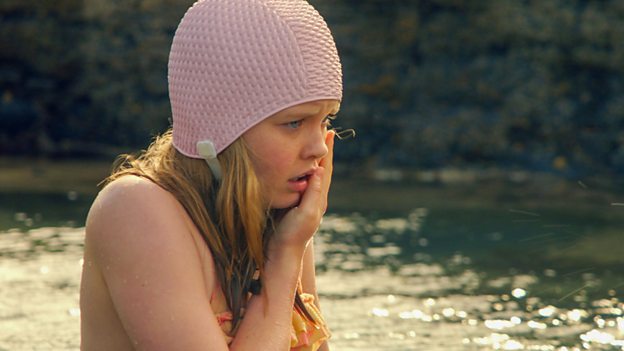
Submarine -  Joe Dunthorne


Submarine is a coming-of-age tale of Oliver Tate, a precocious teenage boy, an account of his relationships with family, friends and girls, and his observations of the world around him. It is an intelligent, somewhat poetic read, and one which led me back to my Superior Person's Book of Words to indulge the word-nerd tendencies that I share with the narrator. However, I didn't altogether like Oliver - he was a rather obnoxious kid - and the scenes in which he participated in the bullying of a classmate were an insurmountable barrier between me and the book, and Dunthorne seemed to rely too much on cringe-comedy and explicit content for my tastes - possibly appropriate for a tale about a teenage boy. I'm not saying that I entirely disliked Submarine, but I don't feel that I have gained anything from having read it, and shan't be rereading or watching the film.


The Hunger Games - Suzanne Collins (reread)

When I first read the series a couple of years ago, I wrote, "I'm not sure that The Hunger Games is as amazing as the hype had led me to believe, but it is a very good book, and it was a lot better than the book blurb and my reading taste came together to expect." Catching Fire won me over, and evidently the story lingered in my brain, because over the last months I've had dream after dream about being in that arena, about being Katniss Everdeen. With the hype mounting for the new film which comes into cinemas next month, I am still undecided whether or not I actually want to see it. 


The trailer is amazing. Watching it, I felt tears stab at my eyes a couple of times, when Katniss shouts in desperation and love for her sister: "I volunteer!" and the salute to her from the citizens of District 12. And yet - there is a movie already in my mind that I feel a fierce attachment and loyalty to. Flicking through The Tribute Guide which came into bookstores recently, I nearly shouted aloud, "You are NOT President Snow!" (Donald Sutherland is an excellent actor and I am sure he will play the part admirably, but he is not my President Snow.) Some pictures looked perfect, while others I judged as "too sci-fi." Jennifer Lawrence is almost Katniss, Josh Hutcherson a passable Peeta, Gale I never had a very strong image of, so he'll do. Rue. Cinna. Effie Trinket. Prim. All fine. Great, even. It looks a like a great movie. 

But I'm still not certain. The concept of the book - children killing each other for entertainment purposes - repelled me, and watching it as a film takes you closer to the real experience, the discomfort of knowing you'll be watching the Hunger Games recreated, rather than reading about them. (Maybe that's just me.) And the other thing: I have a phobia of wasps - can't even say or type the word without flinching, and there is a horrific scene with mutant wasps, or "tracker-jackers." Is this spheksophobia strong enough to deter me from watching the film?

Reading The Hunger Games the second time around, I realise that Katniss' affections could go either way, being manipulated and fabricated before she's really aware that she has any romantic feelings, being formed by her circumstances. Interestingly, on my first time reading the books, if I had any strong opinions on the matter, I suppose I was slightly in favour of Team Peeta, whereas this time I'm veering more towards Team Gale. I wonder what has changed.


Wish Me Luck - Margaret Dickinson


I picked up this cosy wartime romance in a charity shop years ago, and forgot that I'd even got it until yesterday, when I wanted a break from the doom and gloom of Panem. I have little time for romance, whether that be Mills and Boon, or chick lit, but occasionally I'll make an exception for a sweet story from the "granny" section of the bookstore, wartime romances, family sagas, usually seeming to take place in World War 2 Liverpool. Wish Me Luck is the story of Fleur, a WAAF (women's branch of the Royal Air Force) girl who falls in love with an RAF officer. Their relationship is marred, not only by the dangers of being in love during wartime, but by their parents, whose own pasts are intertwined by secrets long gone but never forgotten.

Wish Me Luck is a light, easy read. Dickinson's style is simple but warm. She hooked me with the mysteries and kept the plot twisting so that it wasn't predictable. She recreates 1940s Lincolnshire and Nottingham well, peopled with a likeable, well-rounded cast. With one exception. Fleur's mother was too unpleasant, a bitter, shrieking harridan who is never given much development or redemption, and towards the end, I felt that the story tailed off a little. Of course it is inevitable that any book set on the home front of World War 2 is going to feature some sort of tragedy, but it all seemed to come at once, like an avalanche of heartbreak, all at once. Still, Wish Me Luck is a very sweet, "nice" sort of story over all, and despite the deluge of disaster before the happy ending, just the sort of book to cheer me up when I was feeling low.


Thursday, 9 February 2012

The Gum Thief, Douglas Coupland


I wanted to fall in love again, I realised. Not with a man. I’m far too lazy and selfish right now to arrange my life around another person’s. I’m too fond of going where I want, doing what I want, when I want, acting on the spur of the moment without having to be accountable to someone else. No, what I wanted was to fall in love with a story. To discover something brand-new that grabs me by the brain and imagination and takes me entirely by surprise. Something that would mean my life would not be quite the same after having read it.

Seeing Douglas Coupland’s The Gum Thief in the library, I wondered if, perhaps, this might be The One. I had vague memories of my friend Anna recommending Mr Coupland - possibly JPod - and Girlfriend In A Coma has been on my to-read-maybe-one-day list for so long I can’t even remember why any more. My friend Anna is very clever and a bit nerdy but in such a way to make it cool, and she likes Neil Gaiman and has purple hair. If she recommended Coupland, maybe I would like him too. Anyway, I’d give him a try. The blurb on the back hooked me: “Bethany discovers Roger’s notebook and finds that he’s writing diary entries pretending to be her - and weirdly, he’s getting it right.”

Of course, when you go looking to spontaneously fall in love and be taken by surprise, you’re doomed to failure. The Gum Thief is entertaining and voices many truths about Life, The Universe and Everything™ - especially if you’re stuck in a dead-end job in retail - but ultimately, I did not connect emotionally with the book. When reading, the pages passed quickly, with multiple narrators and short chapters to keep interest, but I didn’t feel a great urge to return to it when I’d put it down. The book’s tone was subdued. Roger is in his forties divorced and disillusioned, while Bethany is a twenty four year old goth living at home with her mother, with vague plans of visiting Europe with her new boyfriend, but no real plans for the future. I could identify with Roger’s and Bethany’s observations in their working life in a Staples superstore, and I liked the characters well enough, but somehow I felt distanced from their world.

As well as Roger’s and Bethany’s diaries and letters to each other - interspersed with the occasional letter from Bethany’s mother and other Staples employees, many chapters of The Gum Thief are chapters from Roger’s attempt at a novel: Glove Pond. Unfortunately, this novel is bad. Deliberately bad writing - at least deliberate on Coupland’s part - full of dry dialogue, telling-not-showing, faux-intellectual ponderings on life and creative but not quite successful imagery. And when so much of a book is full of bad writing and pretentiousness, even as a literary device, the lingering impression I take away from reading the book is - bad writing and pretentiousness. Glove Pond colours The Gum Thief - or perhaps I should say it sucks out all the colour, leaving a white and grey, cold and somewhat empty-feeling novel.

Or, conversely, maybe the fictional-within-fiction Glove Pond helps to draw attention to what colour does exist in Roger’s and Bethany’s apparently bleak, dull lives. It makes the chapters written by them interesting by comparison. Time will tell which of these contradictory impressions of The Gum Thief is stronger in my mind.


Thursday, 19 January 2012

The Adventures of Sherlock Holmes, Sir Arthur Conan Doyle

My best friend, Judith, is only two months older than me, but when we were at school, she was in the year above me. This proved very useful when it came to discovering literature. Many a book I read and loved came second-hand through her talking about what she was studying in English. This was certainly the case for my first Sherlock Holmes stories. I must have been either ten or eleven, and after her raving about Holmes, I just had to find out what all the fuss was about. Even at eleven, I didn't like missing out on a good story. I vividly remember that I read four stories, one of which was "The Speckled Band," which captivated me, appealing to my slightly ghoulish imagination. This must have been one of my first really grown-up stories, and it was like nothing I'd ever read before.

I've read The Hound of the Baskervilles a few times, but aside from that, Sherlock Holmes lay at the back of my mind for many years. I watched a few stories on TV, acquired much of the knowledge through the osmosis of popular culture, but didn't read much until about eighteen months ago, when BBC started airing Sherlock for the first time. The series sent me right back to the original stories: A Study in Scarlet, and The Sign of Four. After an unusually long wait for a second series of a TV show, Sherlock returned to the screens once more on New Year's Day this year, and I returned to the next volume of the series: The Adventures of Sherlock Holmes.


After two novels, the third installment is a collection of short stories. This makes the book easy to dip in and out of, and you need little knowledge of what has come before, but can read the stories in any order - there may be a throwaway reference to "the case of..." but nothing that has any bearing on the tale. In fact, the stories aren't even compiled in chronological order - some are set after Watson's marriage, others before. They are narrated by Dr Watson, as written up long after the event. Though far from simple stories, they are told simply, often to the same formula: The problem is presented, Dr Watson, the client and the reader are all baffled, but not Sherlock Holmes, oh no! He ponders a lot, asks strange questions, goes out, solves the mystery then comes back and then tells us how he did it. My favourite stories in the collection are those which have a little less talking and a little more action, those stories in which Watson gets to go "on location" with Holmes.

Some of the tales are rather silly, such as "The Blue Carbuncle" - a valuable jewel which nearly ends up in the Christmas dinner. Two stories require suspension of disbelief as dodgy characters fool those closest to them with disguised identities, and then there is "The Red-Headed League." A fun, entertaining and cunning tale, but how gullible was Holmes's client, duped into joining this fictitious club, just for gingers?

Adventures also contains some of the most wonderful and memorable cases. We meet The Woman, Irene Adler, the one woman Sherlock acknowledges. There is the gruesome tale of the "Engineer's Thumb," and the "Copper Beeches" mystery, first dismissed by Holmes as his "zero point" for interest, but which turns out to be one of the most intriguing and exciting of all. And of course, "The Speckled Band," my old friend, the original locked-door mystery.

Yes, reading these stories, sometimes I found myself rolling my eyes at some of these cliched tropes - but let's not forget that they were not cliched. These are the original twisty page-turning detective stories, those that helped to invent the genre. I won't say Conan Doyle was the inventor - check out Poe's Auguste Dupin stories that came before - but for twists and thrills and cleverness, I think nothing has topped the Sherlock Holmes series in over a century. Maybe Agatha Christie put up a fair fight.

Tuesday, 17 January 2012

The Psychopath Test, Jon Ronson

psycho test
What is a psychopath? That is the question at the heart of Jon Ronson’s book which is advertised as: “A journey through the madness industry.” What is a psychopath, how are psychopaths diagnosed, is there a cure, and what is the difference between psychopaths who are institutionalised, and the psychopaths at the top of the institutions: politics, business, entertainment and so on? These are just some of the questions Ronson explores in his study in madness.

In his research for this book, Ronson meets a man who feigned madness to try to escape a prison sentence – only to discover it is impossible to prove his sanity. In a chapter that reads more like the “madness literature” of Catch-22 or One Flew Over The Cuckoo’s Nest, every action “Tony” takes to show that, in fact, he is not insane, is taken as evidence that, in fact, he is. Or that he is not mad, but still a psychopath.

Ronson catalogues historic diagnoses and attempts at treating psychopathy – and his findings are surreal, sometimes disastrous, often seeming more like a skewed fiction than reality – interviews the psychologist responsible for coming up with the definitive psychopathy test, and starts applying the test to various people he meets: the mass-murderer, the top businessman with ruthless ambition and a love for firing people, the M15 agent-turned-conspiracy theorist. And yes, it certainly seems that the same traits that label some people as “psychopaths” are those that are encouraged in the people judged as “most successful.” Is society really run my psychopaths?

At the same time, Ronson argues, it is easy for people to be misdiagnosed, and especially in this day and age, any strangeness or eccentricity is easily – too easily – categorised as “mental disorders,” sometimes with disastrous results. Where do we draw the line? is the question we are left asking, in the fragile balancing act between “madness” and “sanity.”

I’m not a natural reader of non-fiction, but I found Ronson’s style to be easy-going, understandable considering I have no background in psychology, a curious and fascinating, if somewhat frightening insight into the world of diagnosing psychopathy.

4 buttons

Friday, 13 January 2012

Cuckoo, Julia Crouch

When Rose hears that her childhood friend has been widowed, she doesn't hesitate in inviting Polly and her children to stay. What else could she do? But Rose's husband Gareth isn't too happy about this. He's never liked Polly. She gives him the creeps. And certainly, Polly is not your normal grieving widow. She's never quite been normal, a former indie musician, with a history of drugs, eating disorders and other demons that have never quite gone away. But that's just Polly.

But the longer Polly stays under Rose's room, the more Rose feels she is losing her family. Her neatly ordered home and life starts falling to pieces. Could her old friend have anything to do with this?

Cuckoo is not the first book I've read where a newcomer to the household spreads an unhealthy influence, and seems to be gradually weaseling her way into the wife's position. Candia McWilliam's A Little Stranger works on similar themes, although in that case it was the nanny. Araminta Hall's Everything And Nothing looks like another version of the same story, but I haven't actually read that one and am only going by the cover blurbs.

I didn't automatically like any of the main characters, with the exception of Anna, Rose's elder daughter (and I suppose Flossie the baby.) Still, they are real characters, with flaws and struggles, dark secrets in the past, bad tempers, maybe too much drinking and smoking. Still, I grew to fear for Rose as her life started to unravel around her.

Polly was an interesting character, sometimes evil incarnate in a sexy dress, otherwise charm itself, and undeniably a very messed-up person. Sometimes it seemed she was so messed up that she couldn't help herself, and that there was only a certain amount of blame you could throw at her. Other times she was coolly manipulative, casting her glamour - and I mean this in all senses of the word - over Rose, her friends and relations, and eventually even the reader. As Polly began to cast her web, I was almost shouting at the characters, "How can you let her fool you?!" Yet in the end, even I was drawn in, a little. Even after all the evidence, even I wondered if, maybe, Polly was telling the truth and Rose was the one who was a bit mad.

When I started reading Cuckoo, it was with my editorial eyes, and at first I felt myself wanting to go through it with a red pencil. "Stop telling us and start showing! And for goodness' sake, stop telling us 'Rose thought this' and 'Rose thought that!'" Despite this, Crouch sets a really creepy, menacing atmosphere in her descriptions, each little detail leaving me worrying about what new disasters may unfold for Rose and her family. I feared for her.

Some aspects of the plot were visible for miles off, and I wondered how Rose herself could not see them sooner. But there were plenty of twists, too. Its ending was not a cosy, neat one, but if it had been, I would have felt cheated. This was not a neat story, but a messy one of damaged people trying to make their way the best they could.


If you enjoy this book, you may like:
The Poison Tree by Erin Kelly

Saturday, 7 January 2012

Mini-review: The Sandman, Vol.3: Dream Country, Neil Gaiman

I started reading Neil Gaiman's celebrated graphic novel series, The Sandman, last year. The first volume, Preludes and Nocturnes, I reviewed here, and concluded that, although the quality and style was patchy, while Gaiman was still finding out what sort of a series Sandman was, his voice shone through, and left me thinking. The second volume, The Dolls' House, was a continuous story, and the art was brighter and cleaner-looking, more pleasing to my comic-novice eyes. 

Neil Gaiman's work has a habit of lingering, of making sense of the world through story, putting into words the thoughts that hover at the edge of one's mind. His Sandman comics are no exception to this. Dream Country is a shorter volume than the first two, with only four stories, self-contained stories in comparison with the longer narrative of The Dolls' House. Gaiman has also included a copy of his original script for one of the stories, for those readers with an enquiring mind and interest in behind-the-scenes. In his stories, we see the horrific lengths to which a writer goes to banish writers' block in "Calliope" - and Dream's revenge. (Be careful what you wish for!) Neil tells us what cats dream - "I wonder what cats have to dream about...The way it's twitching about, I think maybe it's hunting something...some small animal, I suppose.[...]it's really cute." , and the story behind A Midsummer Night's Dream. And finally, we meet Death again when she visits someone cursed with immortality. A haunting, unforgettable chapter in the Sandman saga.

Tuesday, 3 January 2012

Howl's Moving Castle, Diana Wynne Jones

When Sophie Hatter falls foul of the wicked Witch of the Waste, she heads off to the best place to get help - to the mysterious moving castle inhabited by the mysterious wizard Howl. But Howl, it is said, eats the hearts or souls of every young girl he comes across. Undeterred by the rumours, Sophie establishes herself as cleaner in the Moving Castle, and is whisked away in an adventure of magic spells and curses, fire demons, charmed suits and seven-league boots, and she even gets to peep into a strange land called Wales, before the Witch's spell can be lifted and Sophie can, despite being the ill-fated eldest child, find her happily-ever-after.

Diana Wynne Jones was my best friend's favourite author growing up, yet somehow I managed to reach my twenties without having read any of her work. My friend was determined to rectify this, and so this Christmas, alongside my presents, she handed me a huge bag of all the books I'd lent her over the past year, and a few of her own in return, including Howl's Moving Castle.


Sophie Hatter is a practical, no-nonsense young lady who is well aware of the conventions of the sort of story she lives in. She knows the importance of birth order in stories, that the eldest child is never successful in seeking their fortune, and accepts her lot in life. But when she finds herself transformed into an elderly woman, she decides it is up to her to find her way out of the mess, which she does with a level head and a lot of stubbornness. The Wizard Howl's reputation is greatly exaggerated, as such reputations usually are, but he is still a vain and selfish man who Sophie can't tell if he can be trusted or not. Still, he is an amusing and likeable character, for all his foibles. 


Some fantasy books are fantasy, and others are fairy tale. Wynne Jones establishes from the very beginning that Howl is set in the land of Once Upon A Time. The world of Ingary is a world where there is no such thing as impossible - although, of course, the impossible has its own rules - and Wynne Jones' simple, matter-of-fact narration of weird and wonderful occurrences, gives the book a dreamlike quality reminiscent of such classics as Alice in Wonderland or The Wizard of Oz. But this is a wonderland with a twist. About halfway through the novel, Howl takes Sophie to see his strange, far-away homeland - which is revealed to be 20th Century Wales, and his strange name a corruption of Howell. Howell Jenkins. We get to see our world as if it were the fairyland.


Howl's Moving Castle is a charming and cheeky fairy tale that turns a lot of the traditional fantasy conventions on their heads. I'm off to see a stage play of the story in London at the weekend, and it has also been adapted by Studio Ghibli into an anime film.


Sunday, 1 January 2012

Top books of 2011

Happy New Year everyone.

I've read 120 books in 2011, and looking back over my list, it was interesting to see which books have lingered on in my memory, and which I had completely forgotten about. Others I read, enjoyed (or not) but promptly forgot about.

So here are my top new discoveries of 2011, as seen from today:

Never Let Me Go - Kazuo Ishiguro
A haunting, atmospheric tale of friendship and love among three people who have been brought up to know that they were not quite the same as everyone else. The story is told cleverly, so that the reader experiences alongside Kathy, Tommy and Ruth the gradual realisation that they already know what's going on. A melancholy but extraordinary tale.

Affinity and Fingersmith - Sarah Waters. 
Ms Waters excels in writing historical page-turners, twisty mysteries and world-building. These two novels explore dark undersides to the respectable society that we think of as Victorian. Her prose is beautiful, atmospheric and believably written as by someone you might find in a Dickens novel. These novels draw you in and are difficult to escape from.

When God Was A Rabbit - Sarah Winman
The first novel by Sarah Winman was selected as part of Richard and Judy's book club, and it was one of my favourite books of the selection that I've read in many years. A tale of family, friendship and growing up, When God Was A Rabbit is a quirky, funny and heartrending novel with eccentric but loveable characters. An enjoyable read.

My Sister Lives on the Mantlepiece - Annabel Pitcher
I experienced this book as an audiobook, read by David Tennant. The story is of a small boy whose family is falling apart. His sister has been killed in a terrorist attack, his mum has left and he, his dad and surviving sister have had to move to a new home. A simple view of a complicated world as seen through the eyes of a child.

The Distant Hours - Kate Morton
Kate Morton's third novel is full of her signature ingredients: two stories from different times entwined together, a mystery from the past, a big old house. The Distant Hours is a modern gothic novel of an old castle with a moat, three elderly sisters, a favourite fairy tale whose origins are shrouded in mystery.

Dark Matter - Michelle Paver
This ghost story set in the arctic circle in winter is eerie and chilling, capturing well the unnatural sense of being alone and in the dark for a long stretch of time.

The Night Circus - Erin Morganstern
I unpacked this book at work and it jumped out, grabbed me by the collar and shouted "Buy me! Read me! Love me!" A romantic dark fairy tale, of two magicians competing in a contest without knowing what they are competing for nor how they can possibly win. Written in beautiful, vivid prose, with a wonderful supporting cast, The Night Circus is full of magic, possibility and improbability. It will grab you and not let go.

Saturday, 24 December 2011

Twelve Days of Christmas 12: The Lion, The Witch and the Wardrobe

A glowing lamppost in the middle of a snowy wood. A faun, wrapped in a scarf, carrying parcels and an umbrella. This is one of the images that has lodged in my mind for as long as I can remember, and which is inextricably linked with Christmas. Which is odd, because there hasn't been a Christmas in Narnia in living memory. The country has been placed under a spell which means that it is always winter, but never Christmas.

When I was little, I always wanted so much to find Narnia in my wardrobe. It is so beautifully described, and though it is supposed to be a curse, I think it is at its most beautiful when shrouded in snow and ice. Perhaps I would grow tired of it if I lived in perpetual winter - after all, in real life, I am already wishing that spring would come again. But that snowy wood with its lamppost is the first sight you get of Narnia, and that is the most special, the most iconic image of this wonderful land in the wardrobe. And every time I read this book, which I do most winters, I am transported to the innocence of childhood, when, although even then I knew the story inside out, it never lost its magic and its wonder.

And with the arrival of Lucy, Edmund, Susan and Peter, and the return of the Great Lion Aslan, the Witch's power begins to wane. Father Christmas is seen once more. I love the fact that, although here Christ is known as Aslan and is in the form of a Lion, Christmas is still Christmas. (It was probably brought over by the first King and Queen of Narnia, Frank the Cabby and his wife Nellie in The Magician's Nephew.) Father Christmas is instantly recogniseable, as old as time, wise as well as jolly. I was pleased to see that in the recent film adaptation, Father Christmas was an old-fashioned, graver version of today's Santa, in a darker red coat, as befits an old-fashioned British story - and yet still very much recogniseable.

The Lion, the Witch and the Wardrobe is, to my mind, the classic child's fantasy story, a fairy tale not only for children, but for those who have outgrown being too old for fairy tales. It never loses its magic.

And I still check the wardrobe in every room I stay in.

Merry Christmas to you all.

Friday, 23 December 2011

Twelve Days of Christmas 11: Little House on the Prairie

I received my Little House on the Prairie omnibus for my seventh birthday, and it was my first really big book: three books in one, chronicling the early years of Laura Ingalls and her family as they settled in different places, making their homes in different places before moving to their next place in a covered wagon drawn by horses. Laura Ingalls Wilder's descriptions, coupled with the illustrations by Garth Williams, ensured that this book allowed my imagination to play house to its heart's content. A pen-and-ink drawing of the inside of a small wooden house was enough to let me imagine I was there too, living with Laura and Mary and playing make-believe.

There are two vivid Christmas scenes in the series that stand out for me: the first in the first book: Little House in the Big Woods. It is a merry, family Christmas, with all the uncles and aunts coming to stay, presents of mittens and a precious doll for Laura, home-made candy of molasses poured onto snow, making snow-angels and indulging in a feast of a Christmas dinner. It is a Christmas described so well I could almost taste it, almost smell the clean, fresh snow and hear the laughter of a family celebrating Christmas together. Other Christmases feature as the series chronicles Laura's life. Nowadays children receive TVs, gaming consoles and iPods for their big Christmas presents, but Laura makes a few pieces of candy, a pair of mittens, a tin mug and a penny sound like riches galore. What else could any child want.

The other striking Christmas in my three-in-one volume, was a lonely one. A trip to town for essential supplies was a long journey, and one December, Pa Ingalls was stranded there by a blizzard. The days following his departure are anxious days of waiting, with Ma trying to distract her children with games, well aware of the dangers her husband faces. Pa's safe return on Christmas Eve, minus the Christmas candy and treats, which he had to eat to survive, is the best Christmas present of all.
Related Posts Plugin for WordPress, Blogger...