Thursday, 16 May 2013

Bout of Books: Thursday


Bout of Books


Today was another slow day at work, with not enough jobs to keep me occupied all day, and for the second day in a row, the weather meant customers were few and far between. Yesterday, because it was pouring with rain and today because the sun was out and no doubt people were all on the beach, in the park or in their gardens. The upside of this was that today, I got to escape the dingy staff room and take my lunch and book out to the nearby park, stopping off at the local bakery, Grace's, for a take-away coffee and a tasty doughnut. I was incredibly lucky: there was a heavy-looking grey cloud hovering ominously over the town, but the sky over the park was blue and sunny. Even when the cloud started to creep towards me, there remained a friendly blue patch right over my bench. Needless to say, it was very difficult to head back to work afterwards.


I'm about three quarters of the way through Alex Woods, and for all its apparent simplicity, it is an extremely profound book. Picking up from yesterday, we've followed Alex through his early teens, his friendship with the curmudgeonly Mr Peterson, his struggles with school bullies, morality and family. Alex Woods is a very cleverly crafted story. Every incident is there for a purpose, though not apparent at first, coming together to shape Alex's character and build up to the main event of the plot. For a long time, I felt that Alex read quite young for his age: he has a lot of book-knowledge, but there was a kind of innocence in his earnestness which, though very endearing, made me think of a twelve-year-old when he was approaching fifteen. Then something happens to make him grow up subtly but quickly. All the little events in preceding chapter that have taught him about himself and the world, come together to show that he is a young man with a strength of will beyond his years.

Tomorrow will be a very welcome day off, and I've made few plans other than reading plenty. I intend to finish Alex Woods either tonight or tomorrow, and make the most of the day to make a start on Alan Moore's graphic novel Watchmen. I've had this out of the library for a while, but needed the time to really get stuck into reading it. Tomorrow is the perfect opportunity.

Books read today: The Universe Versus Alex Woods - Gavin Extence
Number of pages read today: 120
Number of books read in total: 2
Books finished: 1
Today #insixwords: light, easy read but surprisingly deep
Books added to mental shopping list: 5

Wednesday, 15 May 2013

Bout of Books: Tuesday and Wednesday


Bout of Books


Apologies for the lack of update yesterday. After work I went out with friends to see the new Star Trek movie. I'm new to Star Trek, having somewhat reluctantly seen the rebooted films (once you get into Star Trek, surely there is no going back!) but it was an excellent film. As with a lot of fantasy, and increasing amount of science fiction, it appealed to my longing for exploration and adventure. I can see that I'm going to have to borrow some of my friend's original series DVDs. Oh dear. What have I done?


Yesterday lunchtime I finished The Age of Miracles. While remaining a fascinating premise, there came a point about three-quarters of the way through when it stopped being fun, and became just plain depressing. If events could go one of two ways: good or bad, bad or terrible, invariably the worst-case scenario would happen. The book was powerful, poetic and eerie, a solemn voice in an unnatural hush, but ultimately it was a relief to reach the end.

Memorable quotes:
"Amid this usual bilge now floated a different kind of gossip, its sources equally dubious. In 1562, a scientist named Nostradamus had predicted that the world would end on this exact day."
I include this quote because when I was thirteen, I remember that exact same rumour going around my middle school. (I can even tell you the date, because I wrote dismissively about it in my diary: 4th July 1999. Of course, this was the year of the Millennium Bug scares - that everything technological would fail on the stroke of midnight because it would think the year was 1900, and stop working because it would think it hadn't been invented yet.)
 "doesn't every previous era feel like fiction once it's gone?"
"Birds have always been messengers. After the flood, it was a dove holding an olive branch that told Noah the flood was over.  That's how he knew he could leave the ark. Think about that. Our birds aren't carrying any olive branches. Our birds are dying."


 As I had forgotten to take a second book to work with me to read on my lunch break, I swapped The Age of Miracles for Gavin Extence's The Universe Versus Alex Woods in the staffroom library. I liked Alex straight away, a bright but innocent teenager arrested on re-entering the country and found with an urn of the ashes of his friend, Mr Peterson, and a large quantity of marijuana. Alex narrates the events with a kind of curious detachment, before deciding to start his story from a strange event in his childhood: when he was hit in the head by a meteorite, and survived.


Readathon statistics:

Books read today: The Age of Miracles - Karen Thompson Walker, 
The Universe Versus Alex Woods - Gavin Extence
Number of pages read today: 114
Number of books read in total: 2
Books finished: 1
Today #insixwords: No updates yesterday because Star Trek
Cinema ice cream: mint choc chip

Wednesday 8.30PM

Oh, boy, it's been a long day. Work yesterday was a horrible mixture of manic panic and deadly boredom - all or nothing and everything going wrong which played havoc with my brain. Looking back, I can't think of any one thing that made it a terrible day, but a combination of little annoyances left me feeling dead on my feet, which carried on into today. I spent most of today staring into space while trying to look as though I wasn't just staring into space, but I didn't really have to pretend because we had very few customers. I welcomed the few who wanted to talk at great length about books (not so much the ones who wanted to discuss their medical issues, but even they were a distraction. I must have a face that says you can tell me all your problems. And I do like to get to know my customers as people, and some of the older ones don't have many people to talk to, so if I can lend a sympathetic ear, that's all good.)

Read a little more of Alex Woods at lunch time, where I saw his twelve-year-old self being chased by bullies into a random stranger's greenhouse, being blamed for the destruction of this greenhouse, and being forced to make amends to the stranger by doing various chores for him. Thus begins the friendship between Alex Woods and Mr Isaac Peterson, an elderly Vietnam war veteran and widower.

Mr Peterson has an extensive collection of the works of Kurt Vonnegut, who, by coincidence, is one of the authors of a book on my to-read pile, lent to me by the husband of my friend. Alex Woods has managed to push Cat's Cradle higher up the to-read pile. I love books which make me curious about other literature (also music, film or obscure subjects.)

Readathon statistics:

Books read today: The Universe Versus Alex Woods - Gavin Extence
Number of pages read today: 136
Number of books read in total: 2
Books finished: 1
Today #insixwords: Can't wait till my day off
Length of after-work nap: 40 minutes

Monday, 13 May 2013

Bout of Books: Monday


Bout of Books


Bout of Books starting point:
Age of Miracles - Karen Thompson Walker, p.28
iBoy - Kevin Brooks p.76

8.20AM (BST)


I said that I would be writing my daily Bout of Books blog posts in the evenings, but I thought I might as well start early on my first day. Besides, today and tomorrow I don't start work until 9, (as opposed to my usual 8.30) which gives me an extra half hour sleep reading time over breakfast (fruit salad, a pain au chocolat and, of course, the fuel on which I run: a mug of coffee.)

Currently reading:

Karen Thompson Walker's The Age of Miracles caught my eye when it was first published in hardback, but I decided to wait until the paperback release.

UK Hardcover
UK Paperback
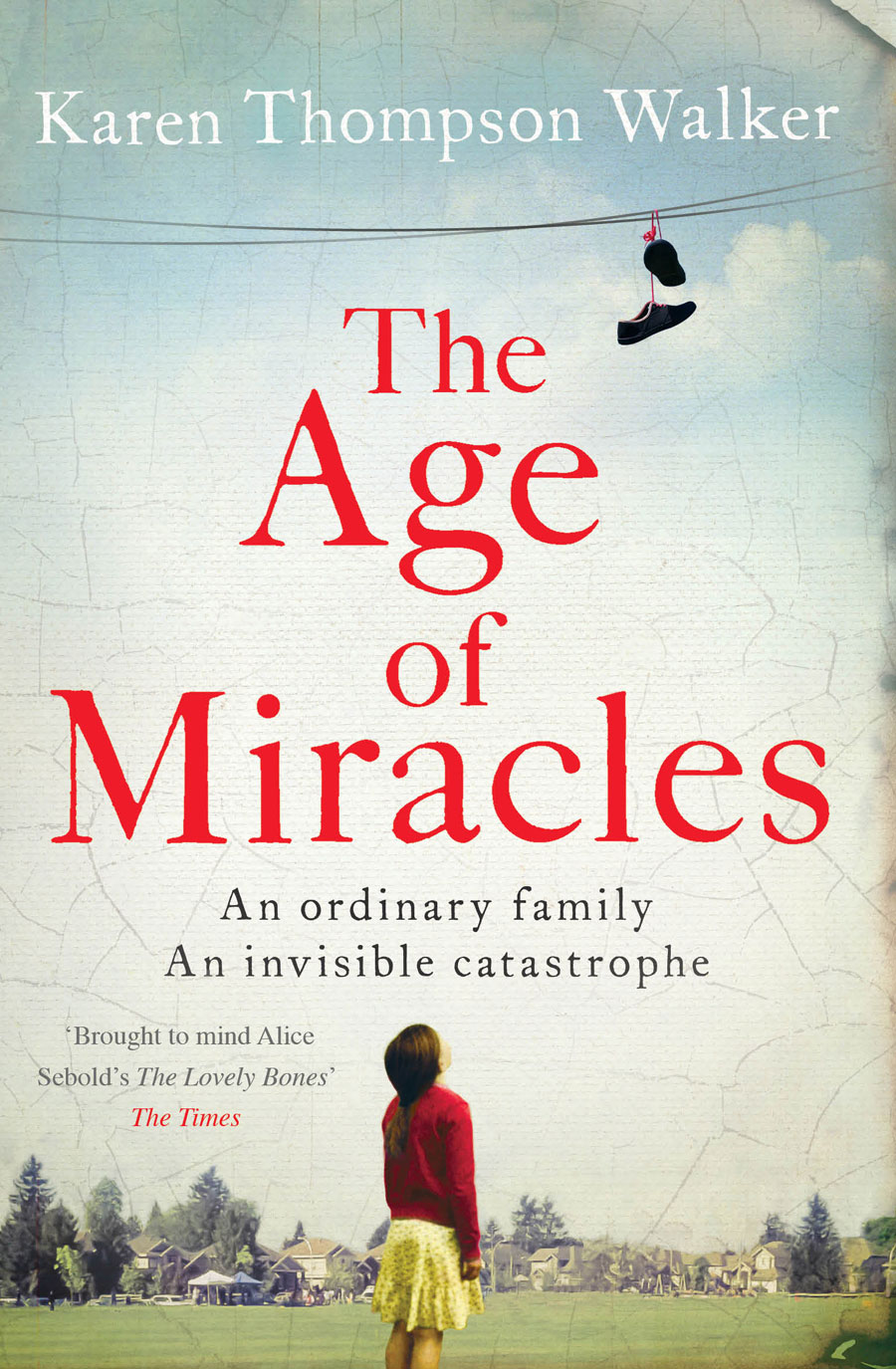
It's interesting to compare the marketing of the book between the original release and its paperback publication. It was published around the same time as Terry Pratchett and Stephen Baxter's The Long Earth, and I found the covers similar, which may have influenced my perception of the book as hard science fiction. Though the paperback cover is not actually that drastically different from the hardback, its new design gives it more of a feeling of a "women's literary fiction" novel with a twist of not-quite realism. Perhaps the fact that it has been chosen by Richard and Judy for their book club has had something to do with this: they seem to choose very specific genres of books, and this seems to have been slotted into the Jodi Picoult/Lovely Bones category. The focus has shifted from the strange phenomenon threatening the earth as we know it - hinted at in the flare at the centre of the hardback image - to the child, representing the more intimate crisis at the centre of one family. The crispness of the colours, the change in typeface, even the buildings in the background, have changed subtly but enough to give a very different first impression of the novel.

But onto the story. I'm just a few pages in so far. The news has just been announced that the earth's rotation is slowing down, and mass panic has broken out, which we see in the mother of eleven-year-old narrator Julia. I wonder whether that's a realistic reaction to a weird scientific phenomenon? I would have thought it more likely that people would be quietly a little freaked, but be slow to really grasp the implications of what's happening. They haven't actually noticed anything different until the change was pointed out, and can't really see how it affects them, so business as usual. None of this panic-buying at the supermarkets and staying home taking cover under the kitchen table nonsense!

But then, I am British.

9PM (BST)

It seems I misjudged the suddenness of the earth's slowing in Age of Miracles. It is slowing faster than I realised, so that in a matter of months days have doubled in length. This leads to an interesting consideration of how to measure days: by the old 24-hour clock, or by the every-growing length of time for the Earth to complete a rotation. These two timetables have divided society, and it brought home how stupid the reasons humans come up with for fearing and hating each other are.

I'm now about two thirds of the way through the book, and as the days grow longer and longer, we see all the different effects of the slowing on wildlife, on people's health, on the tides - I start to realise how frightening it would be if something we took for granted were to change. How many of us have wished there were more hours in the day? The Age of Miracles shows what else would change if that were to happen.

Wondering how this story will end. Will the earth eventually get back to normal? It seems unlikely without Superman getting involved, and I don't think he's going to feature in this story. Either nature, and humanity will adjust to the new way of life, of days being dark and nights being bright, and maybe the earth will fix on a constant, if slower, cycle. This seems the most likely ending. Or else it could slow right down until it stops altogether and everyone dies. (But then, who would be telling the story?)

Challenge: Book Spine Poetry

And now for something completely different: the book spine poetry, a challenge hosted at Escape Through The Pages. I was kind of surprised by the results. I ended up creating two poems out of the books on my bookcases, one uncharacteristically romantic, the other somewhat darker (which is perhaps more me.)

Poem #1

Goodnight, beautiful.
Linger, before I fall.
Never let me go.

You against me, 
warm bodies,
forever stardust

Why did I ever wonder?


Poem #2

What was lost:
plain truth,
utopia,
affinity,
It's not the end of the world.
(liar.)


Readathon statistics:

Books read today: The Age of Miracles - Karen Thompson Walker
Number of pages read today: 240 so far
Number of books read in total: 1
Books finished: 0
Today #insixwords: What if the days grew longer?
Strangest place to read: Walking to and from work


Sunday, 12 May 2013

After the Fall - Charity Norman


One year ago, the McNamara family left their home in England to start a new life in New Zealand. It seemed the perfect opportunity for a fresh start, but one year later, all is not well. Five-year-old Finn lies comatose after falling from a balcony, and his mother is unforthcoming about what really happened to him. After The Fall switches between the past and the present to tell the story of what led up to the accident.

There are five members of the McNamara family: husband Kit, an artist who struggles from time to time with depression and drink; wife Martha, apparently running from secrets in her own past; Martha's daughter Sacha, aged sixteen, reluctant to leave her school, friends and life in England to move to the other side of the world, and five-year-old twins Finn and Charlie, for whom the entire experience is nothing but an adventure. The descriptions of the family uprooting themselves to start a new life caused an ache of longing inside me, aided by the beautiful descriptions of the New Zealand landscape and culture, the Maori folklore whose presence in the novel colours events with an eerie, unearthly atmosphere. But no matter how beautiful the McNamaras' new home is, no matter how far away from their old life, they can't run away from the darkness lurking beneath the surface of the family, because they brought it with them.

I was slow to really connect with this novel, despite sharing the desire to start life all over again in New Zealand or Australia, because of this darkness. Though superficially Martha and Kit appeared fairly likable, there was a menace in the writing, in the contrast between the flashback scenes and the present day in which the little boy was in hospital. The question was: how did they come to this? Hints throughout the book kept me distanced from Martha and Kit, feeling a reluctant certainty of the way that the plot would develop. Kit would lapse into alcoholism, become violent, and Martha would have an affair with the handsome shepherd who lived nearby, culminating in a horrible confrontation on the balcony which would leave me without sympathy for either and injuring an innocent child. I pretty much have a zero-tolerance policy regarding adultery in fiction. I was side-eyeing Martha all the way through the novel, preparing myself to dislike her intensely, while, against all hope, willing the author to surprise me.

So when the dark secrecy was uncovered, and it had nothing to do with the above predictions, it was all the more powerful for being unforeseen. The revelation was heartbreaking and shocking, coming from a character who I had allowed myself to feel sympathy for. Congratulations to Ms Norman for the genuine twist, and for getting past the emotional defenses I had put up between myself and the main couple.

After The Fall turned out to be a powerful exploration of families and secrets, and the futility of running from the past, at times difficult and upsetting, but ultimately hopeful.


Saturday, 11 May 2013

Bout of Books: my goals for the week

Bout of Books


Time spent reading:

Bout of Books starts just the day after tomorrow, so it's time to set out my goals for the week. I will keep my targets modest, because I'll be working full-time. Evening will be my main Bout of Books time, and I aim to roughly follow the following schedule:

Lunchtime: read book, not staffroom newspaper. Not that that will be too difficult as my colleagues tend to get the Daily Mail. *shudder.*

6PM-9PM: Allow 2 hours reading time (also includes time for food and general pottering about.)
9PM-10PM: Online read-a-thon activity, including daily blog update and interacting with other participants.
10PM: Switch computer off, get ready for bed early to allow for another half-hour bedtime reading before 11PM. (This could easily stretch as late as midnight or beyond.)

Friday and Sunday are my days off, so my reading will probably be spread out throughout the day.

Books to read:

The Age of Miracles: Karen Thompson Walker.
I have had my eye on this book since it was first published in hardcover a few months ago. The Age of Miracles is a speculative novel exploring what effect a slowing-down of the Earth's orbit might have on life as we know it.

Watchmen: Alan Moore.
I have already renewed this library book once, so it needs to be read. A dark graphic novel from the author of V for Vendetta, about superheroes who are perhaps not so heroic as all that.

iBoy: Kevin Brooks.
Another library book, this time from the teen section, and another science-fiction novel. After a vicious attack, a teenage boy ends up with bits of his smart phone embedded in his brain, and now he has extraordinary powers...


I may not read all of these books from start to finish in the read-a-thon, and I have another back-up pile if I fancy reading something else. (The three books next on my to-read pile have a science-fictional or dystopian slant to them, and maybe one day I'll be in the mood for something different.)

My goals:

I intend to update my blog daily during the read-a-thon, sharing my thoughts on the books I've read each day, and taking part in some of the read-a-thon blogging challenges. Blog updates will happen in the evenings, (British Summer Time) and I'll be tweeting throughout the day (you can follow me @KatieWhoCanRead) I also hope to discover some wonderful new book bloggers also participating in the read-a-thon.

Daily Updates:


Monday 13th May:
Books read today: The Age of Miracles - Karen Thompson Walker
Number of pages read today: 285
Number of books read in total: 1
Books finished: 0
Today #insixwords: What if the days grew longer?
Strangest place I read: walking to and from work.

Tuesday 14th May:


Books read today: The Age of Miracles - Karen Thompson Walker, 
The Universe Versus Alex Woods - Gavin Extence
Number of pages read today: 114
Number of books read in total: 2
Books finished: 1
Today #insixwords: No updates yesterday because Star Trek
Cinema ice cream: mint choc chip

Wednesday 15th May:


Books read today: The Universe Versus Alex Woods - Gavin Extence
Number of pages read today: 136
Number of books read in total: 2
Books finished: 1
Today #insixwords: Can't wait till my day off
Length of after-work nap: 40 minutes

Thursday 16th May:

Books read today: The Universe Versus Alex Woods - Gavin Extence
Number of pages read today: 120 so far
Number of books read in total: 2
Books finished: 1
Today #insixwords: light, easy read but surprisingly deep
Books added to mental shopping list: 5

Friday 17th May:

Books read today: The Universe Versus Alex Woods
Number of pages read today: 113
Number of books read in total: 2
Books finished: 2
Today #insixwords:

Saturday 18th May:

Books read today:
Number of pages read today:
Number of books read in total:
Books finished:
Today #insixwords:

Sunday 19th May:
Books read today:
Number of pages read today:
Number of books read in total:
Books finished:
Today #insixwords:

Read-a-thon goal template can be found on the Bout of Books FAQ page:


Thursday, 2 May 2013

Bout of Books Read-a-thon 13th-19th May 2013


Bout of Books

I haven't been setting myself much in the way of reading challenges in 2o13, choosing quality of reading experience over quantity of books or pages read. But my to-read pile is building up faster than I'm reading it, and as an attempt to get it back down to a manageable level I've decided to put devote my free time in the week after next to the Bout of Books Read-a-Thon: an excuse to read, blog and snack to my heart's content in the company of people across the globe. Bout of Books will be my first online read-a-thon, and I'm getting very excited about it.

From the Bout of Books website:

The Bout of Books read-a-thon is organized by Amanda @ On a Book Bender and Kelly @ Reading the Paranormal. It is a week long read-a-thon that begins 12:01am Monday, May 13th and runs through Sunday, May 19th in whatever time zone you are in. Bout of Books is low-pressure, and the only reading competition is between you and your usual number of books read in a week. There are challenges, giveaways, and a grand prize, but all of these are completely optional. For all Bout of Books 7.0 information and updates, be sure to visit the Bout of Books blog.
- From the Bout of Books team

I don't expect to read a huge amount during this given week as I will be working full-time from Monday to Thursday and Saturday, but, again, quality is better than quantity. How many hours are lost forever on the Twitter-Tumblr-Facebook Bermuda Triangle, when I could be reading a good book? I dread to think what the answer to that may be!

How many of my readers will be taking part in the Bout of Books read-a-thon this year?

Sunday, 28 April 2013

Film: Prince Caspian (2008)

Prince Caspian remembered

I realise that although over the years I've written several posts about the Chronicles of Narnia, in book, film and TV format, I have only covered some of the stories. Prince Caspian was the second book to be published and the second film adaptation. While I was absolutely blown away by the first Narnia film, The Lion, the Witch and the Wardrobe, which to my mind was a near-perfect translation from book to film, I remember being disappointed with Prince Caspian. This is perhaps not entirely the fault of the film - though not my least favourite book in the series, I think it is the weakest, with a comparatively slender plot. When the BBC adapted the book for TV in the precious Sunday Night Family Drama slot in the late '80s or early '90s, they ran it together with The Voyage of the Dawn Treader, and two half-hour episodes were sufficient to tell the Prince Caspian story. The film-makers, by comparison, had to pad out the book's story by inserting additional scenes and conflict which meant that it was not the film of the book that The Lion, The Witch and the Wardrobe was. With beloved classics such as Narnia or the stories of J R R Tolkien, I think you can tell where filmmakers have digressed from the original text, and their digressions, though often good, lack the sparkle that comes from seeing the book come to life before your eyes. It is still a pretty decent film, but Disney's Prince Caspian is not C S Lewis's Prince Caspian.

I worked out that it has been four years since I saw the movie. I saw it at the cinema on a date with my then-boyfriend, who later bought the DVD as his last Christmas present to me. We broke up shortly afterwards, and I haven't seen the film since. Perhaps my memory has been unfair to it. I remember that I enjoyed it pretty well at the time, though with a critical eye and a constant comparison to the book. But when I think of the film now, it is the memory of the disappointment that lingers. It is time to revisit the DVD in order to see if it is better than I think it is...

Prince Caspian Revisited

I guess a large part of the problem was the casting of Caspian himself. In the book, Caspian is a child, maybe thirteen years old, whereas actor Ben Barnes was in his mid-twenties. Though it is acceptable to age characters up a couple of years, and maybe cast actors up to five years older, if they don't look their age, making Caspian an adult changes the whole dynamic. Peter, too, is a few years older than his book counterpart seems to be - probably because who would believe in a thirteen-year-old high king and warrior? But the two kings (because Caspian is the rightful king) spend much of their screen time bickering and being obnoxious to one another, and generally behaving in a way that is almost, but not quite, entirely unlike Narnian Kings. It makes for a darker and less magical Narnia than the one I tried to find in my wardrobe as a little girl. Maybe the filmmakers felt that the original story lacked internal conflict or character growth, maybe they thought the boys were a little too noble and goody-good.

The movie starts differently to the book, firstly showing Caspian's aunt giving birth (I know that ladies DID give birth, and that it is a significant plot point, but it seems somewhat out of character for a children's story
of that era to actually show it.) The first we see of Caspian is of his escape in the night - I was surprised that in such a slender story that required so much padding and dull, dull battle scenes, they missed the establishing scenes with Dr Cornelius and the astronomy lessons. Those are among the scenes I am fondest of in the book, the most Narnian, so I was sorry they were gone (though the "dance of Tarva and Alambil" is mentioned later on by a centaur.)

Back in England, with the Pevensies, I appreciated the details that remind us that their London is still at war - in the books, this is only shown as the set-up for The Lion, the Witch and the Wardrobe and never mentioned again. The script gives no reason for the children to have left Professor Kirk's house in the country, but I know many children were brought home by their parents after the Blitz, so this is not a continuity error so much as a "time has passed." Although Peter's scuffle on the station with the other schoolboys is out of character for the sensible Peter of the books, it shows the toll that everyday life takes on children who have grown up once, been kings and queens of Narnia, and then have to go through adolescence all over again. I always felt that was a cruel fate. Georgie Henley's Lucy really makes us feel the tragedy of centuries passing in Narnia, while the children have been away for just a year in their time. I always felt a certain amount of sorrow that we only get to spend a brief time with Tumnus, the Beavers and the others, and then the next time they are long dead, but all I need is to reread The Lion, The Witch and the Wardrobe again. For the Pevensies, there is no time machine. Once those thousands of years have passed, there is no taking them back.

I love the banter between the children, but Skandar Keynes stands apart from the rest as Edmund, with his cheeky grin and smart comments. The dialogue can be a little clunky at times, but not half as bad as the BBC version, which has the word "magic" used about three times in two sentences. Add cynical dwarf Trumpkin into the mix, and I had a grin all over my face - and is that Game of Thrones' Tyrion (Peter Dinklage) under the beard? (Answer - yes. Yes it is.)

Warwick Davis, who is no stranger to Narnia, having acted in the BBC version in the roles of both Glimfeather and Reepicheep, this time gets to play a bad guy, Nikabrik, but plays him as a more rounded person than I've previously thought of the character. Like Trumpkin, he is angry and suspicious, but more hostile to our heroes, and ultimately proven an enemy, yet his reasons are understandable. He is portrayed as someone whose downfall was brought about by desperation, rather than an intrinsically evil character.

A short conversation between Lucy and Susan is heartbreaking when you know the books.
"Why do you think I didn't see Aslan?"
"I don't know. Maybe you didn't really... want to? [...] You're happy to be here, aren't you?"
"...While it lasts."
Welcome Reepicheep! I'd forgotten he was in this story, though the lion-hearted mouse has always been my favourite character in the series. He certainly does not disappoint here. He gets a few new wonderful moments, as well.
"You're a- a mouse!""I was hoping for something more original."
I really don't like the plot and character derailment of Peter and the Narnians attempting to attack King Miraz's castle, and I won't deny it, it's purely and simply because that didn't happen in the book. More to the point, it shows a stubborn pig-headedness on Peter's part which, to be fair to the filmmakers, gives him more development when he does start trusting Aslan and accepting Caspian as the King of Narnia, but it's out of character. I accept that they needed to fill out the plot, but I'm not happy with how they did it. This is Osgiliath all over again. It's just not Prince Caspian, and that's all I have to say on the matter! Hmmph!

And likewise, I'm not happy with the flirtation between Caspian and Susan.


As Susan never returns to Narnia, and Caspian later marries another, it is a story that is left dangling and untidy, put in for the sake of it, and I'm not a fan of putting the mushy stuff where no mushy stuff should be-O! The Chronicles of Narnia are children's stories, and when I was a child, I liked my stories to be about children. Romance belonged in the adult world, which was boring, (or at least the teens, which were just as foreign to me.) Lucy and Edmund sum it up perfectly, in the lines that were the only good thing to come out of that subplot:
"Maybe when I'm older I'll understand."
"I'm older, and I don't want to understand."
Is adding romance to a children's story alienating to its audience, are kids growing up faster than they used to, or was I the anomaly in my apathy towards the pink and fluffy? Answers on a postcard please.

In short, Prince Caspian works best when the filmmakers stick to the original material. I can understand their reasons for the added fight scenes and (ick) romance, and they do add more character development than the book, whose Peter, in particular, is pretty static after The Lion, the Witch and the Wardrobe. But this added conflict and character development means that I am spending time in the company of people who I don't know any more. These are not Caspian and Peter, though Susan stays Susanish throughout. Her added depth is consistent with what is shown in the later books, an interesting but unsettling issue; a character treatment that has left readers and writers unsatisfied for the past decades. The film's additions, though they do not resolve all the unanswered questions, fleshes out this enigmatic Pevensie girl in such a way that it fails with the two kings. Ultimately, I'm not sure whether Prince Caspian could ever work as well as The Lion, the Witch and the Wardrobe: the plot is just too thin for two and a quarter hours, and the extended battle scenes and plot digressions leave me cold. When it works, it works well, but it lacks the consistant brilliance of the original Chronicle of Narnia.


Friday, 26 April 2013

Tell The Wolves I'm Home - Carol Rifka Brunt


Sometimes you only have to pick up a book to know it's going to be something special. I'd never heard of Carol Rifka Brunt's novel Tell The Wolves I'm Home when I found it at work the other day, and yet I knew before I even read the cover blurb that it had the potential to be a good friend. Maybe it's the wistful dreaminess of the title, or the striking, bright green cover design. I prefer to think that it was some kind of magic inside the book itself, calling out to me, knowing that it had found a kindred spirit.

I returned to look at this book several times while working in the bookshop, and when I found a shiny new copy in the library a few days later, I knew it was meant to be. Tell The Wolves I'm Home is the story of an introverted teenage girl, June, dealing with the death of her uncle Finn, who was her closest friend and confidant, from AIDS. Through her grief, she strikes up an unlikely secret friendship with Toby, Finn's partner, and gets to know her uncle better through Toby's memories. 

Tell The Wolves is a story about love and loss, but also of finding, growing up, death and life, loneliness and jealousy, but at its heart, it is a tale of family. The book brings the reader into June's family, and gradually, although the primary relationship is between June and Finn - both living and dead - it becomes clear that the bond between June and her sister Greta is as important, or, I would argue, even more so. The sisters were close as children, but in their teenage years have grown apart. Greta appears at first as that familiar figure, the mean elder sister; the grumpy, rebellious teenager who can't help but pick on her shyer younger sister. But the reader comes to realise, long before June does, that Greta is lonely too. Greta starts off as a background figure in the novel, which is how June sees her; while she is so preoccupied with the absence of Finn, she misses the sister who is right beside her, trying in a clumsy way to reach out to her. June and Greta echo the fragile and fractured relationship between Finn and their mother Danni, who was his sister. Once close, they had let secrets, jealousy and resentment come between them, never to be fully resolved. 

Finn was once a famous artist, but one who disappeared from public life some time ago. His final work is a portrait of June and Greta, which is the object at the centre of the novel. The painting lives on as Finn's legacy, and is added to by all those who loved the artist most, becoming a collaborative work containing parts of each of them. Tell The Wolves I'm Home demonstrates how each person's life touches many others, how we are formed by the relationships we make and the people we meet. After Finn's death, June discovers that many of his quirks and traits had originated from Toby, and in turn, she sees much of Finn in Toby. Perhaps because of this, I found it a bit difficult to view Toby and Finn as separate characters, and wondered whether June was looking for a substitute Finn in her new friendship with Toby, an issue that is addressed in the novel.

June is a thoughtful girl and mature for her age, so it would come as a bit of a shock whenever I was reminded that after all, she is still very young. Fourteen is a strange age when one is part child, part adult, and sometimes the two parts don't sit well together at all. The busyness of June's parents make it easier for her to take the train from the suburbs into New York City without their knowledge, and a couple of times I wondered why the secrecy? Surely it would be better to discuss Toby, Finn and all the unresolved issues between the families as adults, though they may have to get through some unpleasantness first? And then I remembered that they aren't all adults. I remembered how powerless you are at fourteen. If adults say no, they won't discuss something, then you can't make them. They can stop you seeing someone, going somewhere, doing anything. Finn (and later Toby) was the exception in treating June as an equal.

Tell The Wolves I'm Home touched me close to the heart. June reminded me of myself as a teenager - shy and always an outsider, though I think that despite her quietness she had more confidence in herself as a person than I did at her age. The story, too, reminded me of the stories I would write in my teens - which is not in itself a recommendation, as I was inclined towards the sentimental and the morbid. Carol Rifka Brunt avoids crossing the line into sentimentality with her lyrical prose and strong characters and relationships. Tell The Wolves I'm Home is a very beautiful, very human story, and I closed the book with reluctance. The best new book I've read this year so far. I will be buying my own copy of this book, and it will take its place on my "favourites" shelf.


If you enjoyed this, you might like:

When God was a Rabbit - Sarah Winman
A Place of Secrets - Rachel Hore
Paper Towns - John Green

Eve Green - Susan Fletcher
The Earth Hums in B Flat - Mari Strachan

Sunday, 21 April 2013

Book and Film: V for Vendetta

Remember, Remember, the fifth of November
Gunpowder, treason and plot.
I see no reason why gunpowder treason
Should ever be forgot.

V for Vendetta is a rare example of a story that I encountered the film adaptation before the original book. I watched the movie last November 5th, texting my sister in London who was watching it at the same time. It is a tale of oppression and anarchy, set in a dystopian England comparable with that of Nineteen Eighty Four. (I wish I'd read V for Vendetta in sixth form, to compare with the Orwell, though I have my doubts about whether a graphic novel would have been considered an acceptable literary work.) Both film and book focus on a young girl called Evey, whose life is saved one night by a masked figure called V, revealed to be a terrorist intent upon bringing down the fascist government and establishing a state of anarchy.

Though I greatly enjoyed the film, it did not escape my criticism. The setting was shown to be a twisted, nightmare version of England, both familiar and unfamiliar, but though the film shows hints, I felt that it was not made clear how the world came to this, or even quite what "this" was. The book clarifies this, showing how the England of V for Vendetta is built up from the ashes of a nuclear war that has wiped out most of the world, and while the population was still struggling to its feet amid the chaos, the Fascist group Norsefire marched in and took control. This England is a cheerless place, devoid of art, music, culture, or anything that does not further the government's totalitarian regime. The government is depicted as an all-powerful being, its departments named after different body parts: the Nose (police force), the Eye and the Ear (surveillance), the Mouth (propaganda broadcasts) and so forth.

The key to understanding the world of V for Vendetta lies in context. When I watched the film, viewing it as a work of the mid-2000s, I found it fascinating but could not identify this nation with my Britain. I hope my American readers won't take this the wrong way, but the movie felt like an American dystopia with an English setting, rather than a home-grown English story (though Alan Moore is in fact English.) Some elements of Norsefire's England struck a chord, while others felt alien. I couldn't see the progression of my country from a relatively liberal, increasingly secular, live-and-let-live nation, to a Fascist state, a place of persecution where it is dangerous enough to be white, heterosexual, meek and law-abiding - and a death sentence to be anything else. (But then, who could have seen in the 1920s and early '30s what would happen in Europe a few years later?)

Reading the novel in the wake of Margaret Thatcher's death, it all clicked into place. Suddenly the media was full of memories of Thatcher's policies and Britain's political situation in the 1980s, and I understood how Moore saw his present and projected a possible future. It's strange how much my country has changed during my lifetime, even looking back to my teenage years. Is it a better place now, or worse? Certainly I'd rather live here in this reality, even with its innumerable problems, than in the V for Vendetta version.

Against the oppressive gloom of this England, V's personal universe is refreshing, rich in the collected culture that has vanished from the world above. His "Shadow Gallery" is packed with books, paintings, records - treasures that have no place in the utilitarian world after the nuclear apocalypse. V is well-spoken, well-read, musically gifted as well as a criminal genius and deadly fighter. His cultural references range from Shakespeare to the Rolling Stones to Enid Blyton. One can't help rooting for him, if somewhat uncomfortably, considering that he is indisputably a terrorist. But if he's the bad guy, his enemies are no better, and they lack V's charm and appeal. Hugo Weaving, in the film, plays the part to perfection, capturing the character's charisma and intelligence, his almost superhuman strength, but also giving V a touch more humanity and pathos than in the comic - quite an achievement when the actor's face is hidden beneath a smirking Guy Fawkes mask the entire time.

Evey's character, however, didn't make sense to me until I read the book. Natalie Portman's Evey is a different person: older, smarter, stronger-minded; but sometimes she has to behave like the naive teenager of the book in order to keep the plot on track. As such, the character doesn't always quite ring true, and I found myself rather confused. I didn't believe in her first scenes as a desperate first-time prostitute trying to scrape enough money to survive - instead, I felt that she had an ulterior motive for being out on the streets after curfew, but this was never satisfactorily resolved. And even if V did save her life, I felt that her gratitude would not be enough for her to throw in her lot with him, help him escape arrest after committing acts of terrorism, live in his "shadow gallery" as a barely protesting prisoner, and then fall in love with him. These decisions fitted the younger, more innocent character of the novel, but not the strong-minded young woman of the film. (And I'm still not sure where her loyalties lie in the scene with the priest - who is she double-crossing there?)

But quibbles aside, the film complements the graphic novel, taking different detours from the main story of Evey and V, and focusing on different supporting characters. As is often the case, there is a lot more room for details, subplots and minor characters in the book than in the film, but in its turn, I missed some scenes and characters that were unique to the film. Stephen Fry's Gordon, for example, is a completely different (very Stephen Fryish) character than the Gordon of the book.

The graphic novel's artwork is incredible, in some places more cinematic than the film itself. I would be interested to see a closer film adaptation of the book - but even that would never live up to the movie in my mind. But film as a medium can do things that even the best of books can't - such as the exhilarating musical accompaniment to the destruction of the Old Bailey at the beginning of the film. The movie ends with an emotional (as well as literal) explosion, heartbreaking and uplifting and strangely cathartic.


Tuesday, 9 April 2013

Top Ten Tuesday: Books I read before I started book blogging

Hello dear readers! Apologies for the lack of recent reviews or posts. There's not been a lot of reading happening lately, and most of what I have been reading has been rereading of old favourites. But this week's Top Ten Tuesday prompt got me thinking about my old favourite books, from the days before I started my book blog. I'm not going to include any of the books that are still favourites and as such have been reviewed on rereads, so I've found it interesting to think back over the books that I used to love, and those which are really due a reread.

Top Ten Tuesday is hosted at The Broke and the Bookish


1. The Book Thief - Markus Zusak

I wrote about this on my (now deleted) personal blog, but all I could find to write was "JUST READ IT!" The Book Thief shows a little girl growing up in Germany during World War 2, but in a unique twist, the author is Death. This does not make the book a morbid read, but Death's matter-of-fact tones really highlight the beauty and tragedy of the story in an understated way. (I really have to reread this!)


2. A Tale of Two Cities - Charles Dickens

When I finished my degree, I realised I'd hardly studied any Dickens in the entire three years - a shocking state of affairs! Though it took me a while to get into the book the first time - so many characters, and it takes a bit of time to figure out how they fit together, who are the main characters and who is in a supporting role - by the time we got to the French Revolution scenes I was hooked. I was holding my breath with worry for some of the characters and completely stunned by the well-known twist ending. This book left me with a serious book hangover.


3. The Bitterbynde trilogy - Cecelia Dart-Thornton

Long before the trend for fairy-tale retellings came the Bitterbynde trilogy from Cecelia Dart-Thornton. Though very, very verbose, the series, beginning with The Ill-Made Mute draws on ancient Celtic mythology and well-known fairy-tales to weave a rich, uncanny tapestry, opening a little window onto a dangerous fairyland.


4. Rebecca - Daphne Du Maurier

The main reason I initially read this book was because my Cornwall-based friend from university assumed I'd read it and I didn't have the heart to disillusion her. It was well worth it - an eerie, suspense-filled novel of a young woman haunted by the memory of her husband's first wife. I find myself reminded somewhat of Jane Eyre.


5. I Capture the Castle - Dodie Smith

"I write this sitting in the kitchen sink." How can you not love a book which opens thus? I Capture the Castle is a quirky story of family, growing up and falling in love, and has been made into a film starring Romola Garai and Bill Nighy. 

6. The Elenium trilogy - David Eddings.

Fantasy always has to come in trilogies, doesn't it? This was the first high fantasy I read after Lord of the Rings sucked me into the genre, and I fell in love with it. I later read Eddings' Belgariad series, and maintain that whichever Eddings story you read first will be the one you like best - because he has one story, one set of character archetypes, which he used many times in different ways. Recently I tried to reread the series, and alas, the years were not kind. The fantasy-names felt made-up, the archaic speech felt fake, the plot full of cliches. The Elenium was saved a little by humour and likable characters, but maybe it's not fair to include The Elenium in a top ten of anything. Still, it played an important role in helping me fall in love with fantasy.


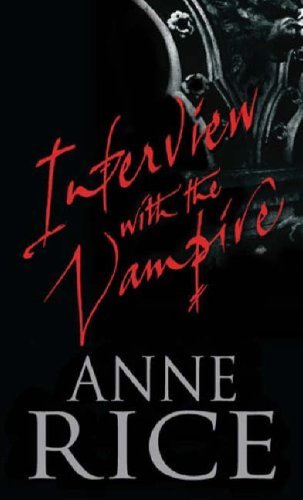
7. Interview With the Vampire - Anne Rice
I read this as a semi-gothic student, little knowing quite how far its brooding protagonist would set the standard for angsty, self-loathing vampires everywhere.

8. Night Watch - Terry Pratchett

This is perhaps one of the darkest books in the Discworld series, but also the best. Les Miserables crossed with Life on Mars - except this was published before Life on Mars. This is one of the City Watch sub-series, but with a twist, because Sam Vimes is caught in a magical storm and sent thirty years back in time, when Ankh Morpork was a much more dangerous place, and it's up to Vimes to sort out the mess, tutor his younger self, and minimise the damage, when all he wants is to get home to his wife and unborn son. Truth! Justice! Freedom! Reasonably Priced Love! And a Hard Boiled Egg!

9. Eve Green - Susan Fletcher

A simple story about family and the past, which I found at just the right time. When Eve Green is expecting her first child, she returns to the Welsh village where she grew up. The story is told in flashbacks to the summer when another little girl went missing, as Eve pieces together the secrets that have been kept from her, and the forgotten memories. Eve Green is a quiet novel, but a cosy read. 

10. The House at Riverton - Kate Morton

Kate Morton's books seem to follow a particular formula: two stories, separated by many decades but linked in some way, a big house, forgotten secrets and family mysteries. The link in The House at Riverton is an elderly woman (in the present day) who used to work at the house as a maid, at the time of a young man's suicide. Tangled up in the story is the relationship between three young people: the man and two sisters, and the novel is reminiscent of Ian McEwan's Atonement. It may be an unpopular opinion, but Riverton is the novel I'd hoped Atonement would be but wasn't. I read the entire 600 or so pages in a single lazy Saturday. I couldn't put it down.
Related Posts Plugin for WordPress, Blogger...